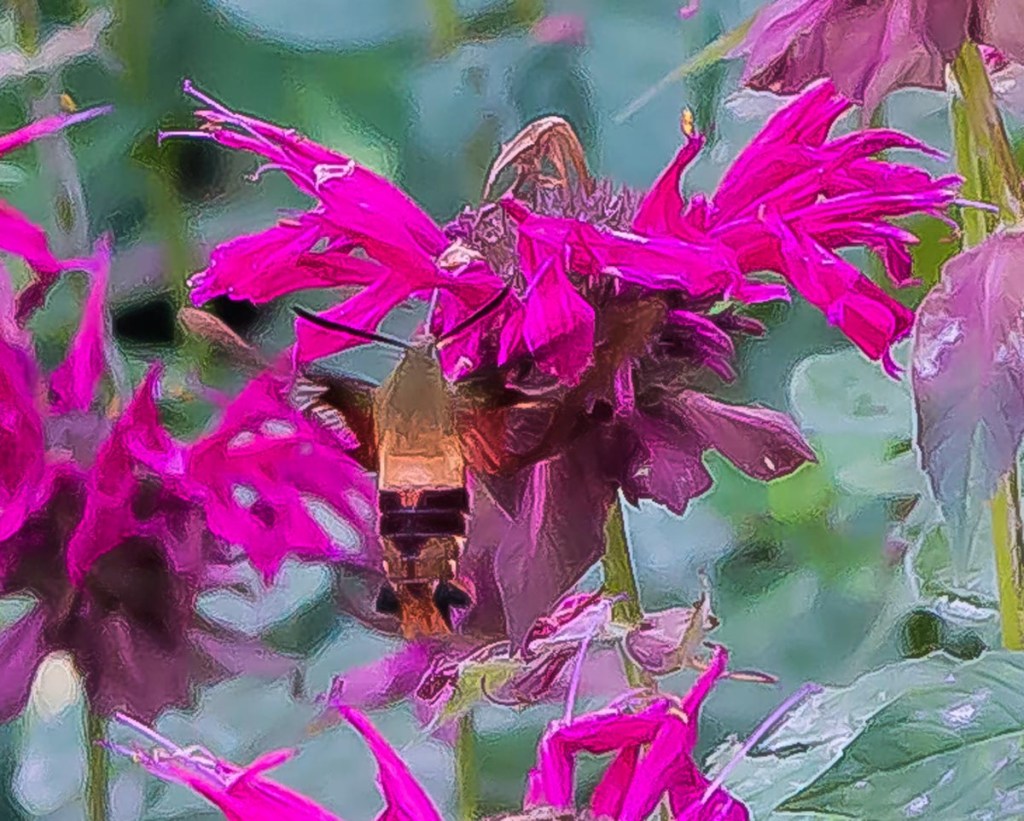
Here in south central New Hampshire Spring passed quickly. Memorial Day came and went and already its June. Yellow swallowtail butterflies are pretty common and I heard a tree frog bellowing from a nearby bush. We see fireflies and before too long they will perform their wonderful mating dance.
Thinking of the flashing fireflies in June reminds me of an old Japanese story about a firefly princess. I will share the story of the Fire-fly’s Lovers with you here.
The Princess Fire-fly is one of several tales included in a collection of old Japanese folk tales, “Old-World Japan: Legends of the Land of the Gods” by Frank Rinder. It is a collection of mythical tales, rooted in Japanese culture, that was first published in 1895.
I downloaded the story of the Princess Fire-fly from the Internet Archive (https://archive.org) https://archive.org/details/oldworldjapanleg00rind. A slightly different, more Holywood-derived, version is available from the Gutenberg Project (https://www.gutenberg.org/). The Gutenberg Project is a library of thousands of books that are no longer protected by copyright and that are offered for free download.
Patty and I illustrated this story of the Princess fire-fly. We hope you will enjoy the story.
Princess Fire-Fly
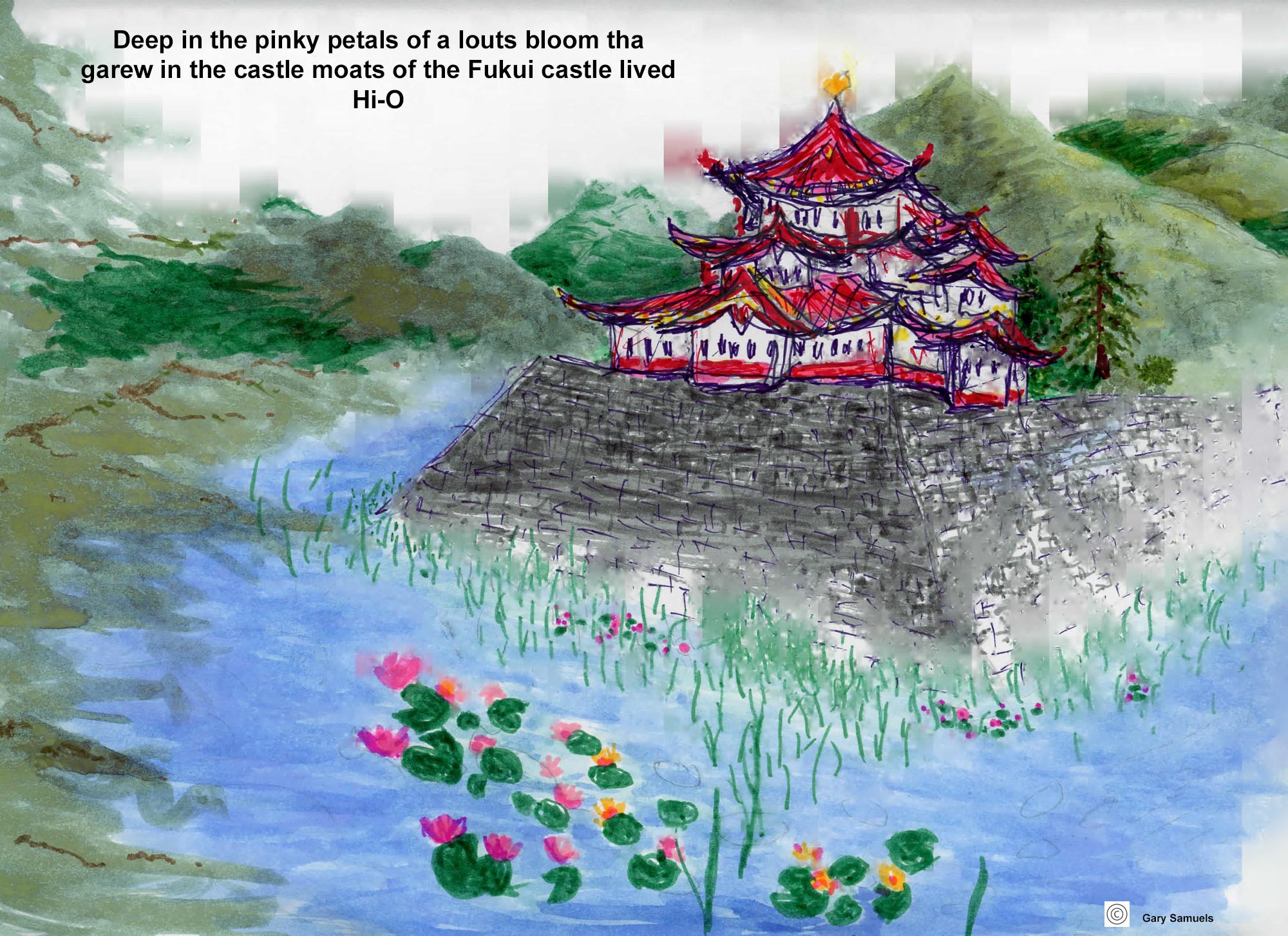
Deep in the pinky petals of a lotus bloom that grew in the castle moats of the Fukui castle, in Echizen, lived Hi-O, the King of the Fire-Flies. In this beautiful flower his daughter, the princess Hotani, passed her childhood exploring every shady nook and fragrant corner of the bell-like palace, listening to the buzz of life around, and peeping over the edge of the petals at the wonderful world which lay mysteriously beyond. Hotaru-Hime had few youthful companions, but, as she daily bade her father farewell, she dreamed of the time when she too, would fly abroad, and her brilliant light would attract universal admiration.

Gradually, a beautiful sheen o’erspread her body; night by night it became brighter, until at last her home, in the hours of darkness, was as a globe of coral wherein shone a lamp of gold. So glorious was her light that the stars paled before it, and the bright sickle moon withdrew behind a cloud from jealousy.

Hime was now allowed to fly from her home, to loiter among the pleasant rice fields, and to explore the indigo meadows which lay far off on the horizon. She had no lack of friends and would-be lovers; thousands of insects, attracted by her magic light, came and offered their homage, but Hime never forgot that she was of royal blood, and, while she haughtily thanked her many suitors, none found a way into her heart.

One evening the Princess seated on a throne formed by the heart of the lotus, held her court. Soon the faint roseate petals of the flower were thronged with a host of ardent lovers.
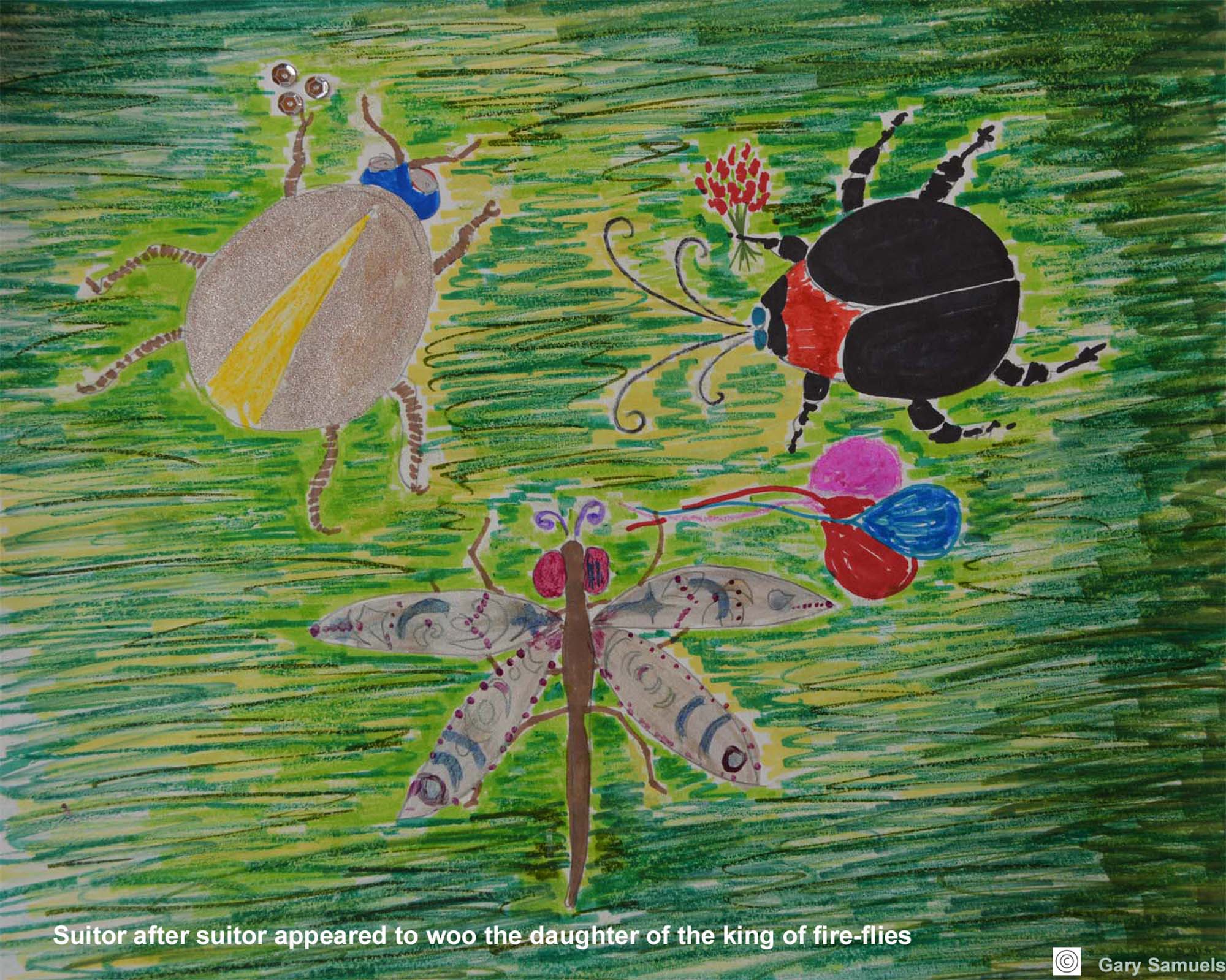
But the Princess whispered to herself, “Only he who loves me more than life shall call me bride.”

The golden beetle laid his fortunes at her feet, the cockchafer wooed her in passionate words, the dragon-fly proudly proffered his hand, and the hawk-moth humbly, yet persistently, addressed her. Countless other insects gained audience, but her answer was ever the same, “Go and bring me fire, and I will be your bride.”

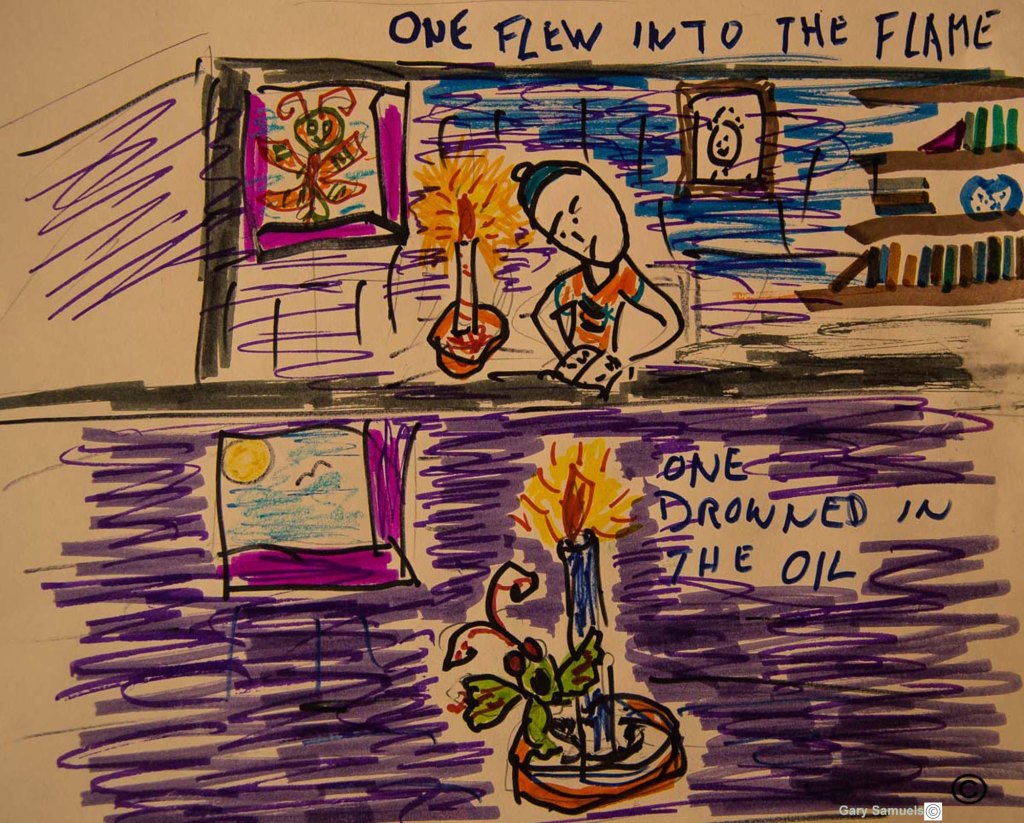
One by one they took wing, enraptured by the hope of success and unconscious, that they were all bent on the selfsame errand. The hawk-moth entered the Buddhist Temple and circled round and round the tall wax lights, until, in the ecstasy of love, he flew into the the flame, exclaiming, “Now to win the Princess or meet my death. His poor singed body fell heavily on the ground.

The beetle watched intently, for a moment or two at the fire crackling on the hearth, and then regardless of his fate, boldly caught a tongue of flame he hoped to carry to Hime — but his end was that of the hawk-moth. The dragon-fly, notwithstanding his sun-lit splendours, couldn’t fulfil the bidding of the Lady of the Lotus Bloom; he also fell a prey to the imperious command. Other lovers there were who tried to steal from the diamond his heart of fire, who winged their way to the summit of Fukui, or sped to depths of the valleys, in search of the talisman that was to make Hime their bride.The sun rose in morning splendour over untold numbers of dead bodies, which alone remained to tell of the great devotion that inspired the lovers of Princes Hotaru.

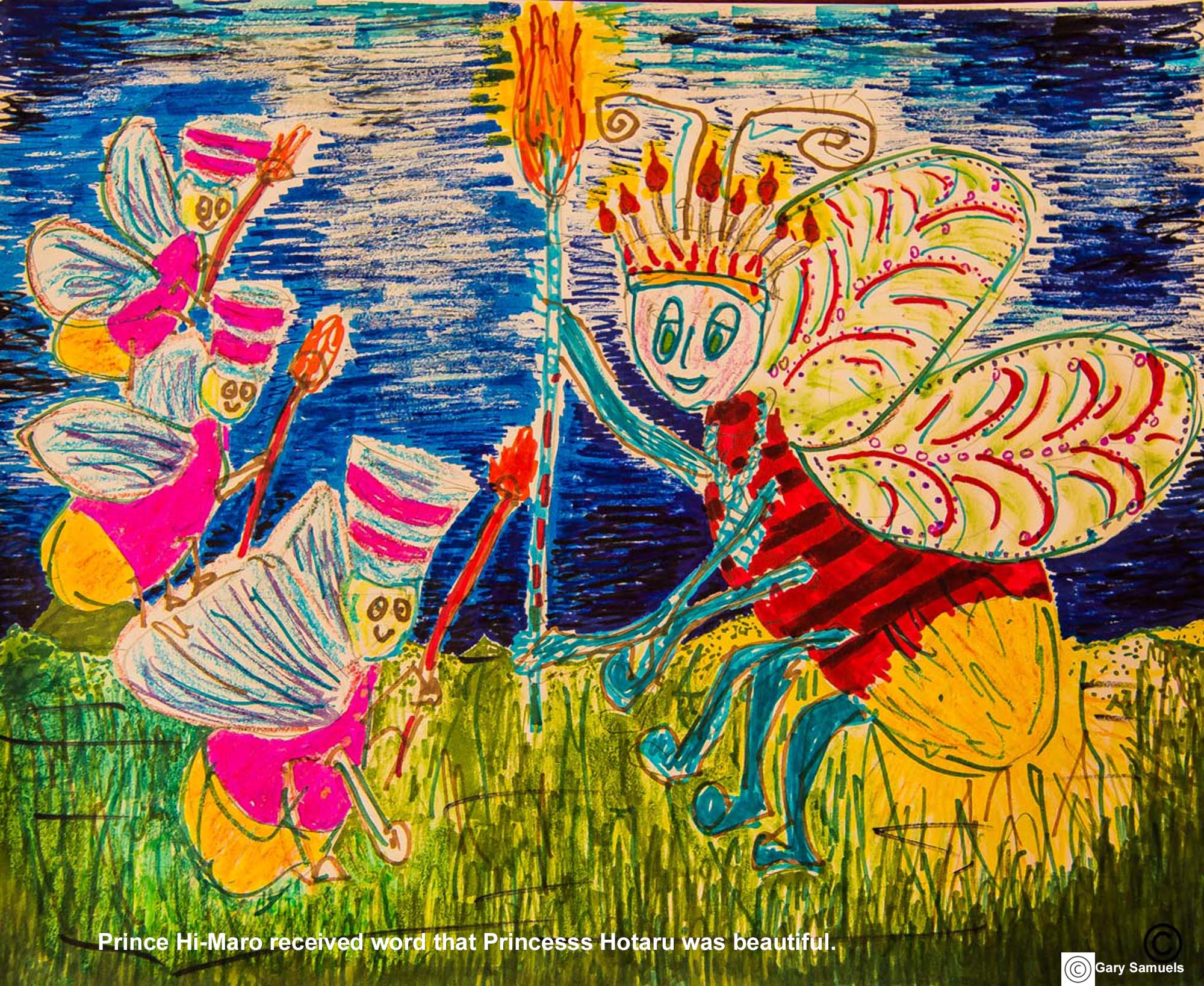
Now tidings came to Hi-Maro, a Prince of the Fire-Flies living hard by, that the Princess Hotaru was exceedingly beautiful; whereupon he flew swiftly to her home among the lotus flowers. Even as, with a flood of golden light, he entered, the charms of Hime were not dimmed. One look passed between the youth and the maiden, and then each felt that a great love filled their hearts. Hi-Maro wooed and wed, and for many years lived happily with Hotaru-Hime in the castle moats of Fukui.
Centuries have passed since Hi-Maro won his bride and still the dazzling fire-fly Princesses send their insect loves in search of fire.

T