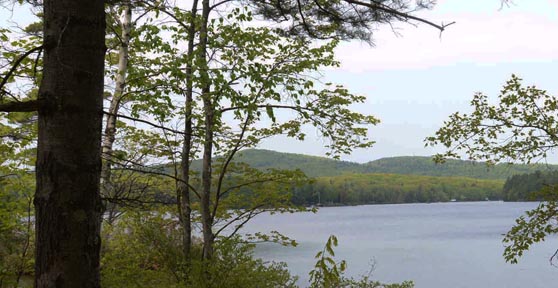
I can’t think of one sidewalk in Deering. Our houses tend to be set way back from the road behind a bunch of trees. Driving through the one through road you would not realize that you were in a town. Yes, there are parts of town where the neighbor’s house can be seen from your front porch or even where your house can be seen from what we loosely call ‘streets,’ often just graded dirt ways through — the woods.
This gives us our ‘rural character,’ where ancient stone walls mark roads and boundaries. The roads are then most often lined by forest and wetlands. Drivers really should watch out for bounding deer or the occasional moose on the road. Early spring can cause turtles and salamanders on the road too.
Glorious Nature!
At this time of year, spring passing quickly but still there is a display of quite pretty white flowers produced from shrubs and small trees. Looking at them as you pass by at 40-or-so miles per you might well think that they are more or less the same, so you might be surprised to know that they are not.
These early flowering shrubs and small trees are some of the earliest of the spring flowers in our town. These species do not have notable scents, unlike later opening flowers. Their flowers open before honeybees and bumblebees are flying and include wild bees and other insects.
As I have written this post over about one month, so flowering has ended for most of the species included. You can still see pin cherry and hobblebush. Chokecherry is just now beginning to flower.
Pin Cherry, Prunus virginiana
The most common of this group are cherries, pin cherry and choke cherry. In Deering the pin cherry has been blooming for quite a while now and the choke cherries will come on in a week or so. Pin cherry trees are conspicuous for the profuse production of white flowers in ‘poofs,’ short clusters, on small trees that grow in exposed places. In fact, pin cherry is intolerant of shade. Pin cherry is conspicuous along roadsides and other exposed sites here.
Pin cherry is a North American native. It’s found all across Canada, down into Wisconsin and Michigan and across into New England, as far south as the Great Smoky Mountains, where specimens reach 50 feet in height. It is also known as ‘bird cherry,’ ‘fire cherry,’ and ‘red cherry.’ I don’t know where the name ‘pin cherry’ comes from, but ‘fire cherry’ refers to the species as an early colonizer following forest fire, and ‘bird cherry’ because many upland bird species eat the fruit. As an early colonizer pin cherry provides shade for slower growing species, thus allowing them to become established. This cherry is a short-lived species, dying off as other species develop on burned sites.
The fruit of pin cherry is said to make excellent juice and jelly.
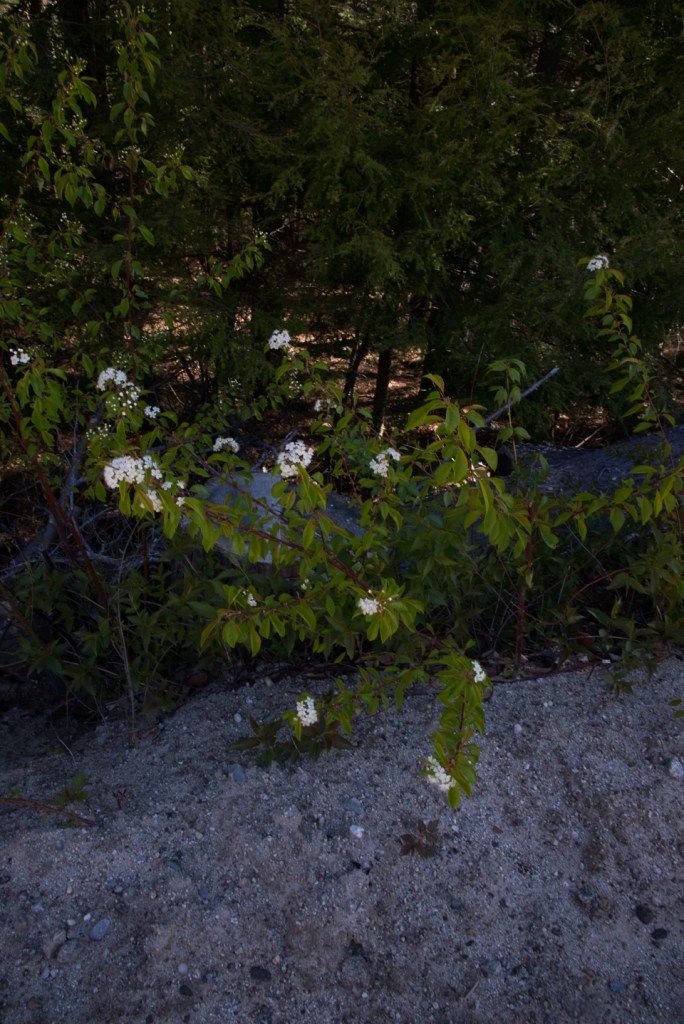
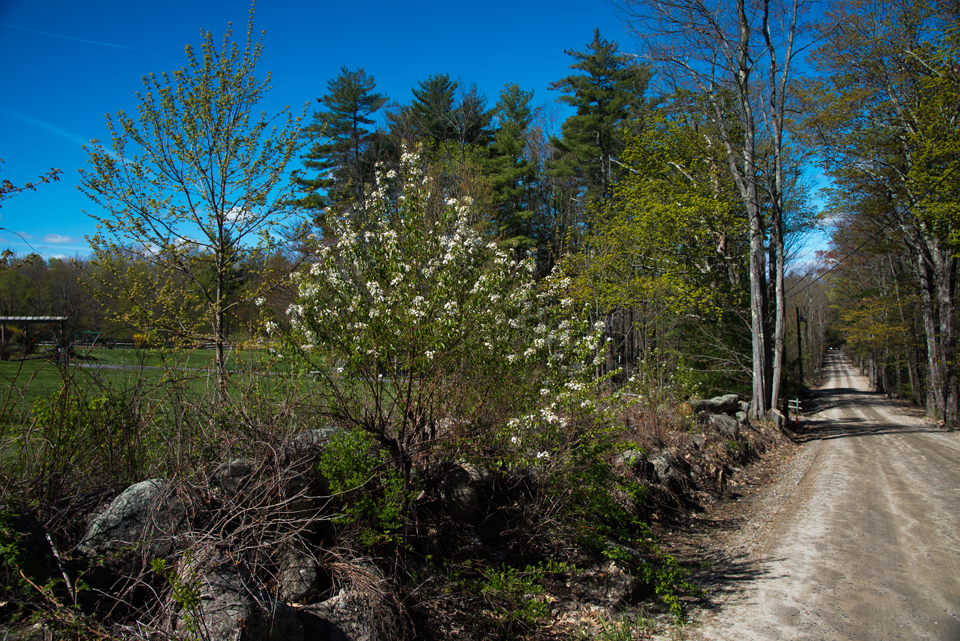
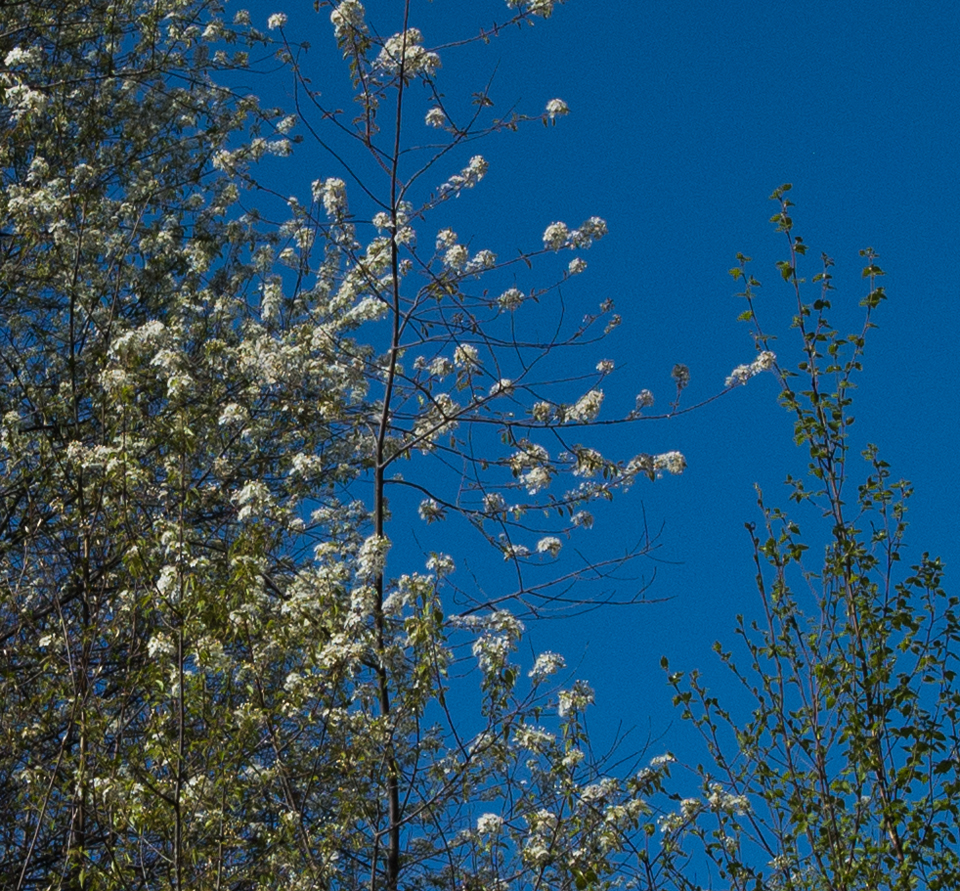
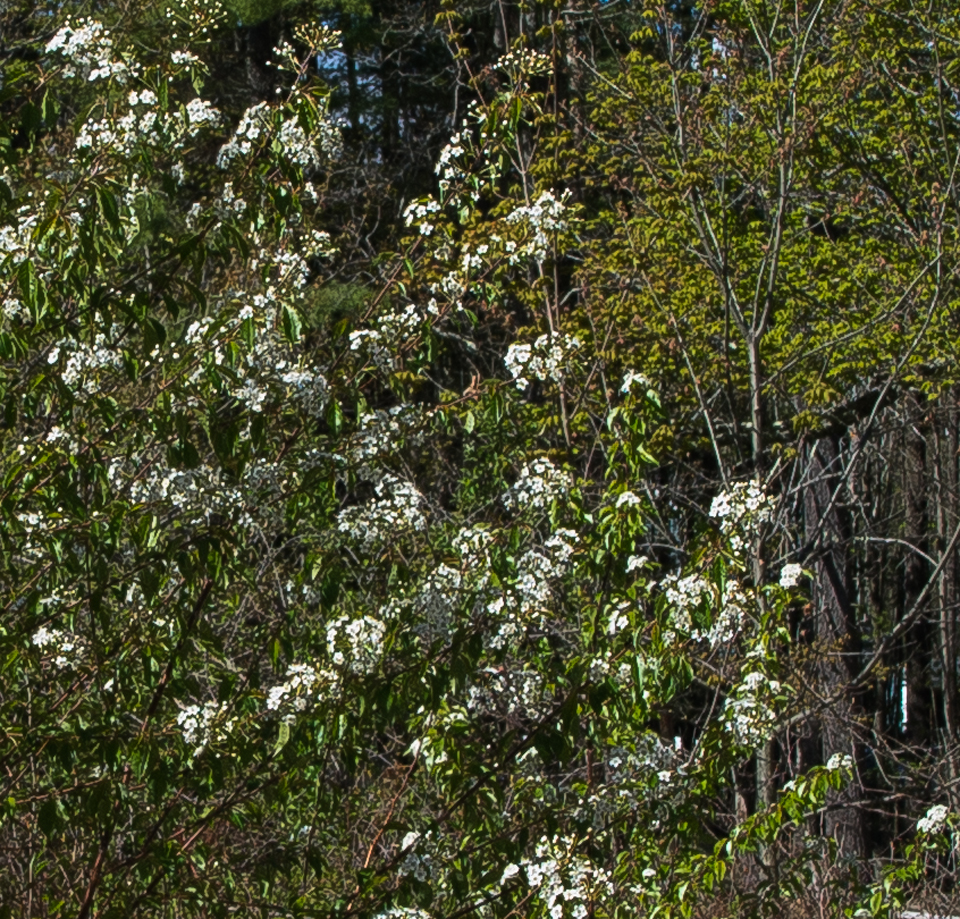
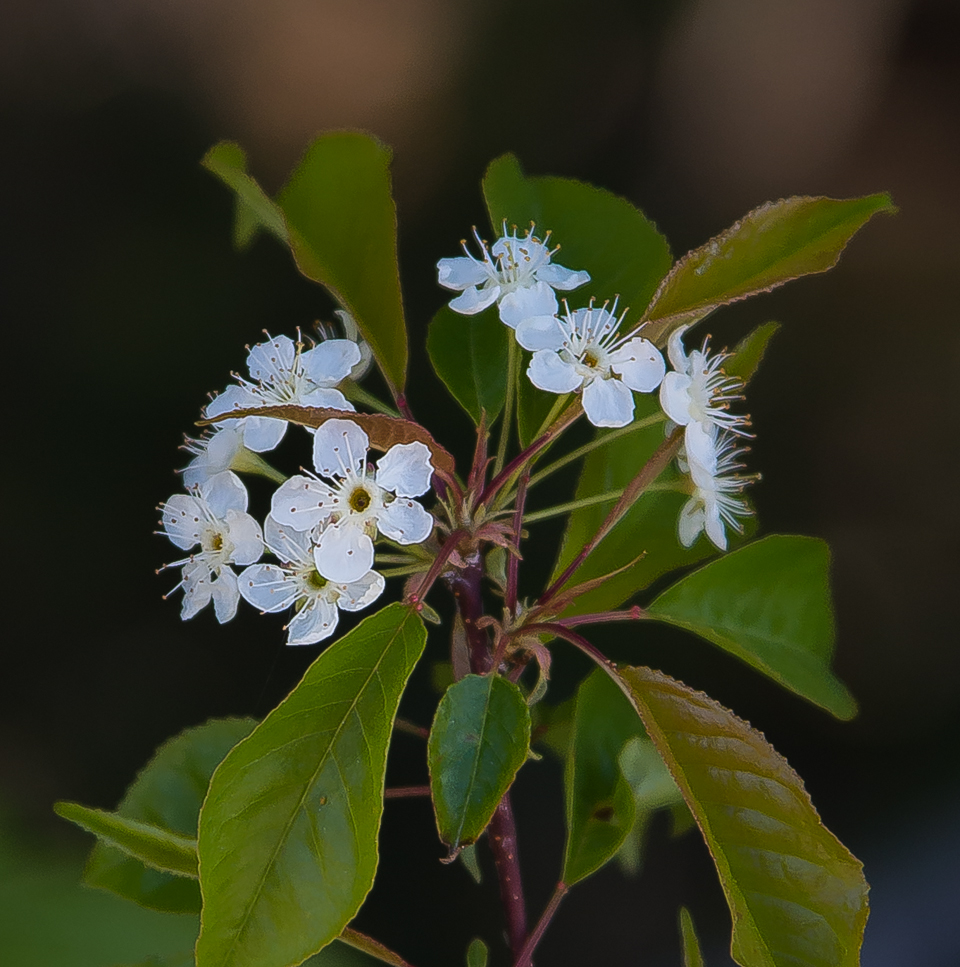
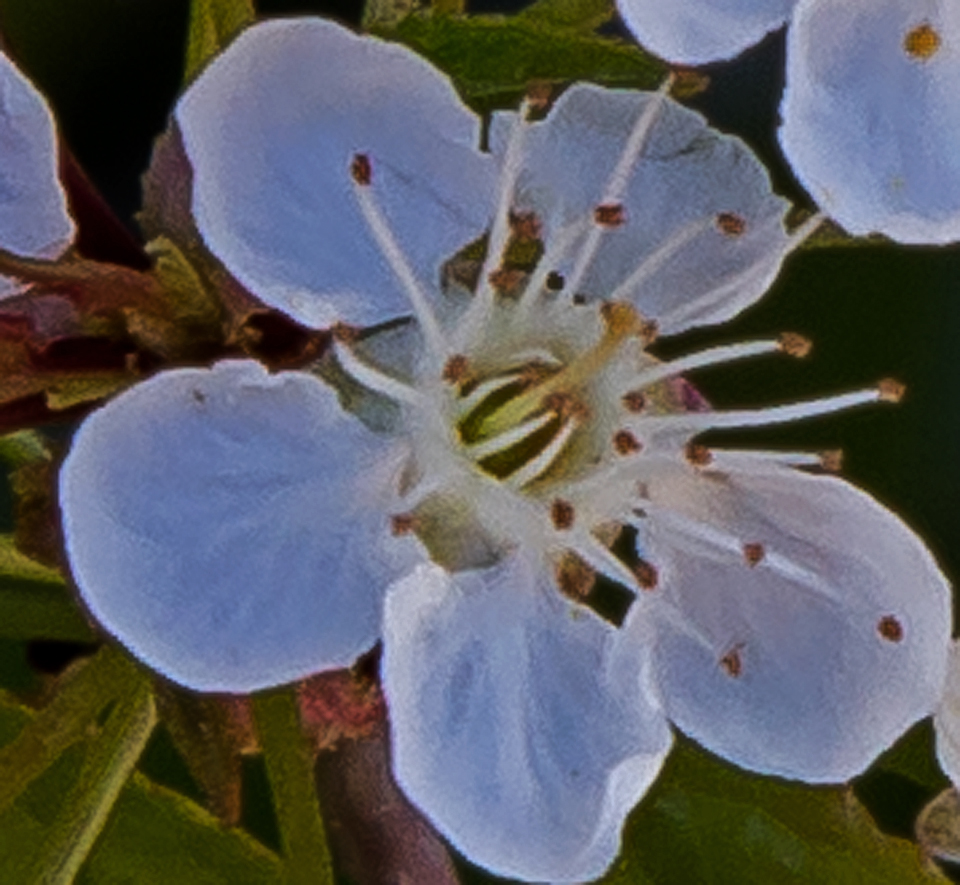
Pin cherry has a single style. Shown here in the middle of the cup.
CHOKECHERRY: PRUNUS VIRGINIANA
Over the couple of weeks that I have been writing this post, early spring has given way to late May and chokecherry has begun to flower along roadsides in Deering.
Chokecherry is a North American native and is spread throughout the USA and Canada. Chokecherry is easily distinguished from pincherry by the linear or columnar arrangement of its flowers.
The name ‘chokecherry’ comes from the astringent fruit. We mostly see small shrubs, but chokecherry can often reach 20 ft in height and have a rounded crown.
The whole plant, fruit and twigs, provide food for wide range of birds and animals. It ranks third in the number of lepidopterans that feed on its leaves. These include five species of butterflies such as tiger swallowtail and red-spotted purple, and 10 species of giant silk moths such as cecropia moth, Polyphemus moth, imperial moth and io moth. Thus this cherry is an important component of our natural landscape.
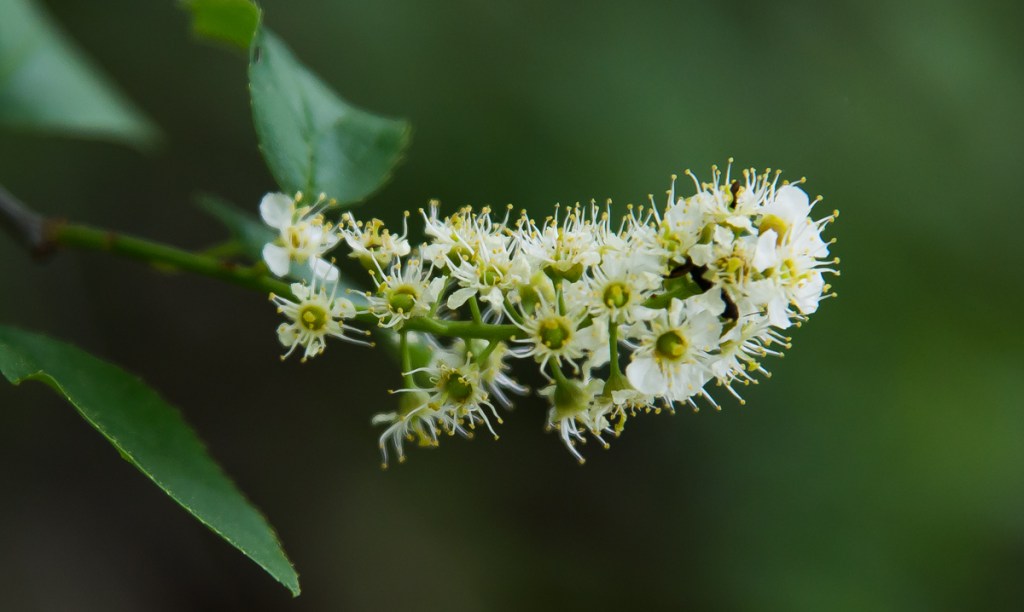
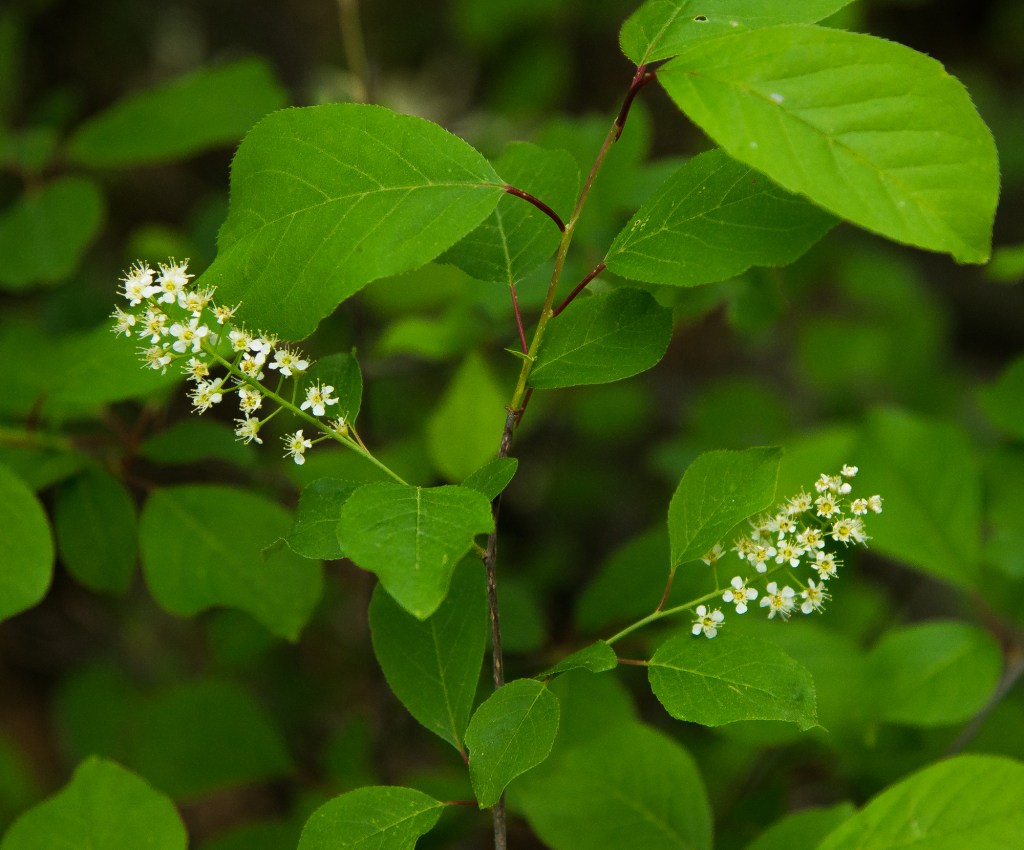
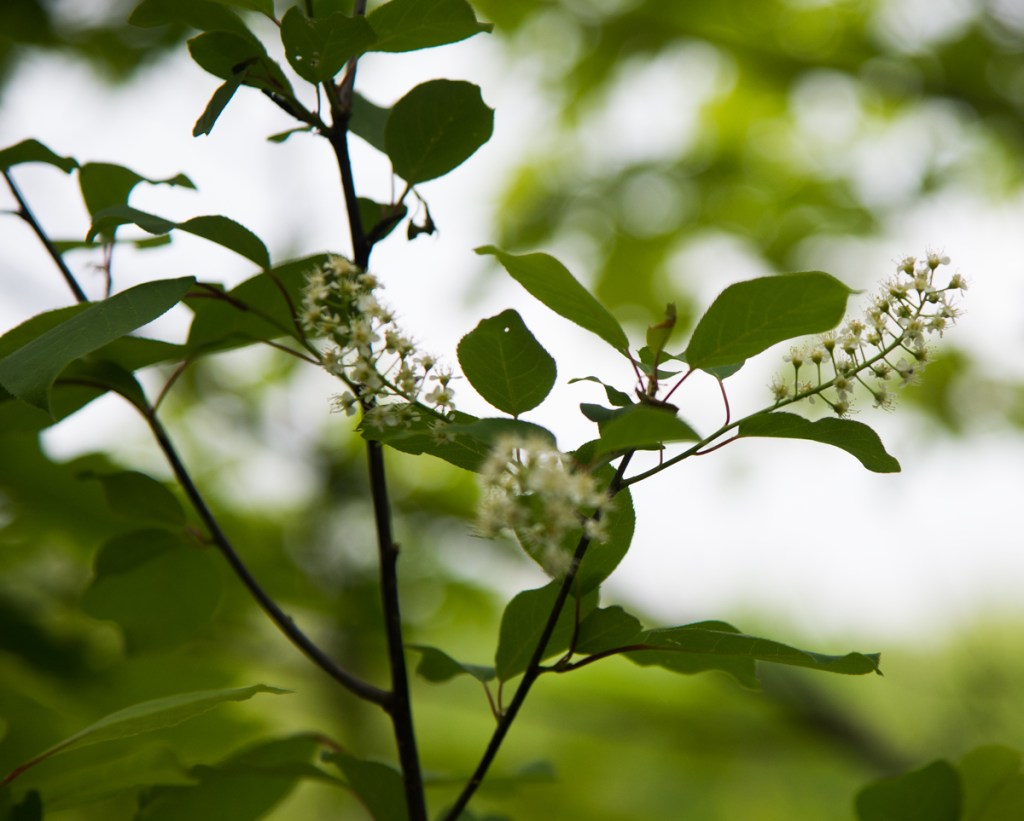
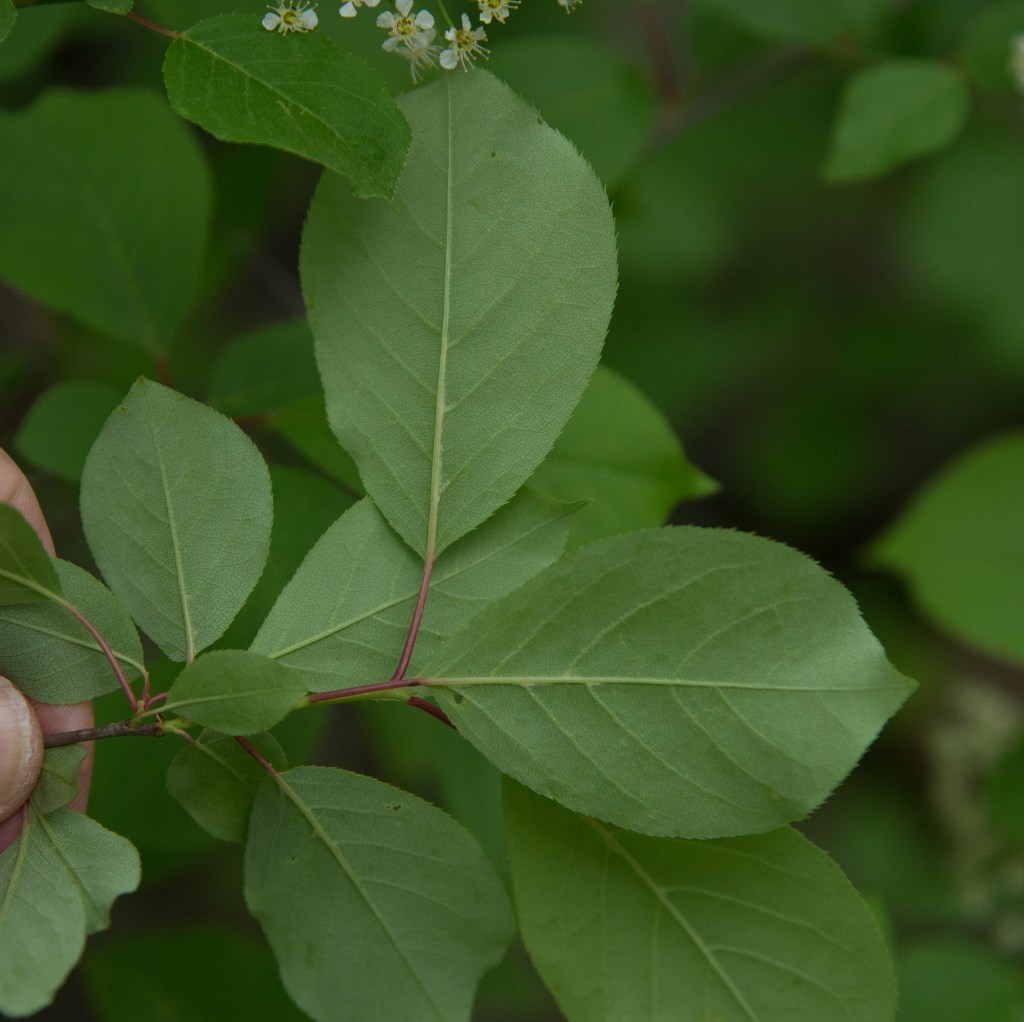
BLACK PLUM, CANADA PLUM: PRUNUS NIGRA
I have seen this plant only once in Deering. Several small trees are ranged along a rock wall to the right of the Carew House, in the heart of downtown Deering.
As near as I can tell, this is Canada Plum, the name that popped up on iNaturalist: must be so!? I have not yet seen the fruit.
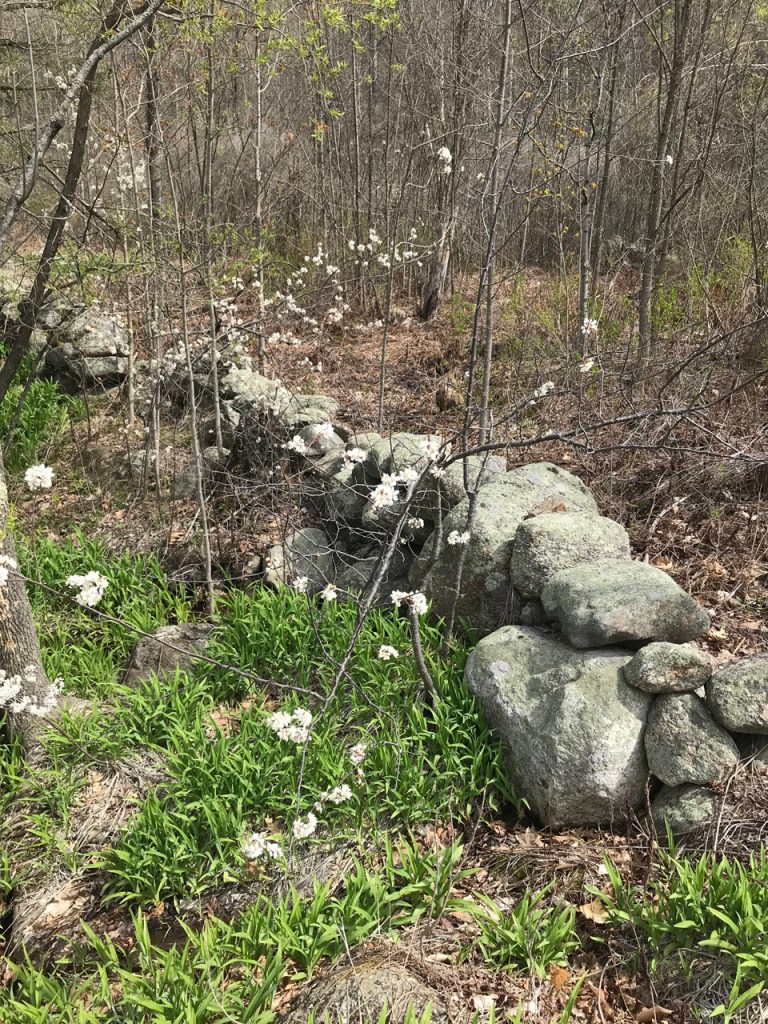
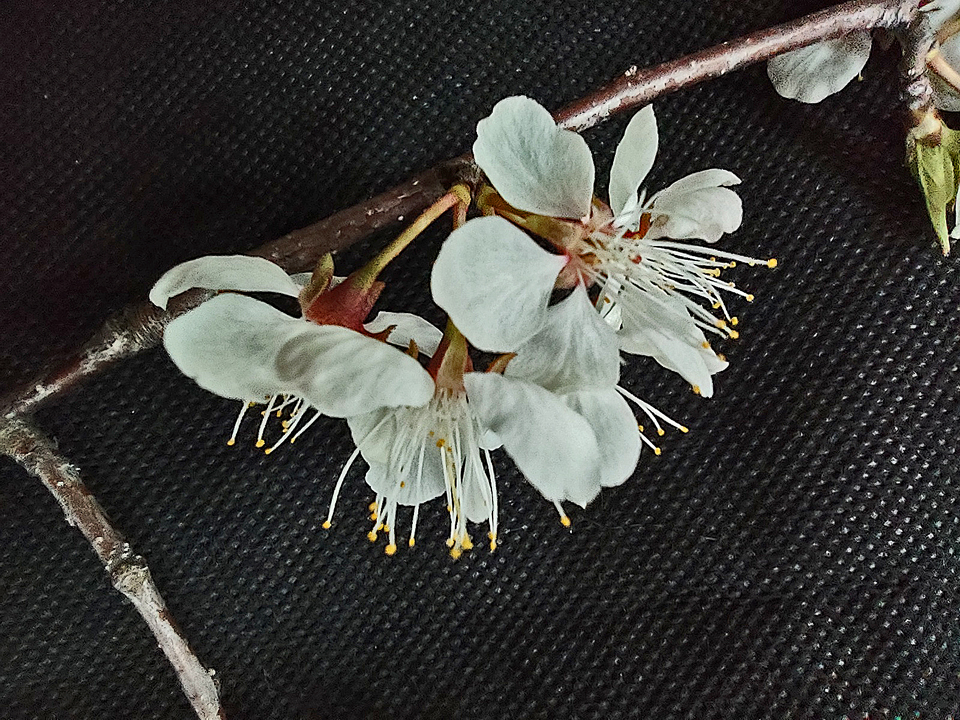
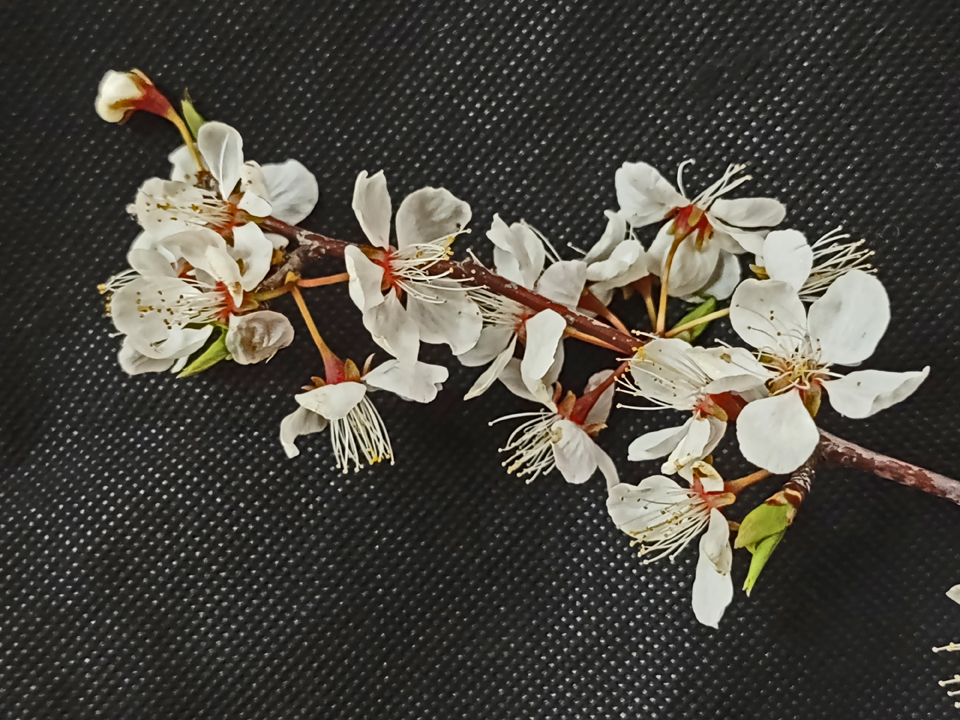
Canada plum is another North American native. It is the northern most plum species. Canada plum occurs throughout New England, but it has not been recorded for New Hampshire. The location of these plants adjacent to one of Deering’s older houses suggests the possibility that it was cultivated. It is supposed to be the best plum pollinator.
The fruit of Canada Plum is described as sour, but is renowned for its use in jams and jellies.
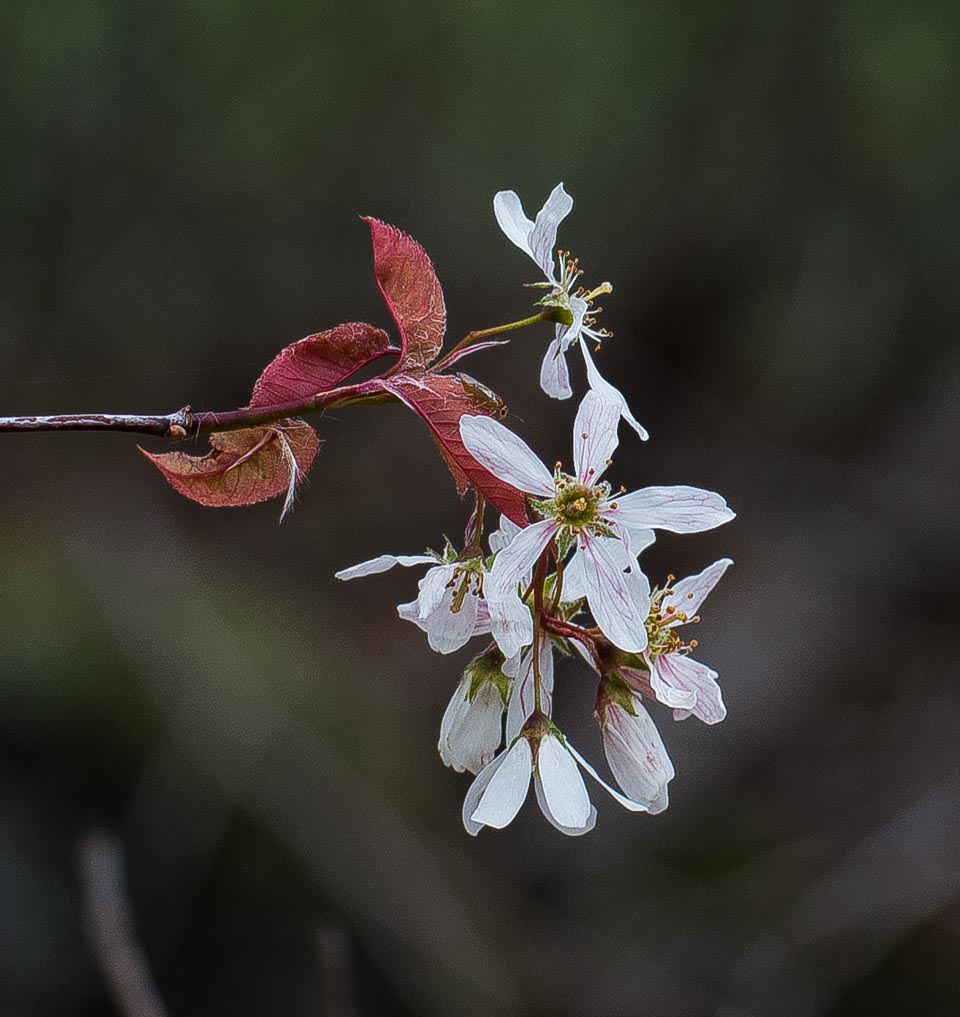
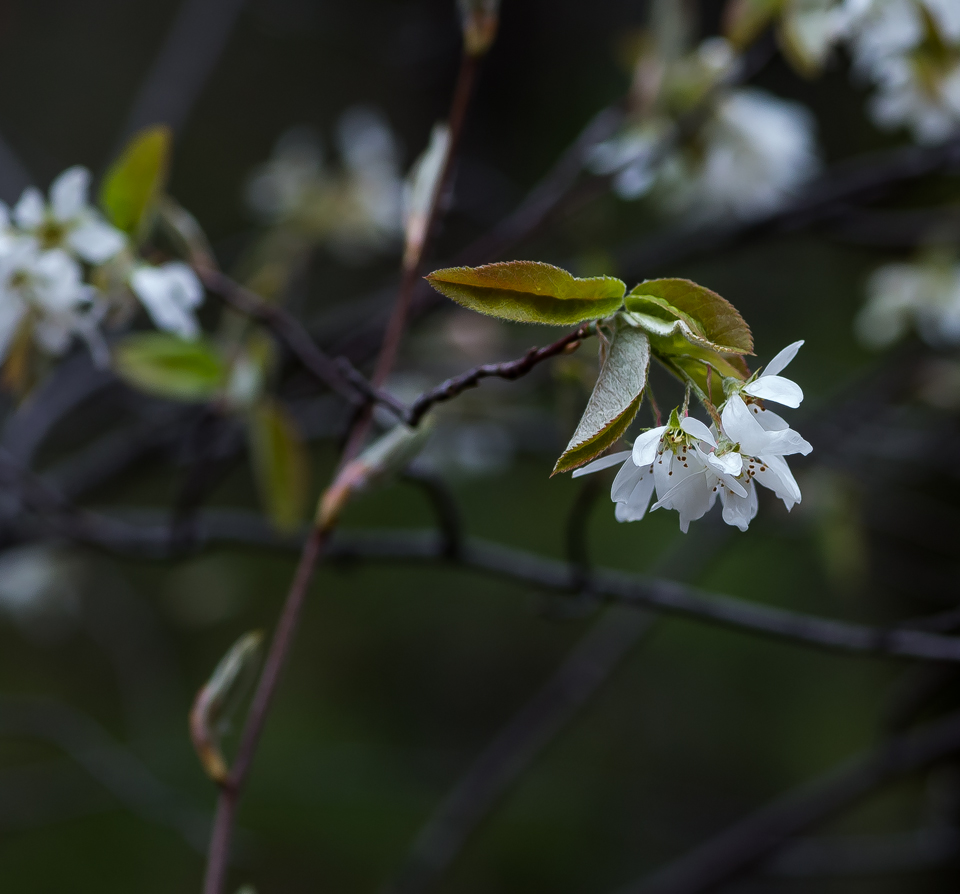
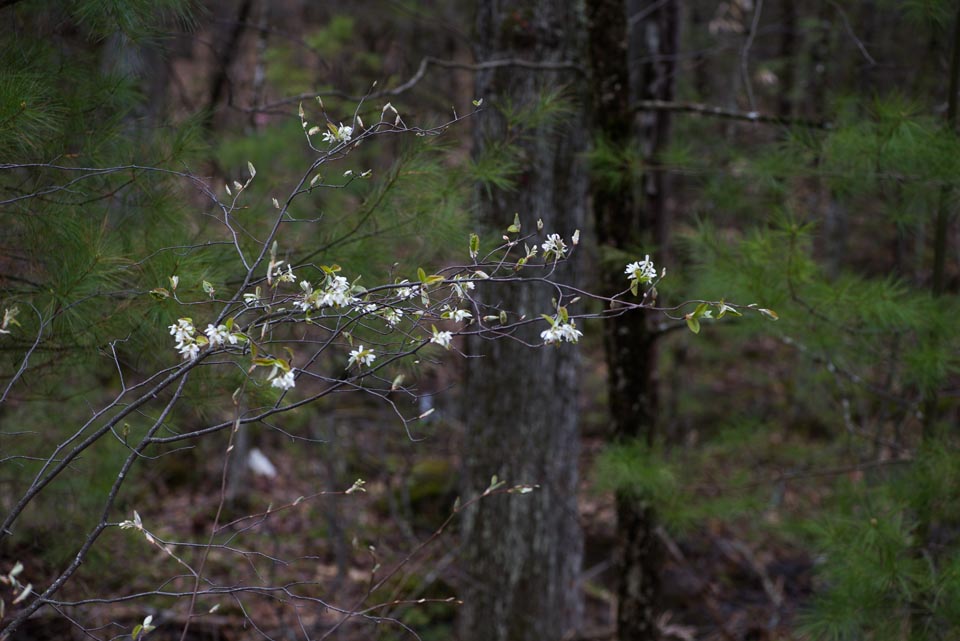
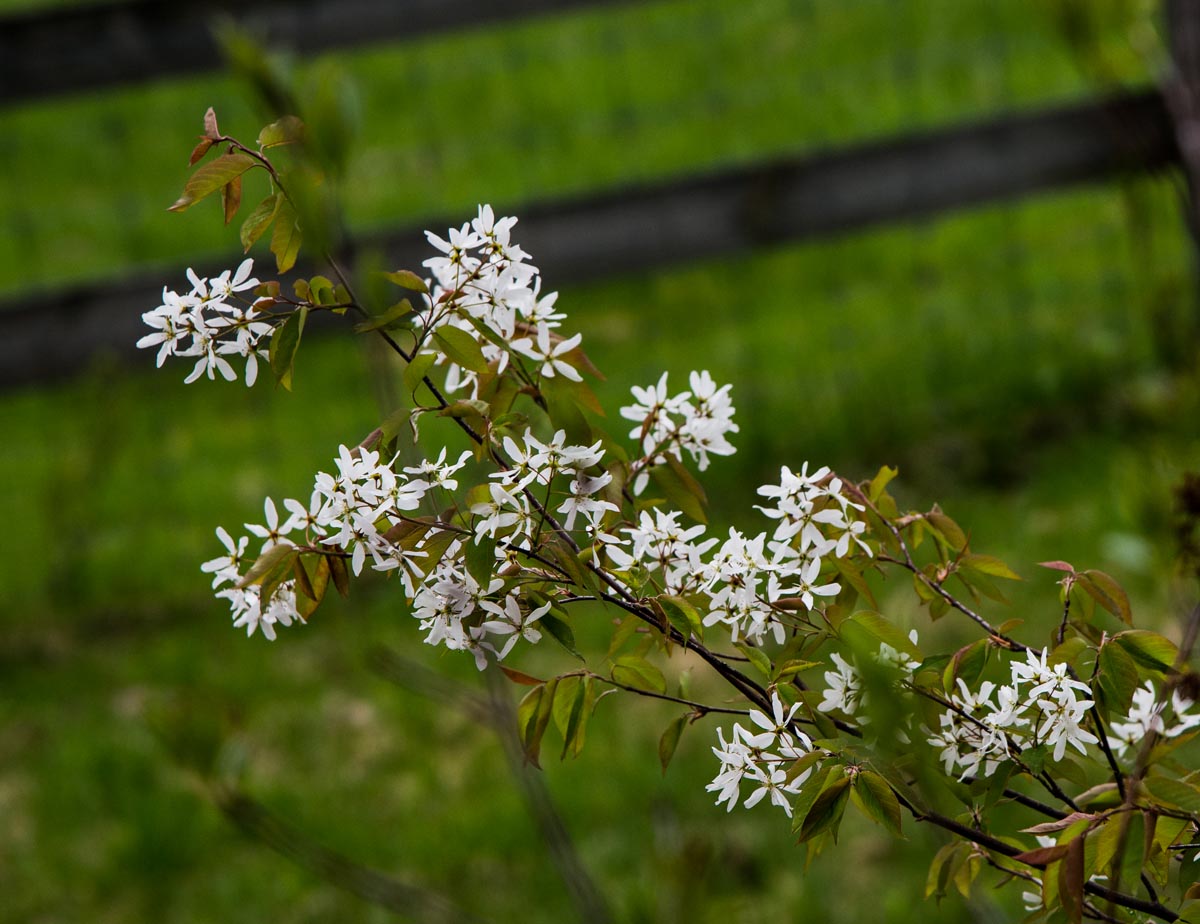
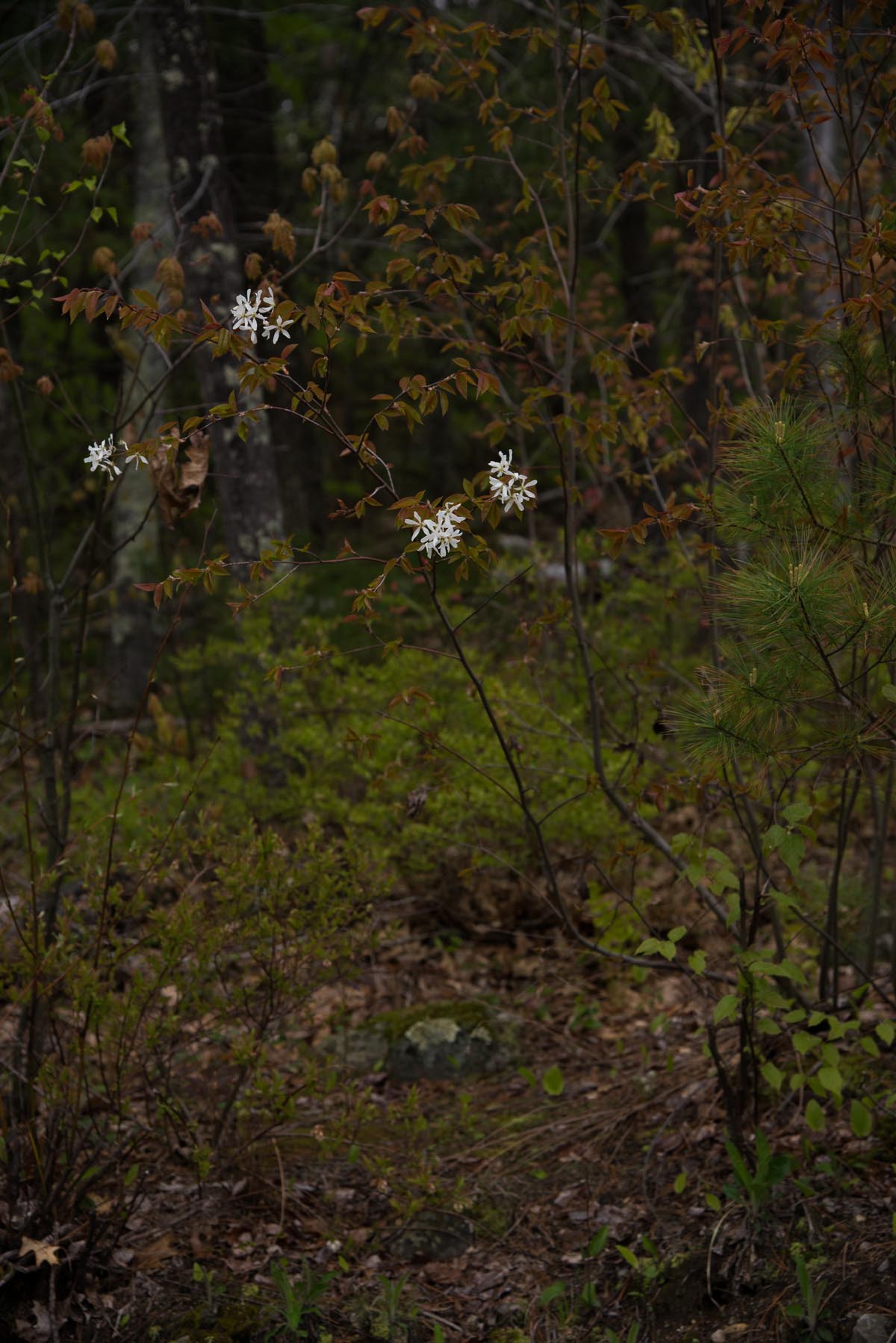
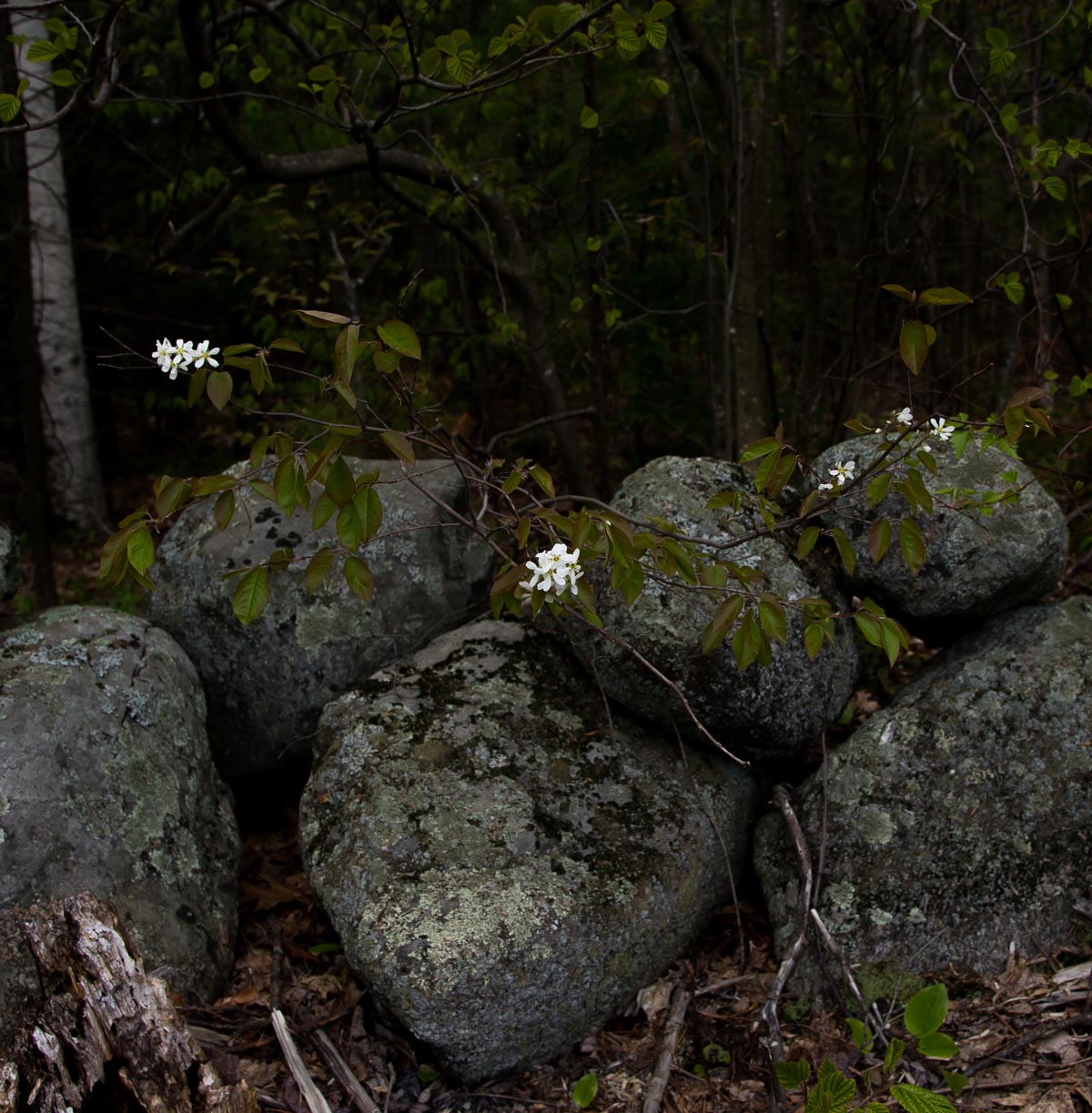
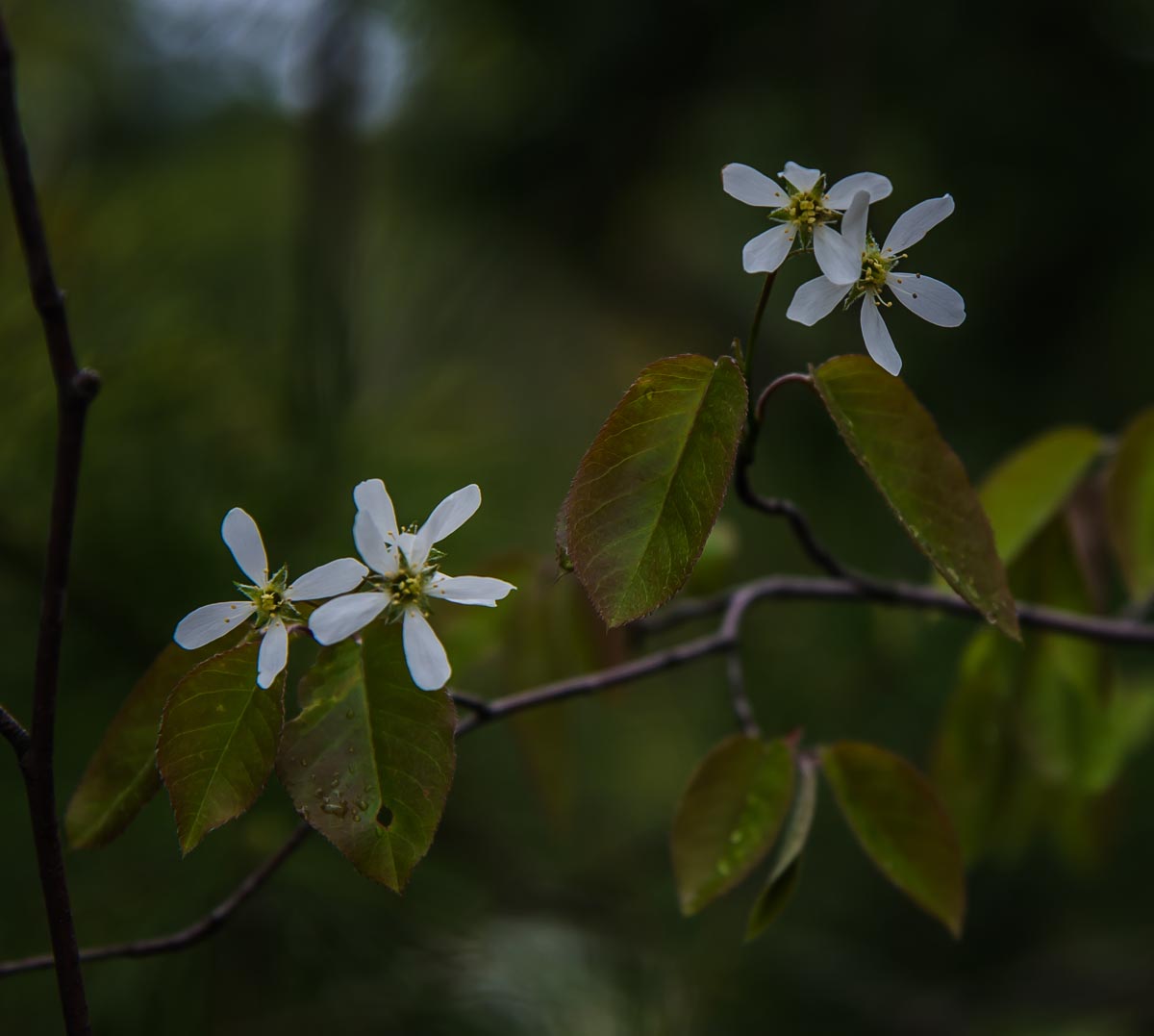
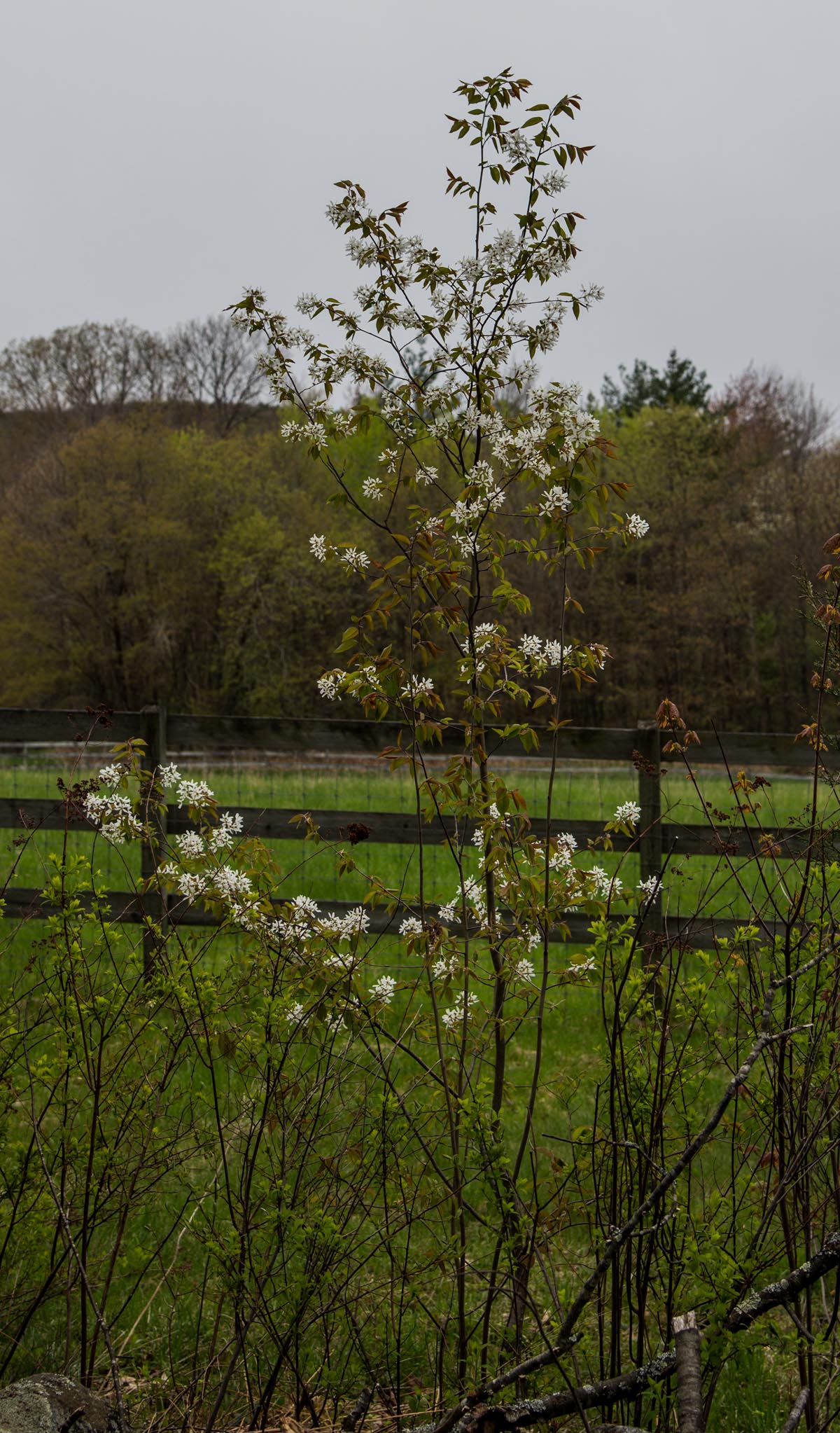
SMOOTH SHADBUSH, SMOOTH SERVICEBERRY, ALLEGHENY SERVICEBERRY: AMELANCHIER LAEVIS
Smooth Shadbush is native to Eastern North America. The genus Amelanchier sees its greatest diversity in North America and there is at least one native species in each of the states except Hawaii, and in every Canadian province. Six species of Amelanchier occur in New England.
The common names ‘shadbush’ and ‘serviceberry’ have interesting if fanciful names. Flowering occurs when shad run in New England streams, and when the ground is thawed enough to hold burial services for those who died during the winter.
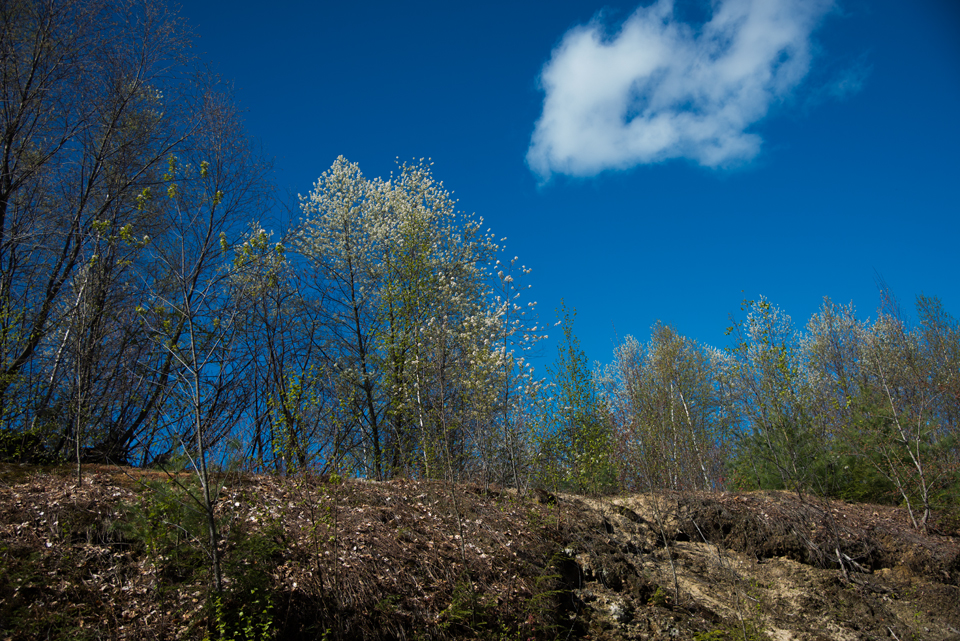
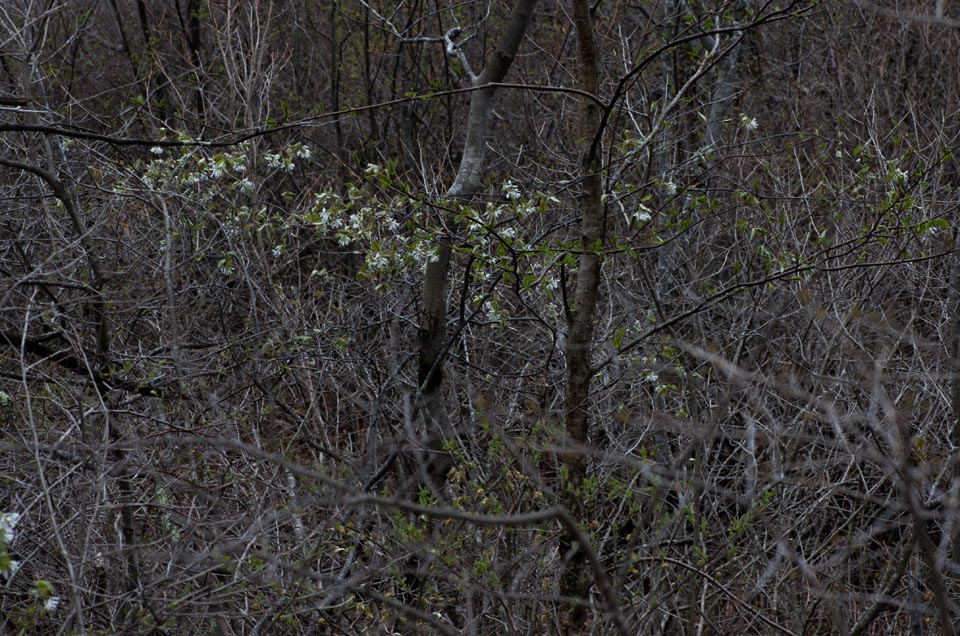
The plants are multi-trunked trees or shrubs and are common that are common along our roadsides. Plants can reach 25′ in height, and I have seen trees this tall at the Wilkins Cemetery. The white flowers of A. laevis are among the first flowers in spring. The newly opened leaves are red or purplish while flowers are still on the plant. The pollinators are bees. The fruit are small, round, edible berries that ripen to dark purplish-black in June (hence the sometimes common name of Juneberry) and resemble blueberries in size, color and taste. Berries are often used in jams, jellies and pies. But if you expect to sample them you must beat birds to them as the fruit are popular with many species of birds.
CHOKEBERRIES: ARONIA SPECIES
Aronia is a genus of multi-stemmed shrubs that tend to grow in wetlands. The genus is a member of the Rosaceae, related to pears and cherries. The three species found in New England are native here and of the three two, A. floribunda (purple chokeberry) and A. melanocarpa (black chokeberry) are known to occur in New Hampshire. Purple chokeberry is a hybrid between
Aronia is a genus of multi-stemmed shrubs that tend to grow in wetlands. The genus is a member of the Rosaceae, related to pears and cherries. The three species found in New England are native here and of the three two, A. arbutifolia (purple chokeberry) and A. melanocarpa (black chokeberry) are known to occur in New Hampshire. Purple chokeberry is a hybrid between A. arbutifolia (red chokeberry) and black chokeberry.
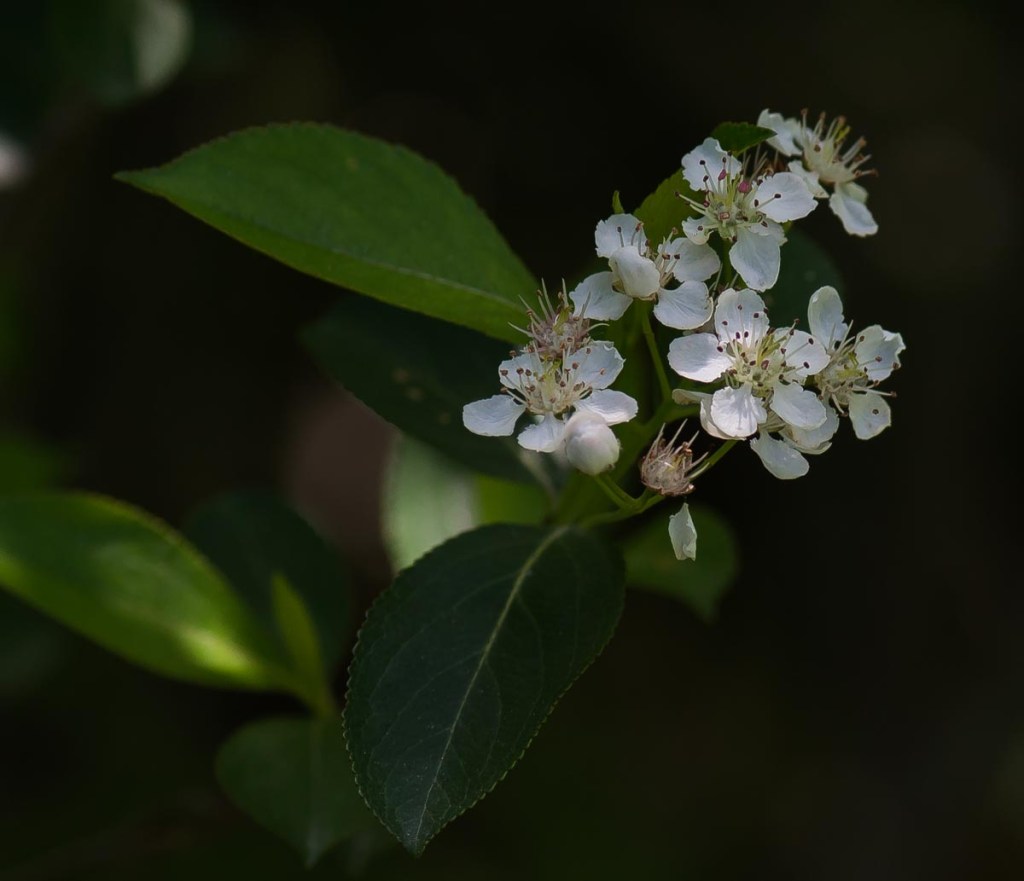
I have only seen chokeberry once in Deering, in the Ferris Tract wetland along Longwoods Road, and have not seen its fruit to know whether it is purple or black. Maybe I have misidentified it.
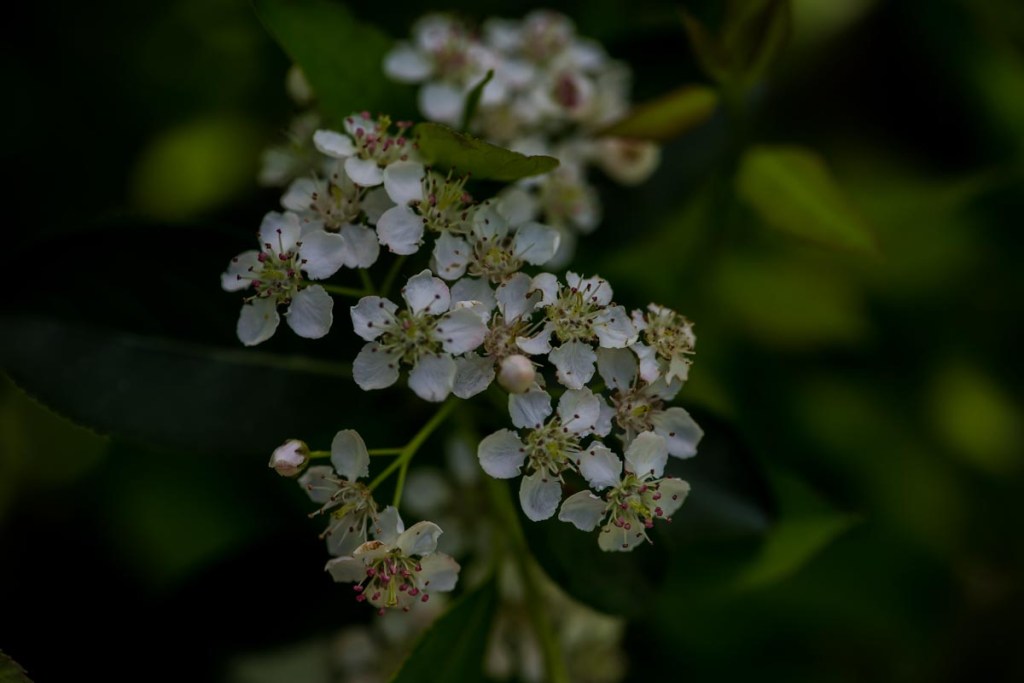
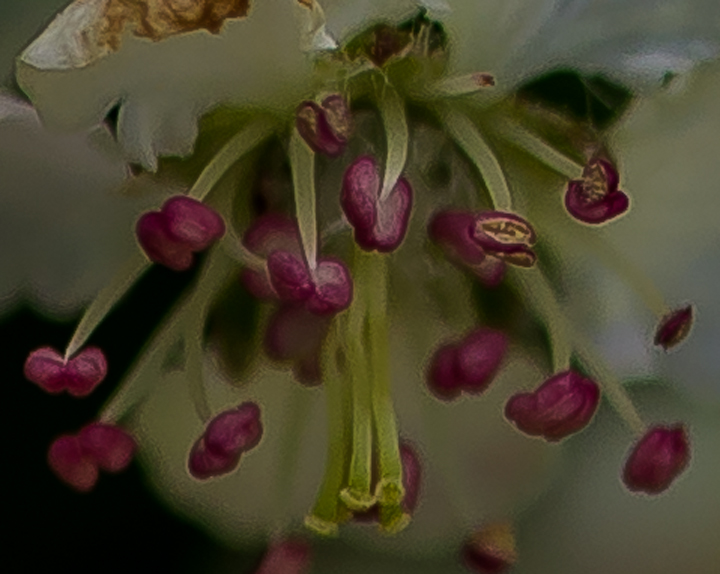
The tiny flowers do look like flowers of pin cherry but chokeberies have a multiple style and not the single style of cherries.
HOBBLEBUSH: VIBURNUM LANTANOIDES
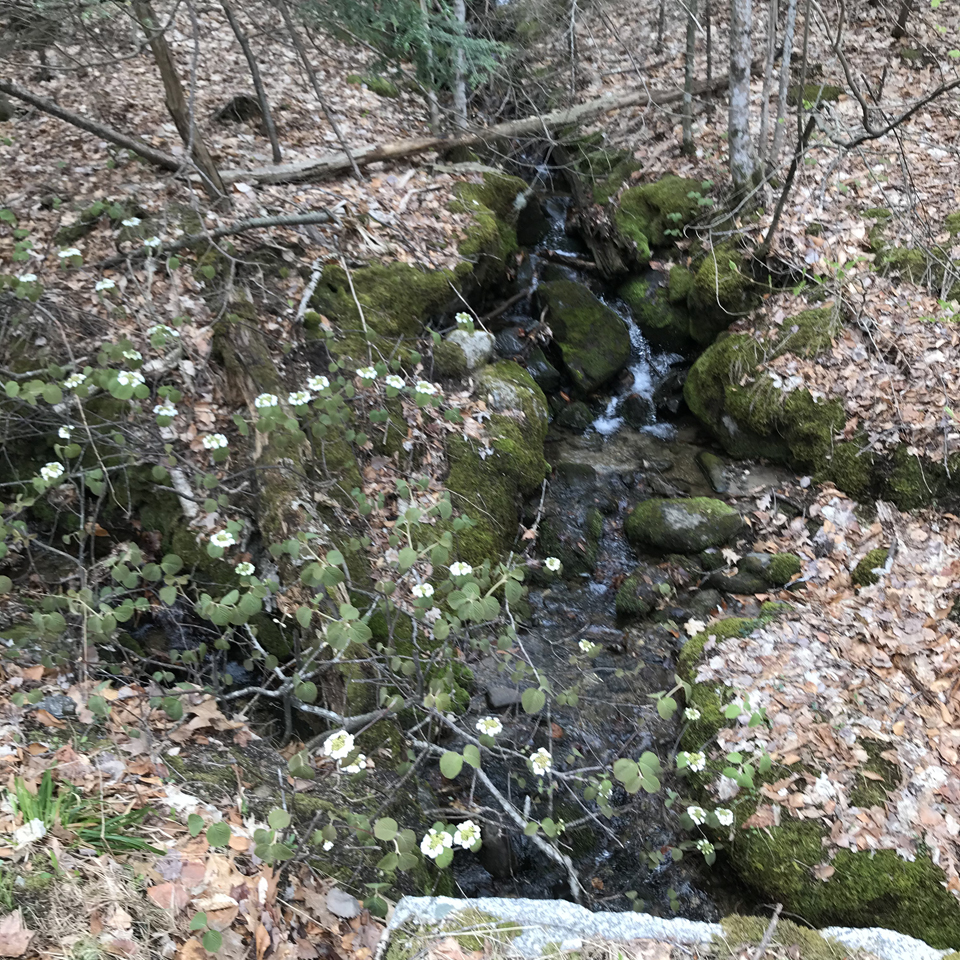
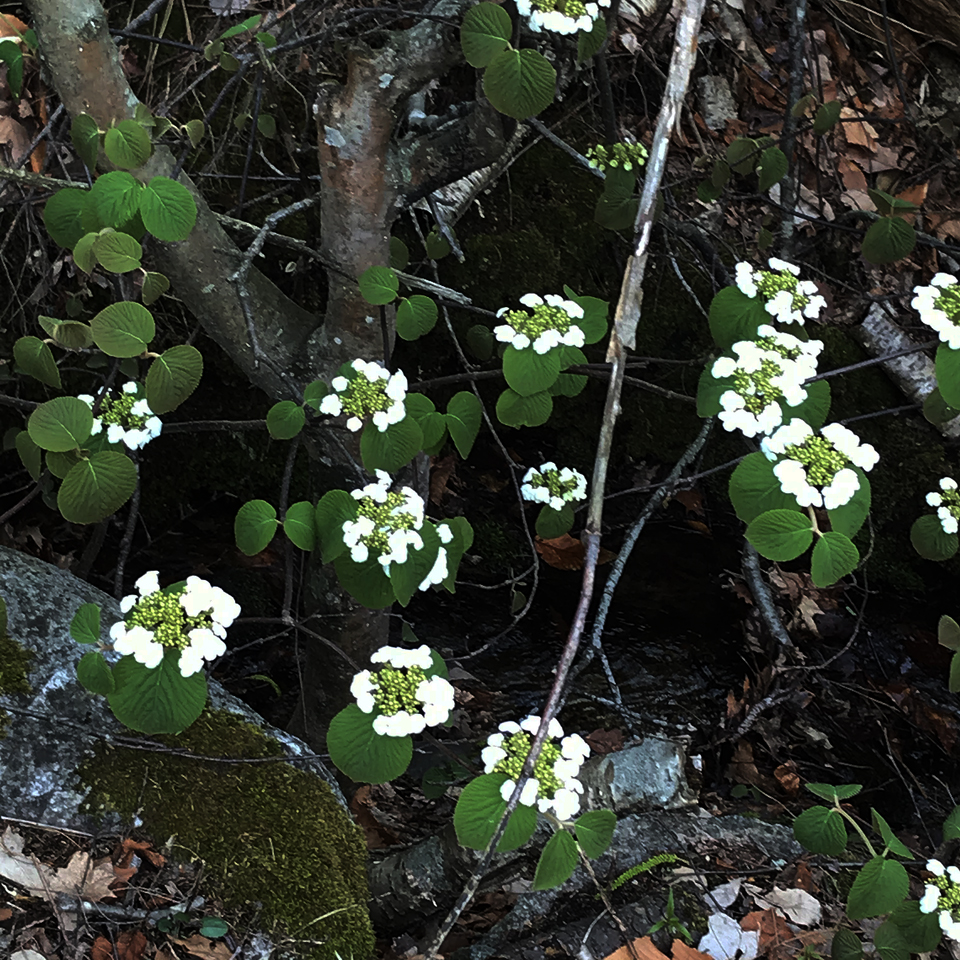
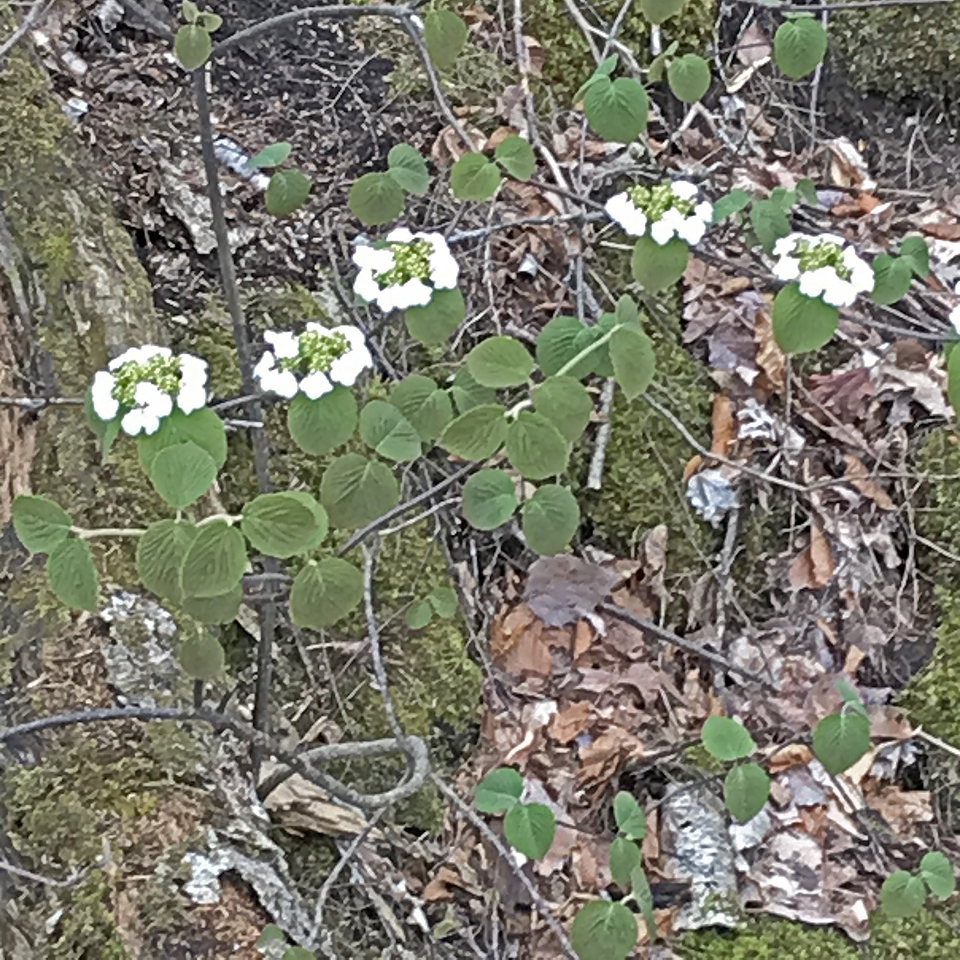
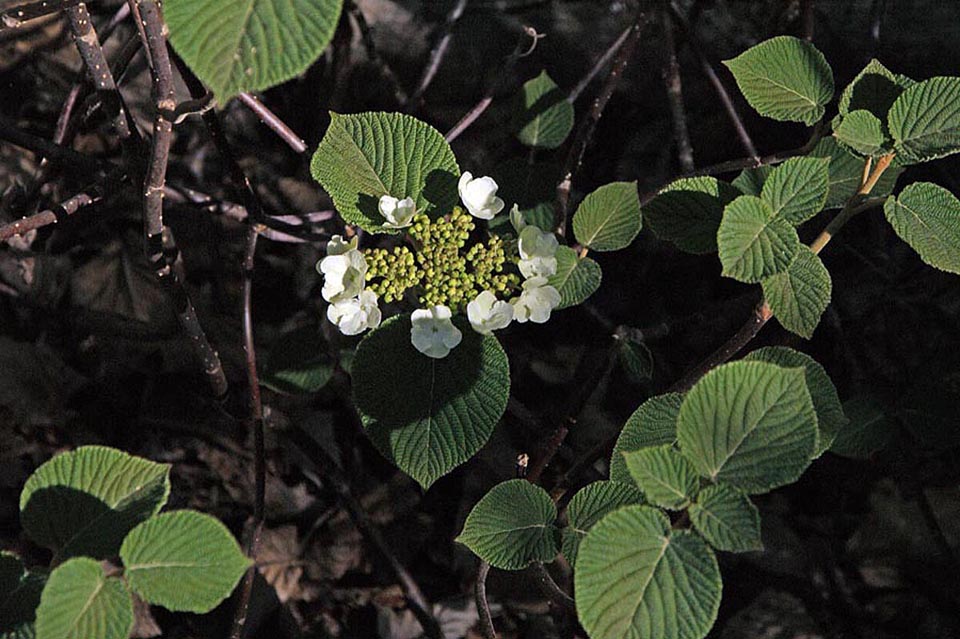
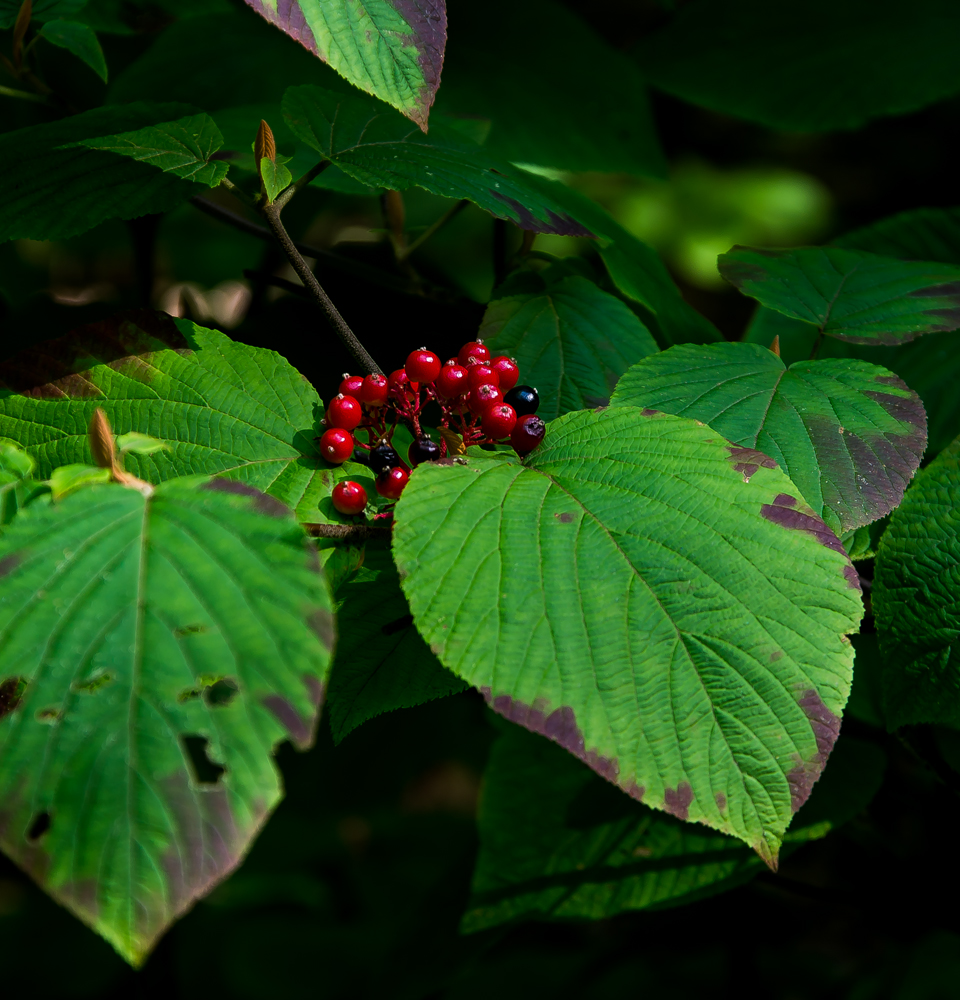
Hobblebush plants are common in the roadside understory, especially in wet places and along the banks of brooks. It is a scraggly spreading shrub that is common in our forests. The flat topped flowers have a lacy appearance, looking a bit like hydrangeas. There are two forms of flowers, an outer ring of large, sterile flowers, and the inner disk of fertile flowers. Both forms attract pollinators. Hobblebush is host plant for the spring azure butterfly. As the season progresses pretty red fruit form, just in time to add to the beauty of our autumns.
Hobblebush is a native of eastern North American and is very common in New Hampshire. Here in Deering we have at least three species of Viburnum, but hobblebush is the most conspicuous and common. This viburnum has a bunch of common names. Of course hobblebush refers to the pendulous branches that reach to the ground and when there is a dense growth of the shrubs, it is definitely a challenge to make your way through, even for a witch (‘witch hobble’ is another name).
Actually ‘witch hobble’ doesn’t come from spell-casting ladies who wear pointy caps. It’s a word descended from the Middle English word “withy,” which means a strong, flexible switch-like branch. It’s the same “witch” as in “witch hazel,” another withy or switch-like shrub.
Hobblebush, Viburnum lantanoides, is the odd plant out in this post. Aronia, cherries, shadbush: they are all fairly closely related members of the rose family, Rosaceae. Viburnum is quite distant from the Rosaceae, a member of the plant order Dipsacales, which includes such familiar names as honeysuckle and elderberry.
SONY DSC 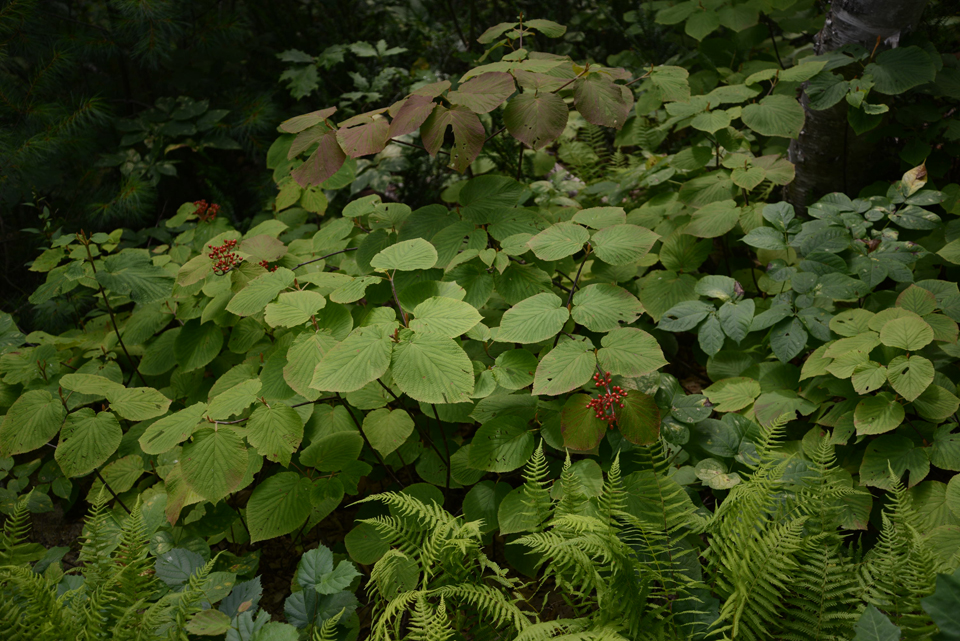



 DEERING'S NATURAL HISTORY