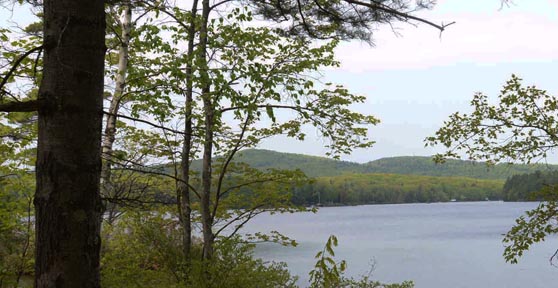
My daily (ok, frequent) walk leads along a diet road at the edge of forested land. Late last year I noticed large rosettes of deeply lobbed leaves. The leaves looked like dandelion, the tips of the lobes being acute — pointed, but these were much larger than dandelion leaves, more than a foot long and correspondingly broader. I did not know what they were. Winter ended and I began to see tall-stalked plants with the same oddly shaped leaves. As the season progressed, the stalks, elongated, ultimately reaching one or two meters in height. Flowers formed from elongated, openly branched clusters at the tip of the stalk and from the axils (where the leave departs from the stem) of the upper leaves. I realized that there were two, different but closely similar species of plants. When the species flowered, the first early in July and the much more common second a month later, I could confirm the two tall plants to be species of wild lettuce.
These were not cute or pretty wildflowers – – one might call them ‘weeds!’
L:actuca canadensis
Canada lettuce is a native of North America, widespread in Eastern N. America – Nova Scotia to British Columbia, south to Georgia and Colorado. It grows in part to full shade, usually in disturbed sites in thickets, woodland borders and clearings, and moist open places in a wade range of soils.
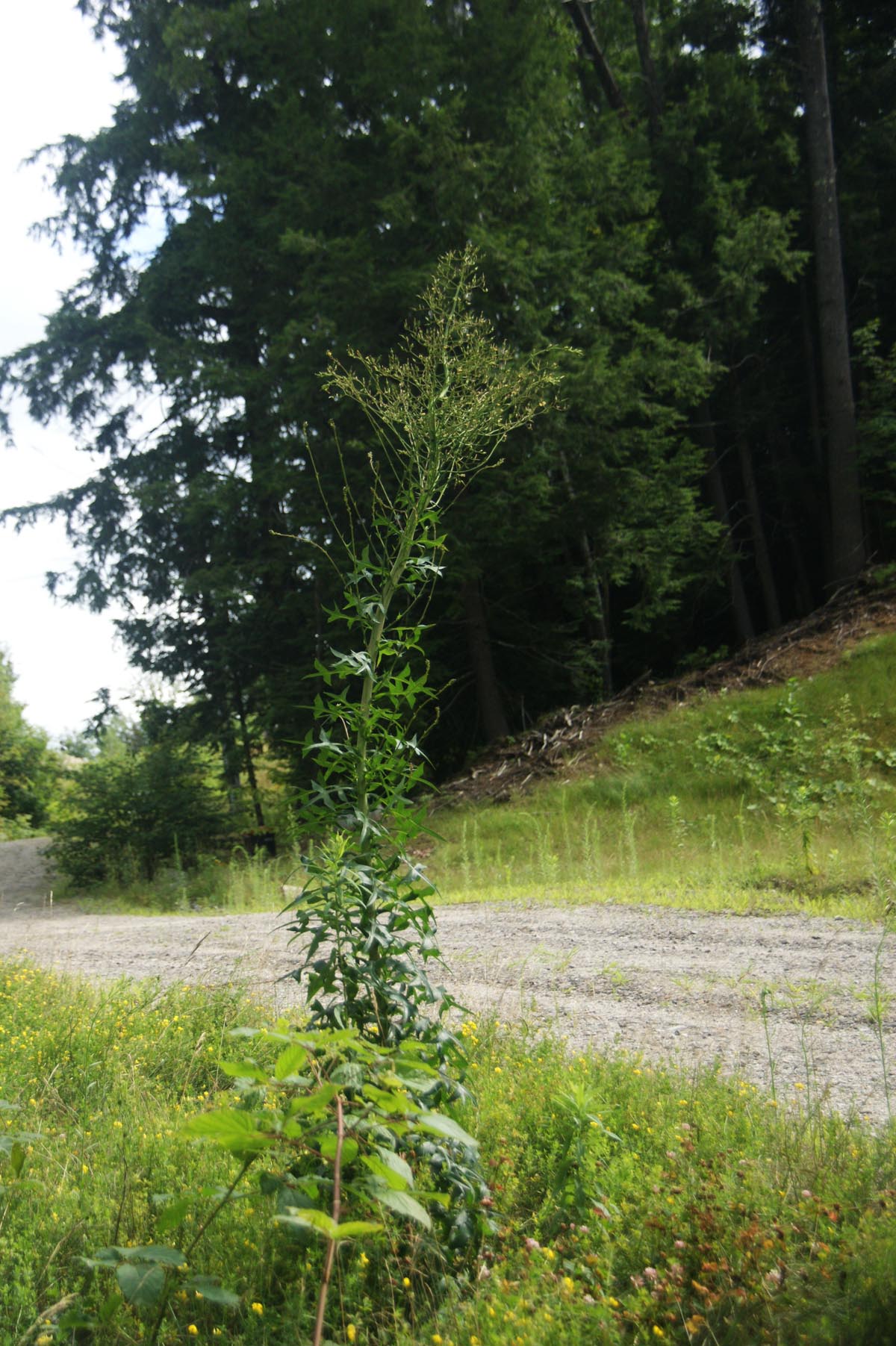


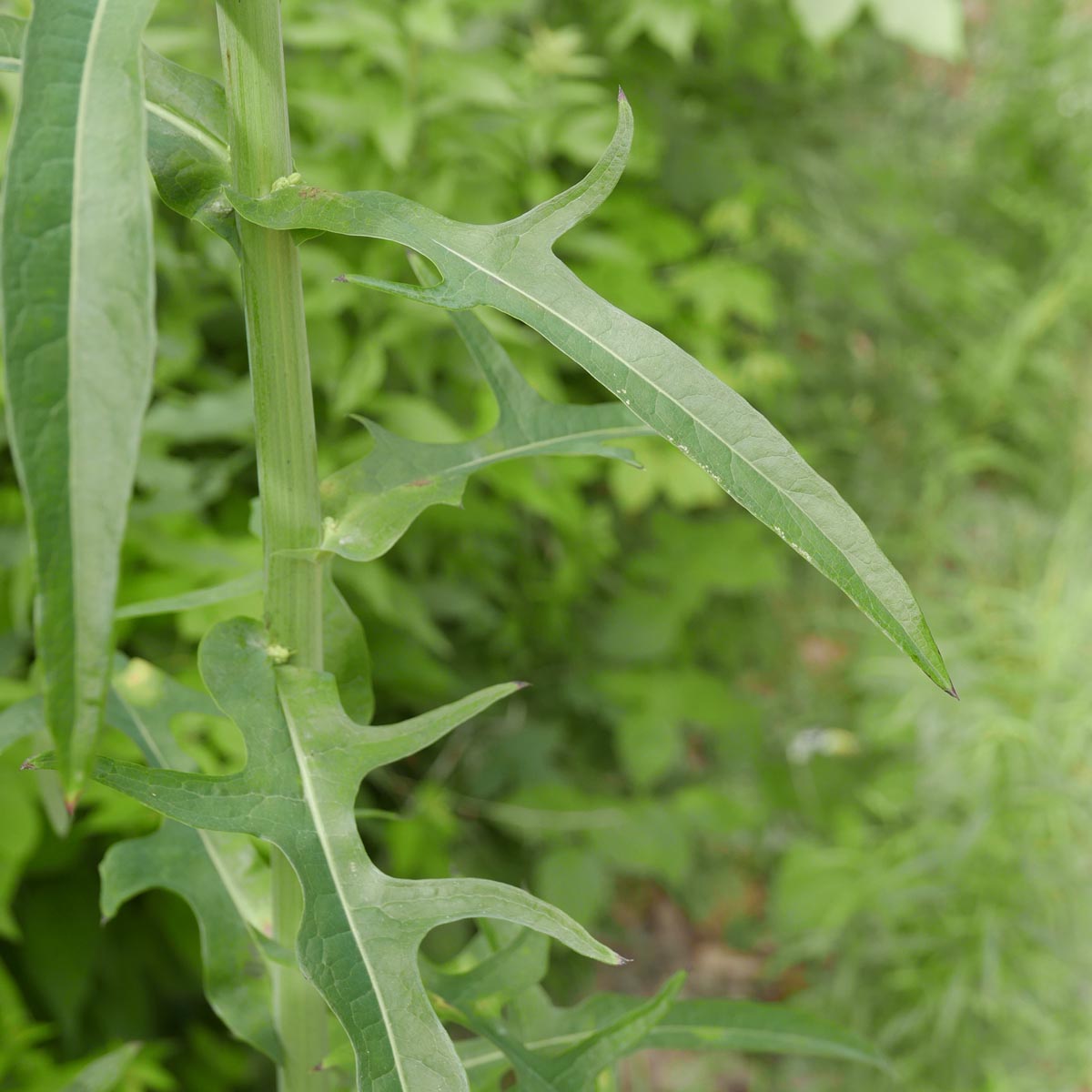



Lactuca canadensis is biennial, which means that each plant lives for two years. Seeds germinate in late summer to fall, producing a rosette of leaves and i the second year long stalks arise from the leaves. Flowers and, ultimately the seeds form at the tip. That plant then dies. The genus name Lactuca implies a milky exudate that flows from the stem when the plant is wounded. In Canada lettuce the latex is light brown or white. The sticky sap can cause a skin rash in some people. The sap contains ‘lactucarium’, which is used in medicine for its anodyne, antispasmodic, digestive, diuretic, hypnotic, narcotic and sedative properties. The sap s sometimes collected commercially.
The plant should be used with caution, and never without the supervision of a skilled practitioner.
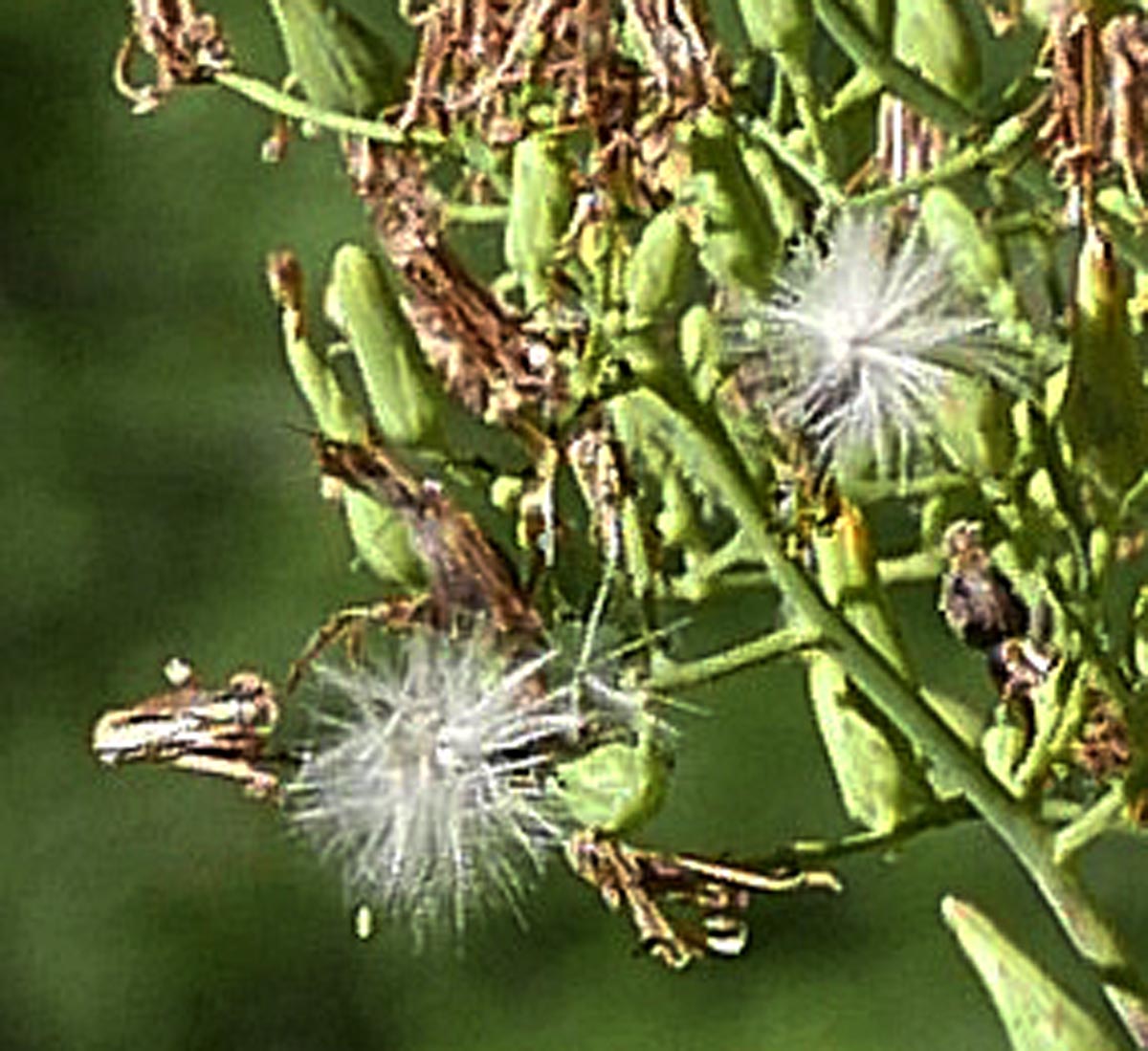
Small dandelion-like yellow flowers, each about 1/4 inch in diameter, occur in a narrow panicle up to 2″ long at the apex of the plant. The flowers are replaced by dark brown seeds – – achenes – – with tufts of white hair, which are attached together by thread-like beaks. Various bees pollinate Canada lettuce.
Lactuca biennis
2022 was the first year that I have seen this wild lettuce on my road — and it is difficult to overlook a seven-foot tall flower stalk! But this year several plants of this species are spread for a distance of about 50 meters along the shaded road.
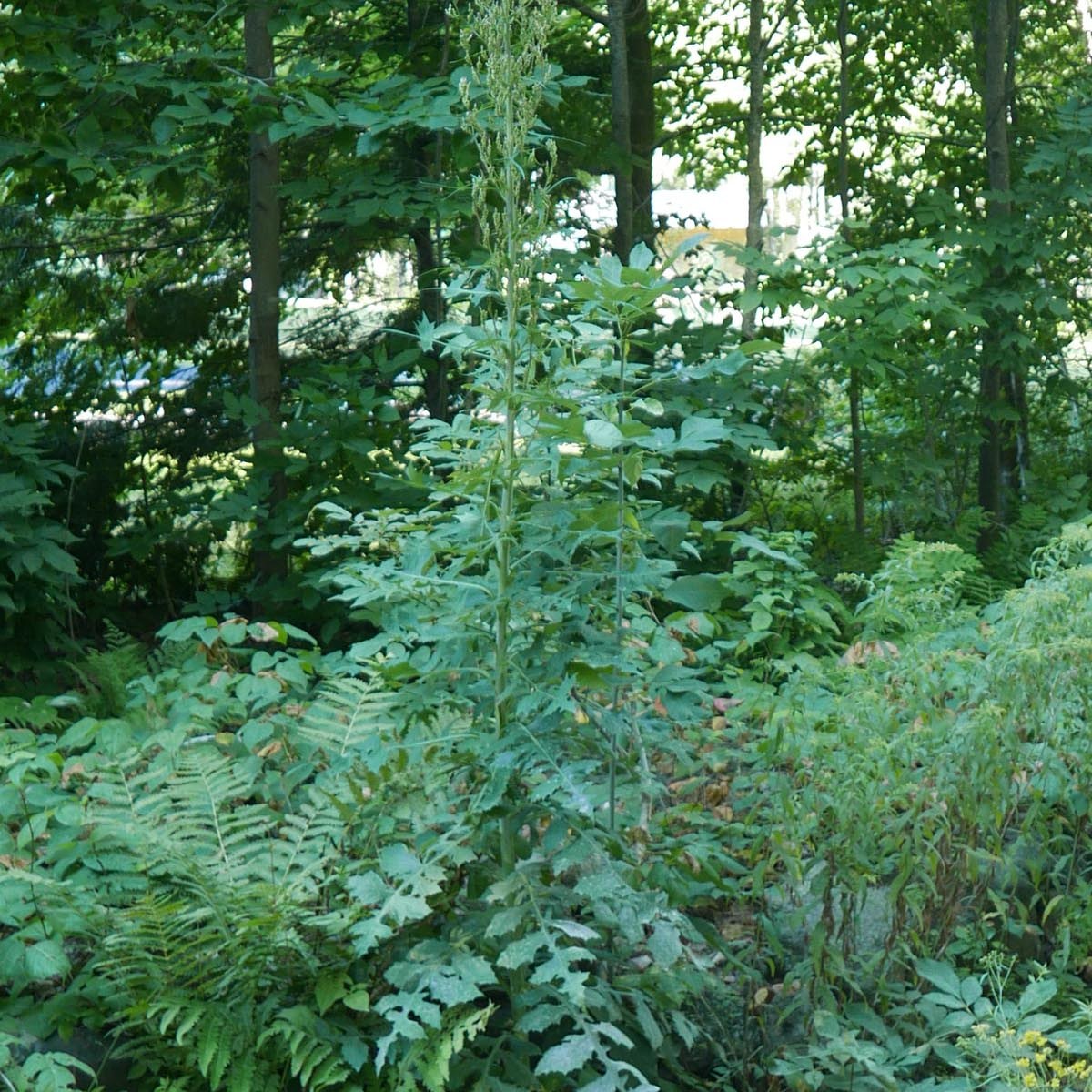

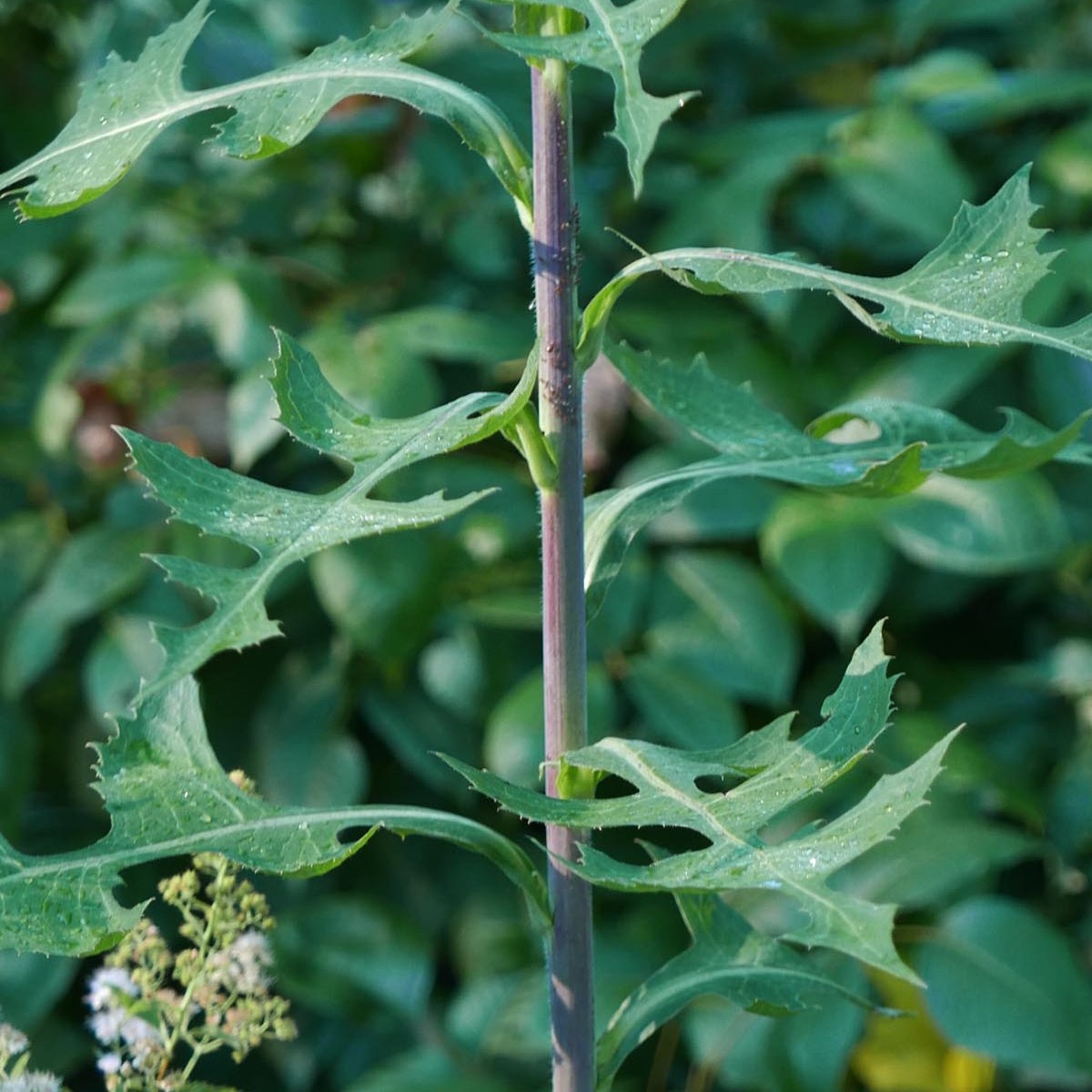


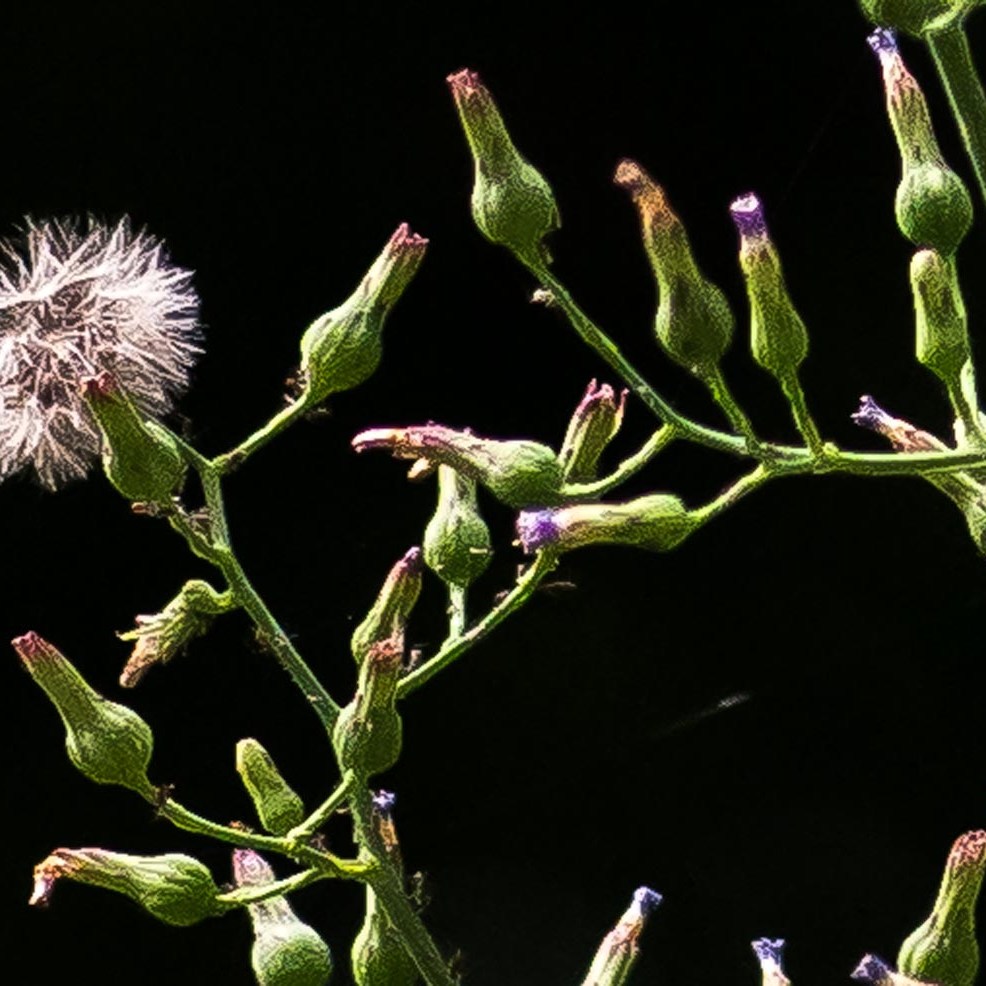


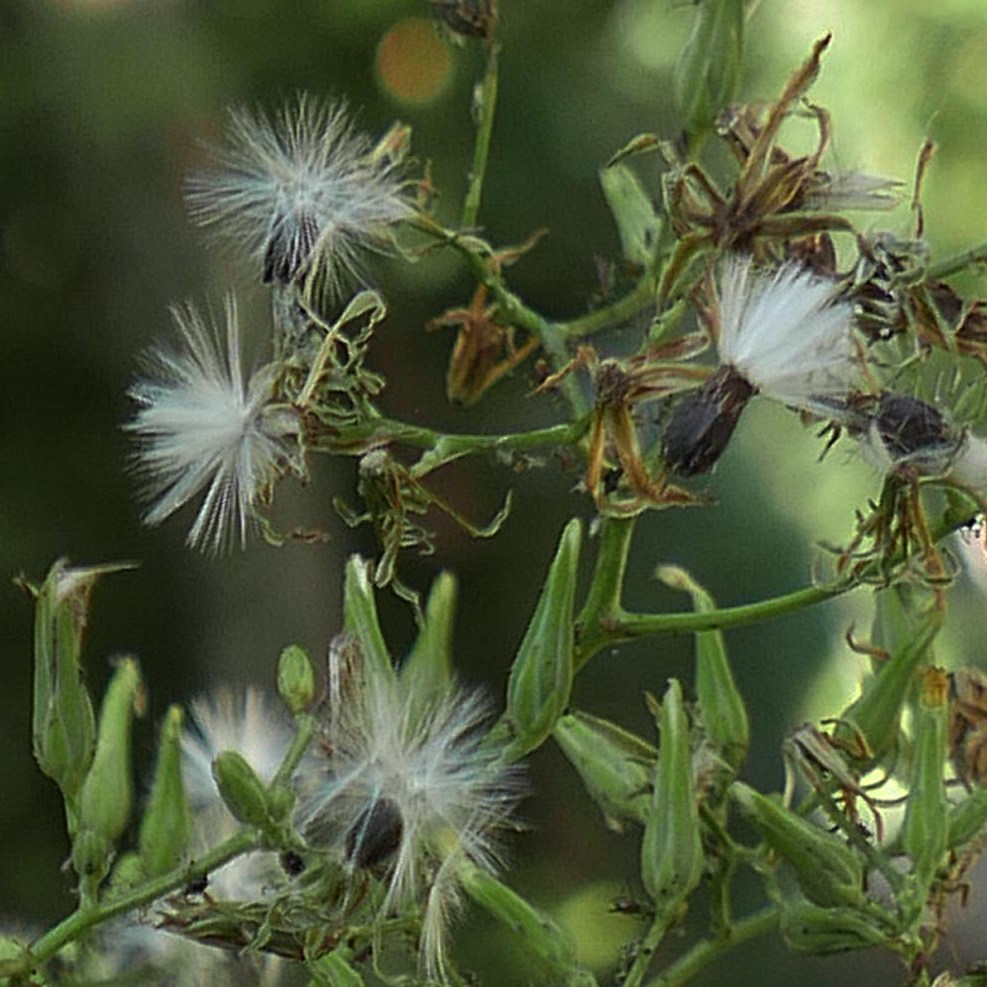
Lactuca biennis, tall blue lettuce or wood lettuce, is native to North America. It is widespread across much of the United States and Canada, ranging from Alaska and Yukon south as far as California, New Mexico, and Georgia. The biennial plant is very similar to that of L. canadensis, and the two can be found growing together in disturbed sites, forest edges, meadows and fields. However, leaves of L. biennis are longer and broader and it’s little daisy-like flowers are blue. The plants can reach two meters in height. Various species of bumble bee have been recorded as pollinators of tall blue lettuce.
Like dandelion, leaves of L. biennis can be eaten in salads when young, but become bitter with age. Various medicinal uses have been attributed to tall blue lettuce including treatment of pain, vomiting, diarrhea, and heart trouble.


 DEERING'S NATURAL HISTORY