Jack 0’Lanterns, Dead Man’s Fingers, Destroying Angels and Ghost Plants: It’s Halloween in Deering!

Fungi have long been associated with ghoulish and otherwise creepy activities. Zombie ants? Well, not in Deering, but in tropical America a fungus takes over the ant, commanding the creature to climb up into a tree so as to enhance the ability of the fungus to disperse its spores — to other ants. St Vitus Dance, induced by consuming ergot baked in rye bread, the ergot a reproductive unit of a fungus that invades and takes over the seed of rye and is gathered with the grain and baked into poor people’s bread. This is what lead Massachusetts colonists to hang some poor girls, ascribing their witchy behaviour to work of the devil.

Here is my Halloween offering : a selection of spookily named fungi — and one plant — that I have found in Deering.

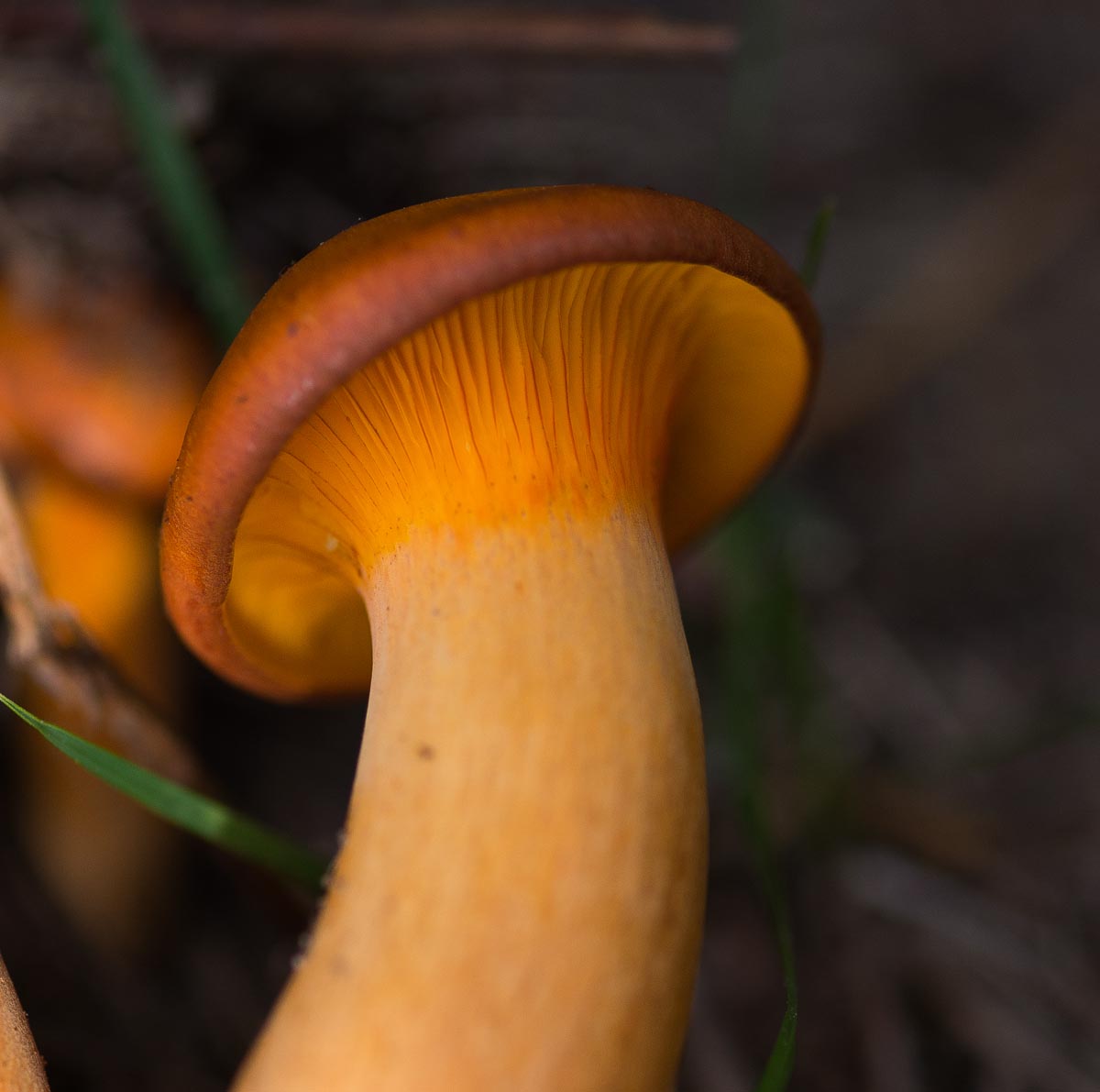
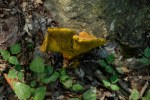
Omphalotus illudens: Jack O’Lantern Mushroom
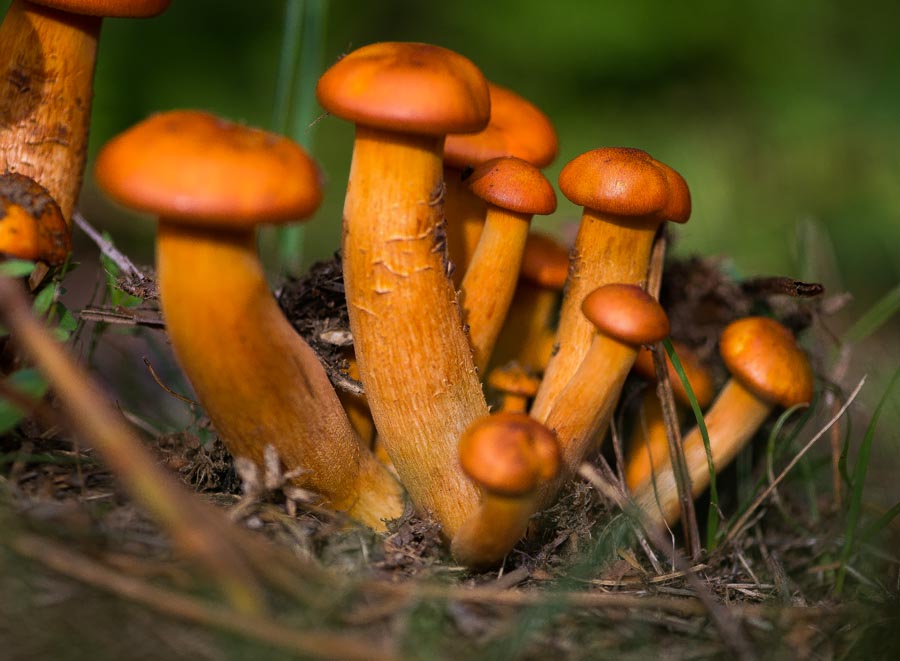
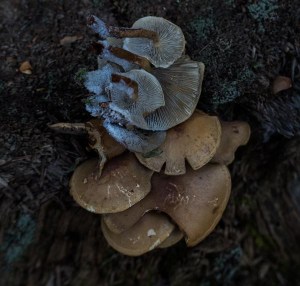
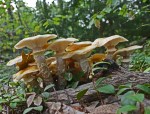
Apart from the pumpkinny color that suggests the season, the Jack O’Lantern mushroom glows in the dark. Spooky, right? Wrap it in aluminum foil and put it in a dark place, such as a dresser drawer, and when you awaken during the night you might se it glowing. This is where the species name ‘illudens‘ comes from. The gills, where the spores are formed, tend to run down the stalk, as can be seen in the right hand picture. This, and the color, suggest the golden chanterelle. But don’t be tempted to eat this one because if you do, you are likely to end up with an unhappy stomach. Omphalotus illudens is a fairly wide spread and common fungus, growing on stumps and buried wood, typically oak.

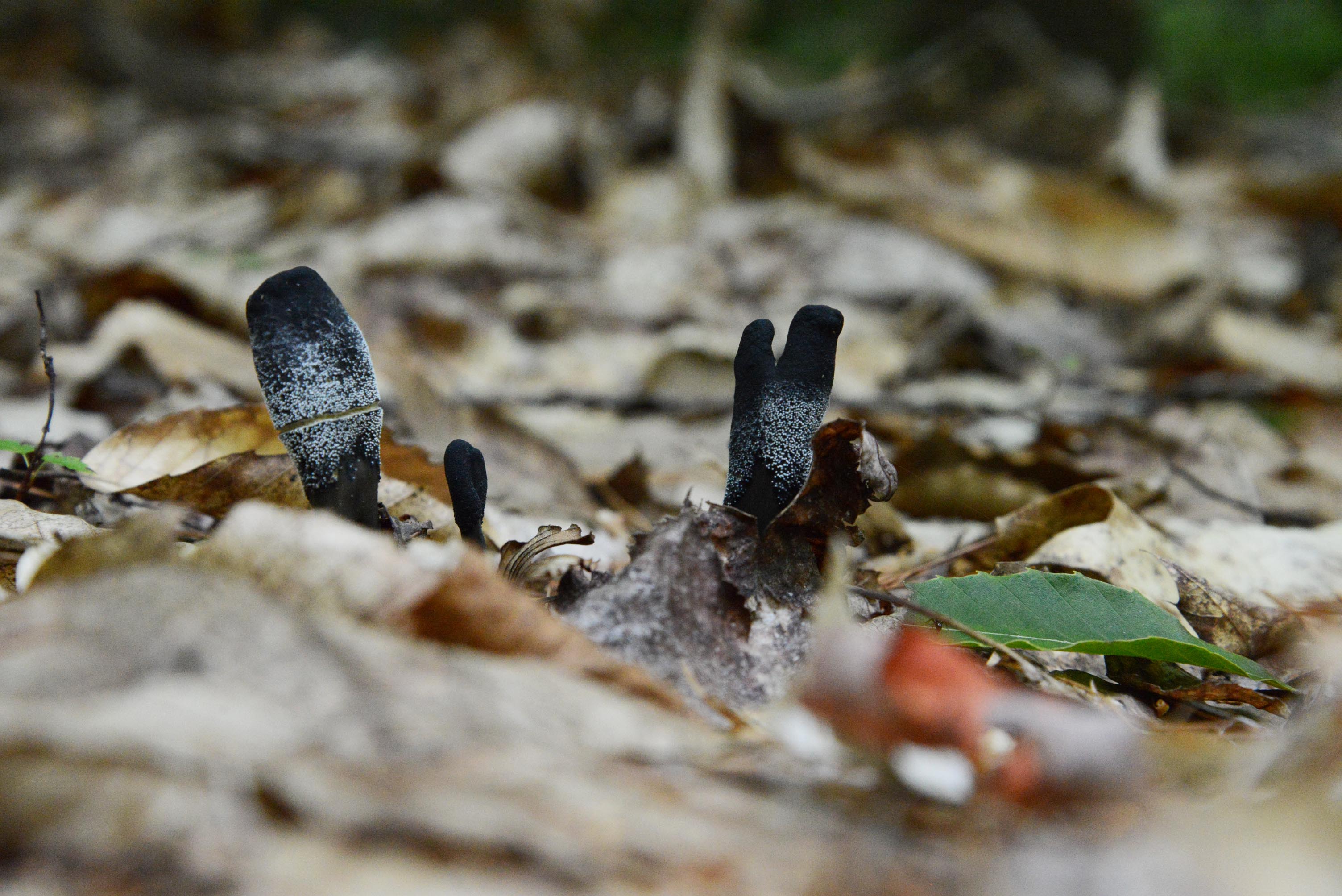
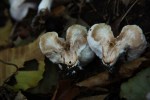
Dead Man’s Fingers: Xylaria species
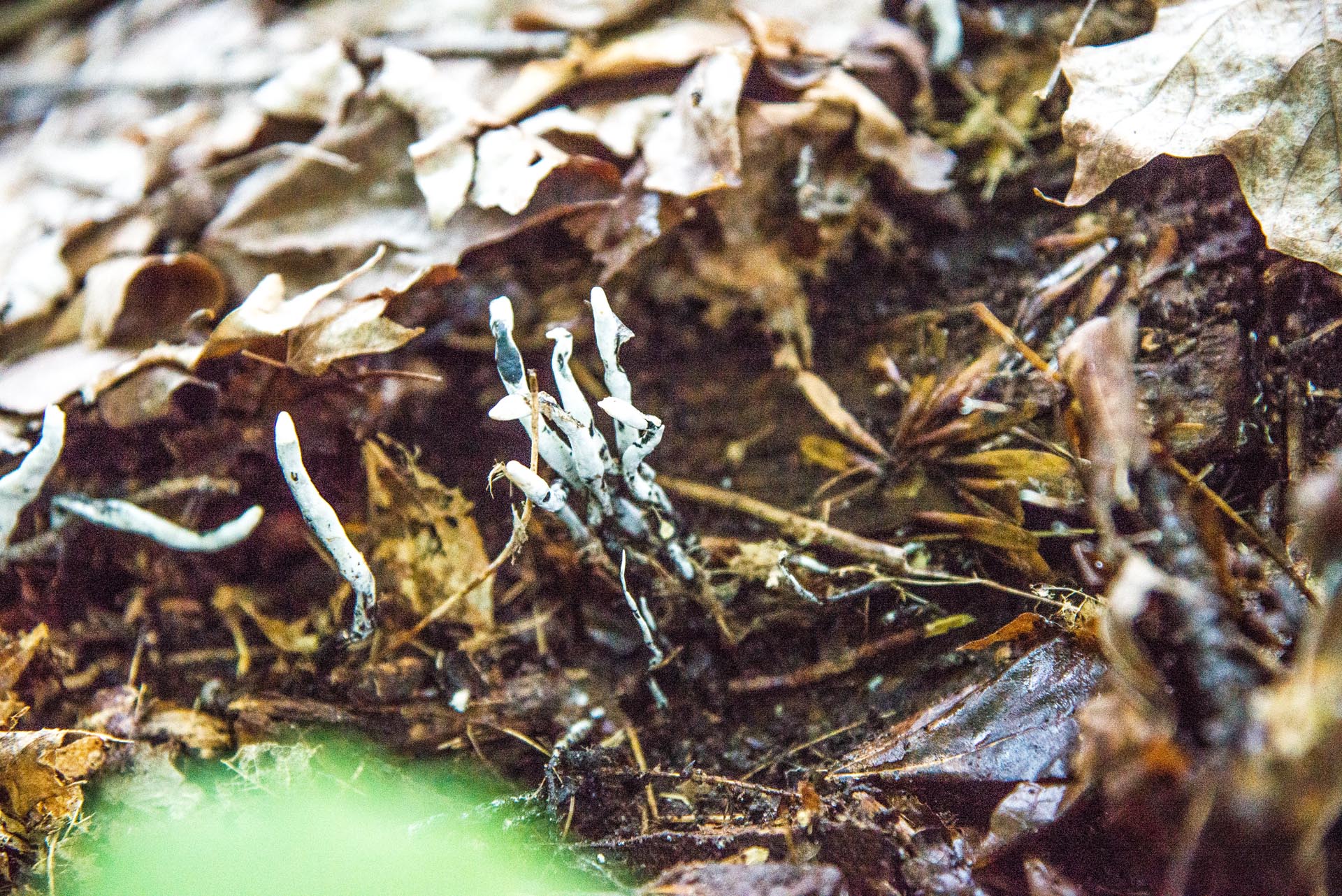
Xylaria species, asexual/spring form on the left and sexual/summer,fall form on the right

Black fingers reaching out from the dense leaf litter. An undead soul seeking revenge? Dead Man’s fingers they are, and if you are brave enough to try to pull them out of the ground you might meet with some unexpected resistance. That is because the structure is often firmly attached to decaying wood. The structure (called a stroma), the reproductive part of the fungus — its body is a network of filaments that are growing in the substratum. Early in the year it is often covered with white powder, such as is seen in the picture above on the left. The powder is the asexual spores that disperse the fungus but that are clones of the particular individual. Later in the season sexual reproduction might take place and special spore-producing bodies form immersed in the stroma. These spores are the result of sexual recombination and disperse new genotypes into the environment.

Xylaria is a genus with many fungi. It is an Ascomycete, a group that is more or less parallel to the mushroom/basidiomycete fungi. Ascomycetes give us Roquefort cheese, wine, penicillin, Chestnut Blight, truffles, ergot and Dutch Elm Disease. Xylaria species are best known as wood decay fungi, and the diversity in tropical countries is truly amazing, but you might also find them growing within apparently asymptomatic leaves of the trees that surround us. These are endophytes and we don’t know what they are doing, but they are very common.

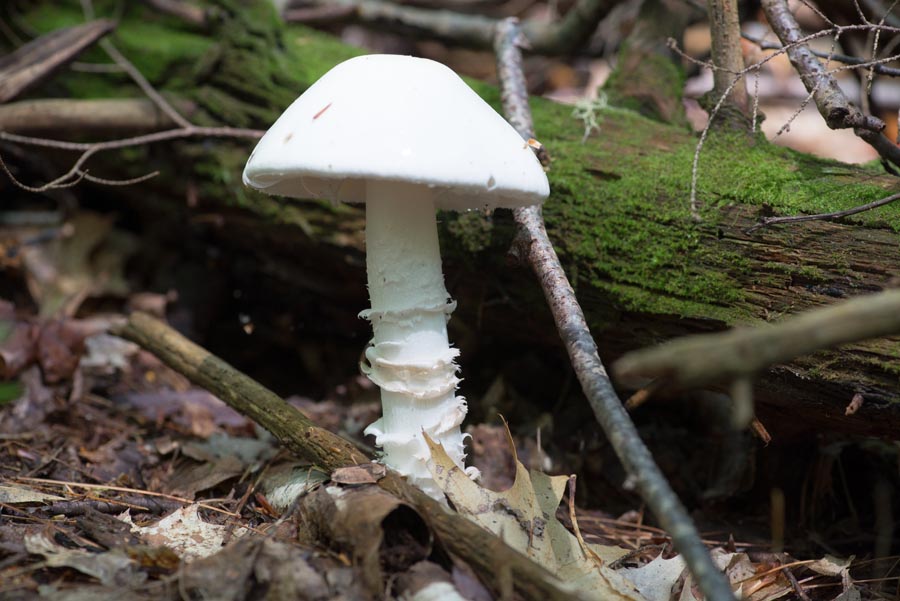
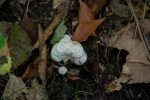
DESTROYING ANGEL: Amanita bisporigera
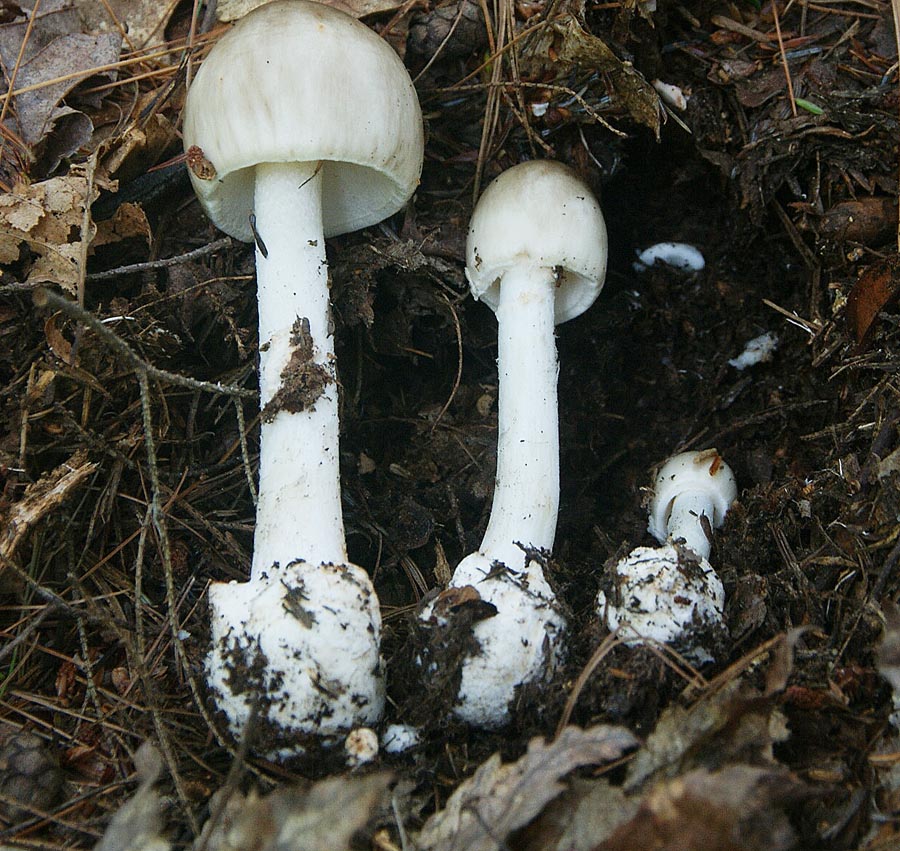
Amanita bisporigera lives up to its name: Destroying Angel, and one of its close relatives is Death Cap. These beautiful and common fungi will lead you to a most uncomfortable death in a somewhat protracted time. In the end your liver is destroyed and there is no known antidote.

You can recognize this fungus by its whiteness, a ring around the stalk just below the cap, and a bulbous base. The cap of A. bisporigera is smooth, unlike some Amanitas that have white patches scattered over the surface of the cap.

Most Amanita species form mycorrhizal associations with trees, so are part of the Wood Wide Web. Amanita bisporigera hooks up with broad-leaved trees. These fungi provide the tree with nutrients obtained from scavenging and receive sugar, produced by photosynthesis. They are important members of the Forest Community. Just don’t eat them.

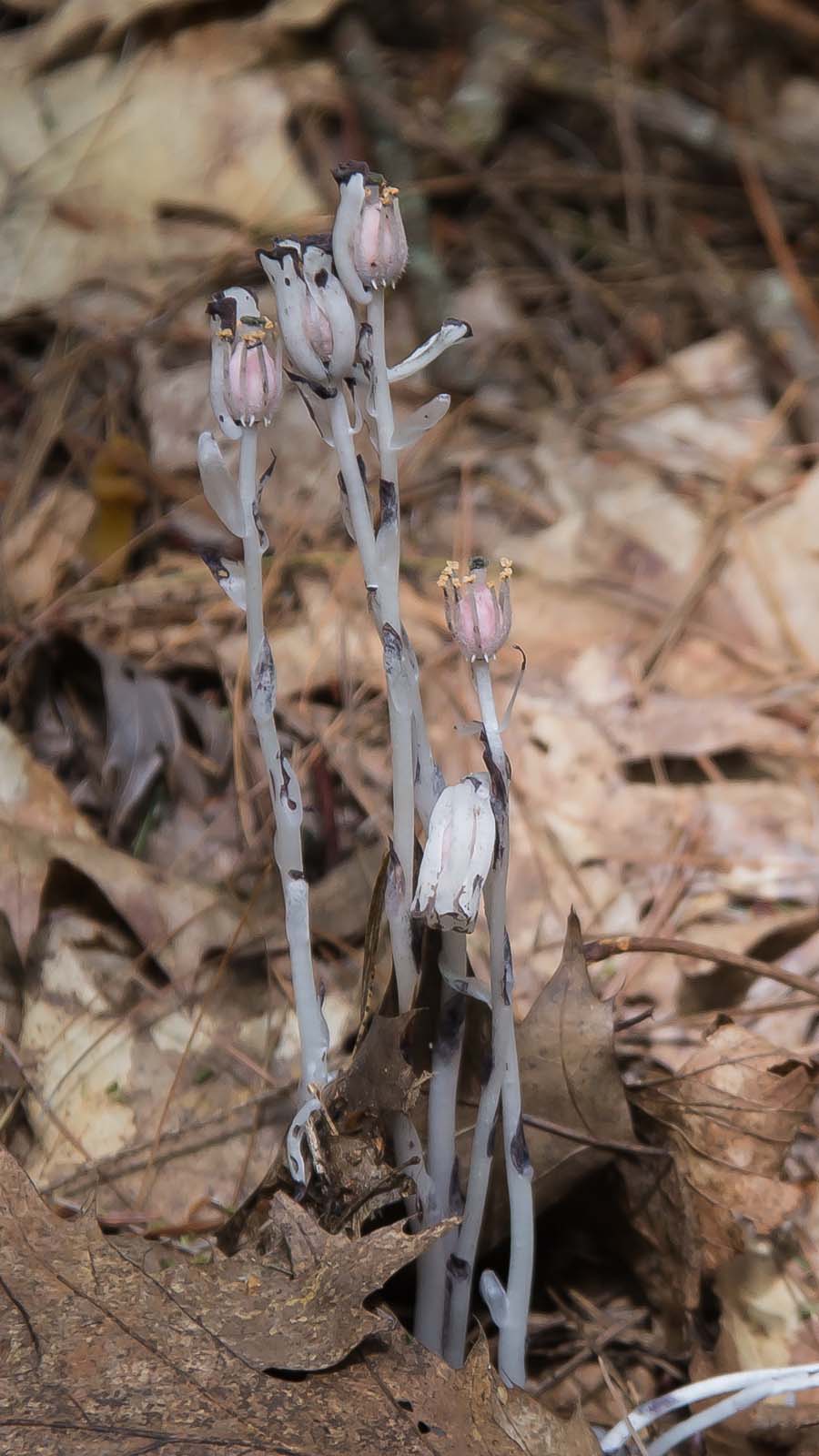
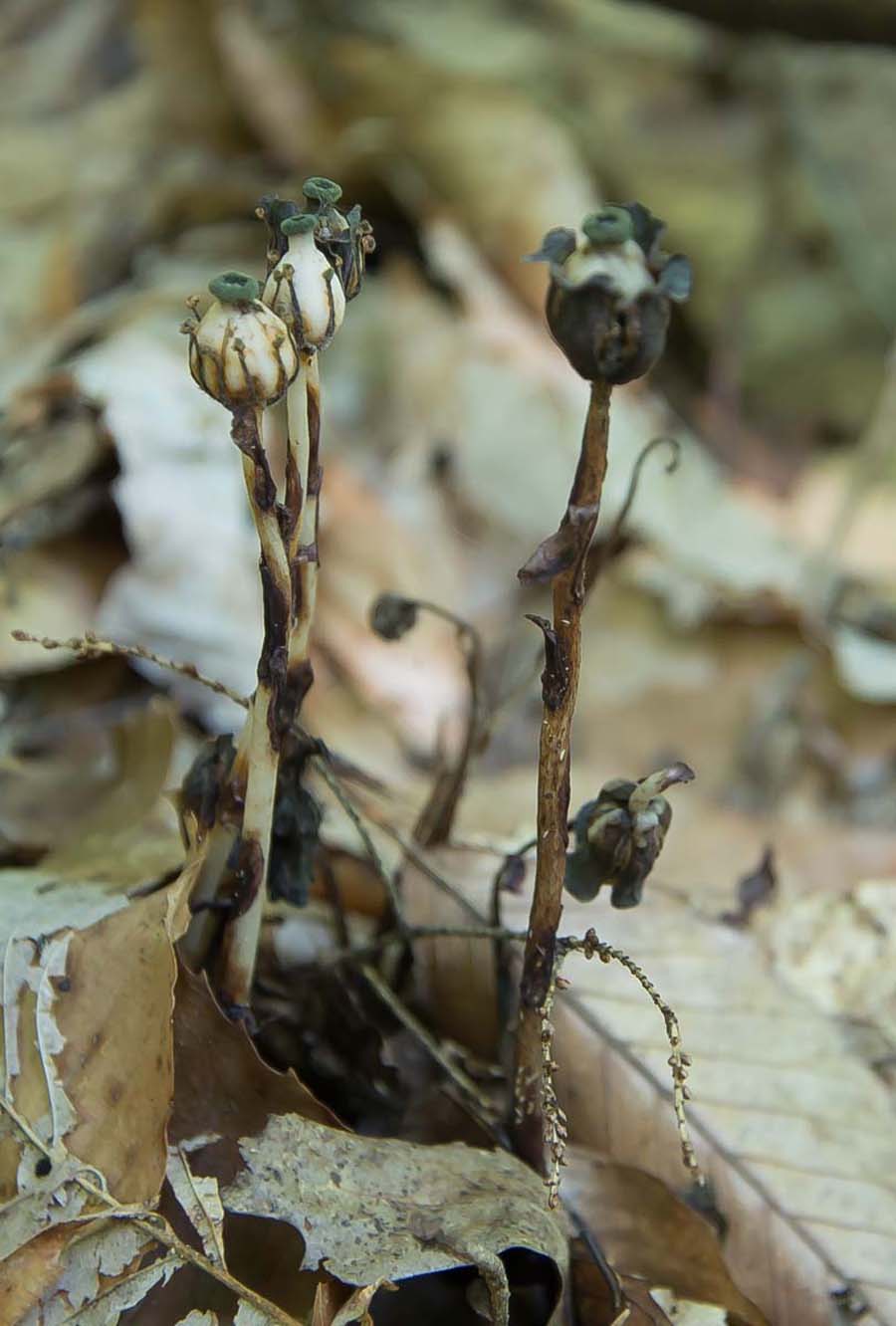
Ghost Plant: Monotropa uniflora
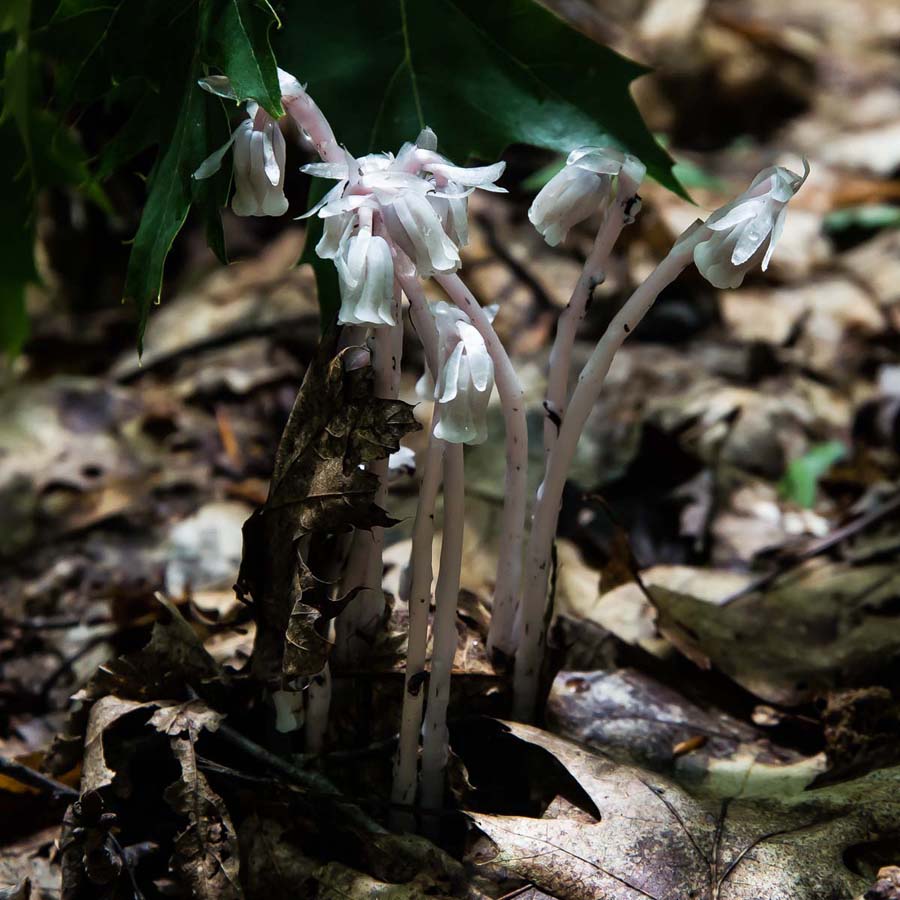
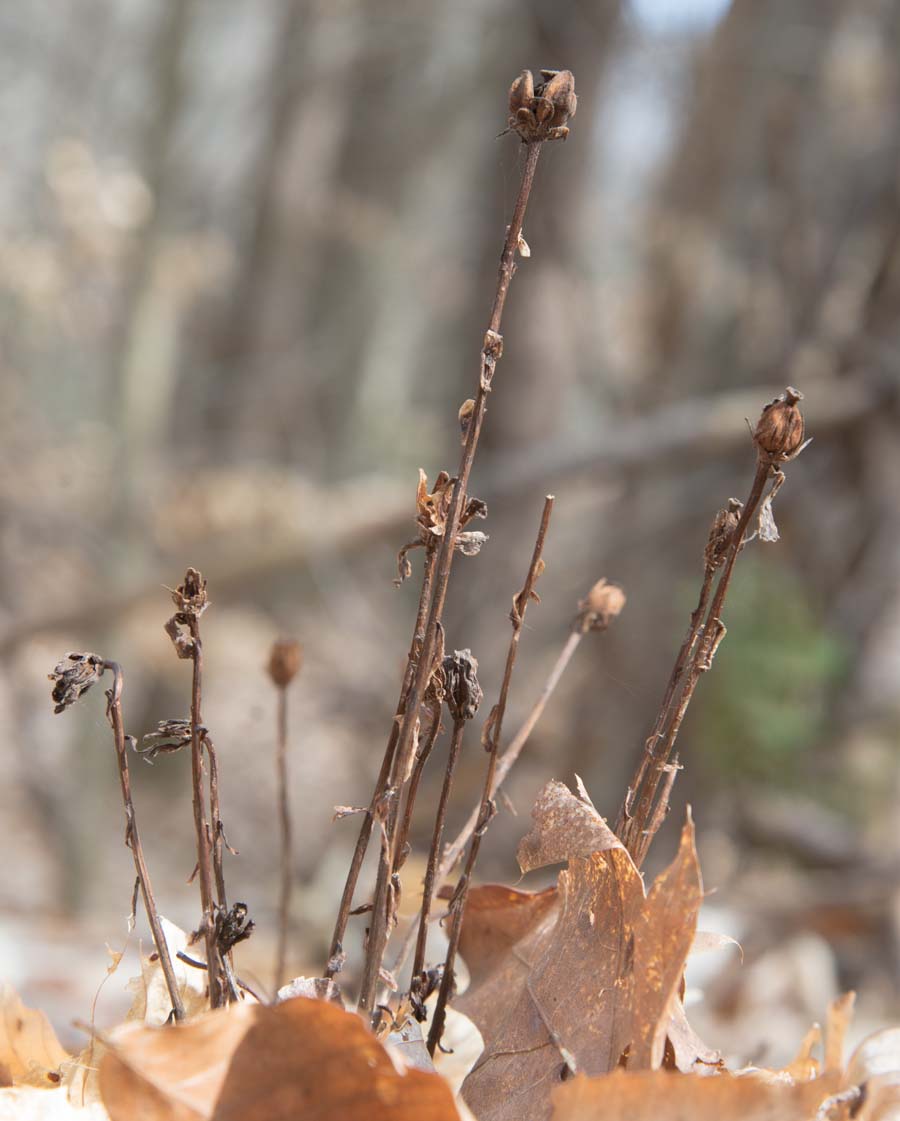
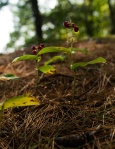
The Ghost Plant, also known as Indian Pipe, is not a fungus for all that it looks like it should be one, what with its white stems and flowers that arise from the forest floor. Early in the season the flower nods, suggesting a pipe. As the season progreses the flower gradually becomes erect to disperse its seeds. Finally all that remains are stems with spent flowers, all looking like dead sticks breaking through the forest floor.

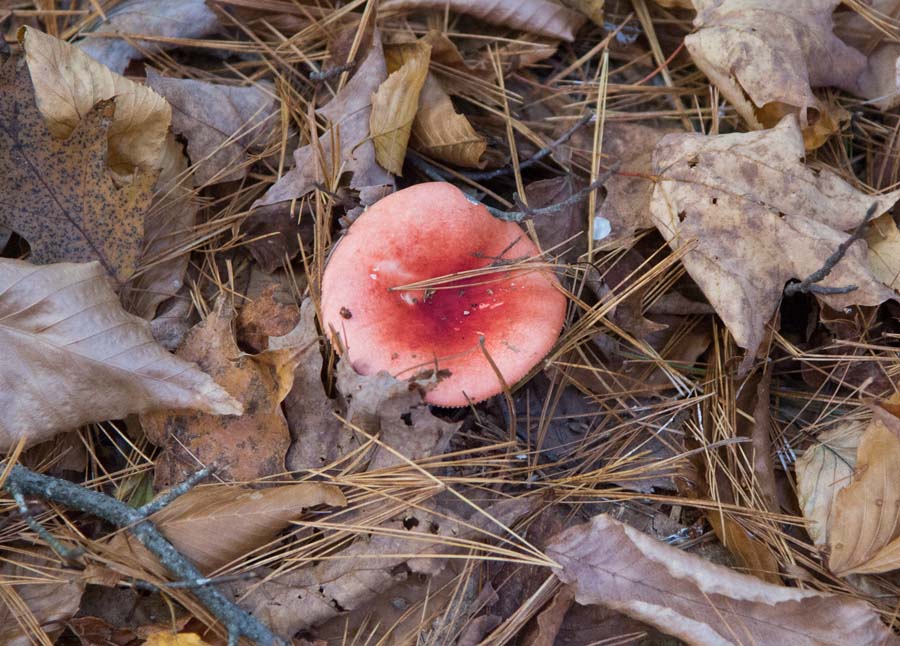
Monotropa and its relatives are actually related to blueberry, but they lack chlorophyll and thus they lack the ability to make their own food through photosynthesis. To meet that challenge, Monotropa and Hypopitys species latch onto the Wood Wide Web by parasitizing mycorrhizal mushroom-forming fungi. Monotropa uniflora parasitizes species of Russula (a typical species having a red cap is shown here), which form mycorrhizae with broad-leaved trees. In this three way affair, the Ghost Plant is a taker. The Russula gives nutrients to the Oak, which returns the favor by sending sugar into the mycelium. The Ghost Plant takes what it needs from the mycelium. The fungus doesn’t seem to mind though. This is just another way for a fungus to tell the rest of the world that “you can’t live without me!”
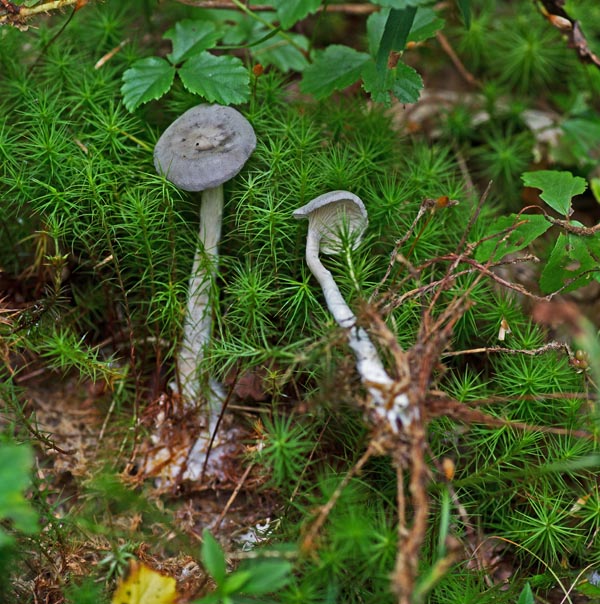
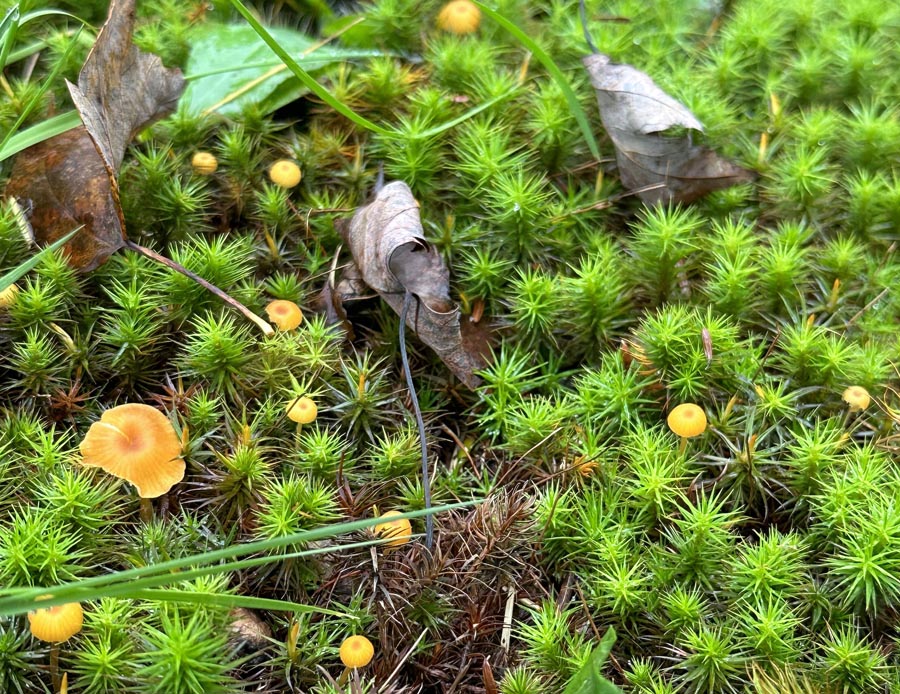
Moss-schrooms in Deering

The great Wood-wide Web: the trees in a forest interconnected by fungi. Fungal hyphae — the filamentous actual body of any fungus — running from tree to tree, sharing out sugars from the leaves of healthy trees, and giving water and essential nutrients in return. The forest one great Superorganism mediated by fungi. An enormously popular concept, and so very true: No Fungi? No future!

In all this it’s important to understand that fungi form associations with almost all life forms, not just trees: sometimes in a good way (most obviously as lichens or mycorrhizae) — and sometimes in not such a good way (for example, zombie ants and chestnut blight).

Fungi are now thought to have been essential for enabling rootless water dwelling plants to become established on land. They entered into ‘endophytic’ relationships with primitive plants, including mosses and liverworts — the closest modern relatives of the ancestors to the earliest terrestrial plants – – well before the evolution of trees and the trees and the Wood-wide web.

Many unrelated fungi are closely associated with mosses. The individual relationships may be saprobic (gaining carbon from dead plant material), or commensal (endophytic or parasitic) and obtaining carbon (sucrose) as the direct result of plant photosynthesis.

Here in Deering I have found, so far, two moss associated mushrooms: Cantharellula umbonata and Rickenella fibula. Both were associated with mosses in the genus Polytrichum., and I have found each only once.

Cantharellula umbonata

I wrote about Cantharellula umbonata, Greyling, in an earlier post. While the species is constantly associated with various mosses, I cannot find anything written about its trophic level, the nutritional nature of its relationship to the associated moss. When I collected it, I did not notice any obviously diseased areas of the patch of moss from which the mushroom arose. In this picture, on the right, one might see that the mushroom is attached to individual moss plants.

Rickenella fibula

I found Rickenella fibula, the Orange Moss Agaric, at home this fall in some of the extensive patches of Polytrichum moss that spreads in what we call ‘lawn.’ A whole herd of little yellow caps peering up at me from a bed of moss. These are little mushrooms that have small (2 – 10 mm across), orange or yellow orange caps with a depression in the center. The stem is delicate and lacks a ring. The gills are widely separated from each other and are white, they conspicuously run down the stem.

Rickenella fibula occurs late in the season, August to November in southern New Hampshire. It is widely distributed in North America and has been introduced into New Zealand. It is always associated with mosses, but not with any particular species.

The relationship of the species Rickenella fibula to moss is ambiguous, either parasitic/endophytic or mycorrhizal. The species has been shown to produce pegs, haustoria, within moss cells. These haustoria would presumably be absorbing nutrients from the moss and therefore are indicative of parasitism. A parasitic or endophytic trophic mode is supported by the fact that the some collections can produce enzymes that degrade plant cell walls. In a DNA analysis, a phylogenetic study, that included several collections all collections of R. fibula were biotrophic (mycorrhizal or parasitic/endophytic); none were saprotrophic (growing on dead plant material). However individual biotrophic collections clustered in the analysis with either mycorrhizal or parasitic/endophytic collections, the difference being how the respective groups access the sucrose produced by the moss through photosynthesis. As far as I can tell the Orange Moss Agaric that I found in my lawn does not seem to be adversely affecting its associated moss.

Entoloma abortivum: a mushroom parasite

One of the first mushrooms I learned to identify was Entoloma abortivum.  It is readily recognized because the typical mushrooms — with a stalk and a cap — are accompanied by aborted (hence the species name) mushrooms. The aborted masses are white and up to 3″ in diameter.

The aborted mushrooms are variously known as  ‘ground prunes,’ hunter’s heart,’ ‘shrimp of the woods,’ and, in Mexico, totlcoxcatl.  Back then, in the late sixties, we thought  that the aborted masses were an expression of the Entoloma mushroom, but in the mid 1970’s it was determined that two mushroom fungi are involved. Later it was determined that the Entoloma was parasitizing another mushroom, a species of Armillaria — the tree parasite called ‘honey  mushroom’ that is always found on wood long after the tree-host is dead.

Armillaria mellea, the honey mushroom

The Entoloma is a decomposer. It breaks down litter in the forest and it is not mycorrhizal with trees or other plants. At least around Deering the Armillaria is more common than the Entoloma.


The Entoloma is one of the ‘pink spored’ mushrooms. It occurs on  soil, and its gills are decurrent (that is, they run down the stalk from the cap).

There is a literature about the edibility of this mushroom. Both the Entoloma and the Armillaria are edible. However, I will only emphasize that some of the pink-spored Entoloma species are toxic, and some species that have brown spores(Pholiota species) look like honey mushroom but are also toxic.

The only  constant rule with mushroom hunting is: never eat what you do not know for 100% certain.

You can read more about Entoloma abortivum at:

https://botit.botany.wisc.edu/toms_fungi/sep2006.html

For me, the interrelationship of these two mushrooms is one of the fascinating stories that we find in our forests.  Finding Entoloma abortivum after all these years is a treat for me.

THE ASH-TREE BOLETE AND ITS APHID FRIENDS

First, allow me to orient you with a little bit of Mycology 101. Specifically two basic sorts of mushrooms.

The mushroom is the result of sexual reproduction. The process? Not sexy. A couple of nuclei get together in a special cell and the process cascades: nuclear fusion and meiosis —  where basically the genes get sorted — and finally a spore containing the recombined genes forms. What you see in a mushroom is the launching platform for the spore. The spores of all mushrooms are born externally on specialized cells. How and where those cells are placed distinguishes two major groups of mushrooms.

In one group the cells line thin sheets, or gills. So, if you look on the underside of the cap of one of these mushrooms you see the edges of a lot of gills radiating from the center, the stalk. The common supermarket mushroom is one of these, so is matsutake.

In another group of mushrooms the cells that bear the spores form inside tubes. If you look on the underside of one of these mushrooms you will see tiny pores. These are colloquially called boletes and the most famous bolete is the Cep.

This story is about one kind of bolete.

Many boletes and other gilled mushrooms form associations with the roots of trees and other plants to share nutrients — called mycorrhizae. It’s a  mutualism wherein all partners get — and give — something. Some people think that the fungus body,  filaments radiating through the substratum that you never see, connect trees and mushrooms in a kind of messaging system. These are good guys.

The ash-tree bolete — Boletinellus merulioides — is not a good guy.

At least not good for the ash trees.

Boletinellus merulioides is not mycorrhizal. It is in a symbiotic relationship with the ‘leafcurl ash aphid’ or ‘wooly ash aphid,’ Meliarhizophagus fraxinifolii. An ash pathogen.

This aphid has a complicated life, but it is inextricably tied up with several species of ash trees. Eggs, which overwinter in laid in cracks of the bark, hatch in the spring. After hatching, the aphids feed first on shoots, and then a new generation feeds on newly developing ash leaves. The leaves become distorted and ultimately form ‘pseudogalls,’ within which there is another generation of aphids. Eventually, as early as August, some of those aphids fly off and lay eggs. During summer  some of the females change their behavior. They begin to feed on roots of ash trees. A new generation of males and females develops from those root-feeding aphids to complete the cycle.

But some of the root population remains in the soil all year, feeding on roots. They form a symbiotic relationship with the ash-tree bolete.  The mushroom’s mycelium protects  aphid by producing little knots of tissue around them. In return the honeydew produced by the aphid nourishes the bolete.

The ash ash aphid is native to North America but it has become a problem on European ash trees.


TWO MUSHROOMS


Rain in the late summer and early fall can bring out a dazzling array of mushrooms in our northeastern forests.  All sizes, shapes and colors of mushrooms scatter about on the forest floor without obvious design. But there actually is a plan. Many mushrooms form more or less specific associations with roots of certain kinds of trees, either hardwoods or conifers and are essential for the health of those trees. Other mushrooms grow on decaying logs or on leaf litter without any obvious specificity as to their substrate.  Along with bacteria, insects and a host of microbes the fungi recycle rotting wood and fallen leaves and contribute to nutrient recycling of the forest. These recycling fungi are called ‘saprobes’ which means that they live on dead plant material. One would not think of saprobes as requiring specific substrates, but two apparently saprobic mushrooms that we see in the litter of our forests actually are specific as to what they grow on.

Cantharellula umbonata, also known as the grayling, grows among hair cap mosses (Polytrichum species) and is native to eastern North America. The mushroom clearly rises from the mass of mosses but does not appear to cause them any harm. It is not a big mushroom. Its cap is only an inch or so in diameter and its stalk is up to 4” long and slender. The cap is gray (hence ‘grayling’) and the gills below the cap are off white, but the cap and gills stain red when bruised. Because the gills under the cap tend to run down the stalk, similar to what is seen in the chanterelle mushroom, the grayling was once classified as a chanterelle. Unlike chanterelles, the gills of the grayling are sharp-edged, not rounded as in the chanterelle. I have not seen research into why the grayling grows only on or with the moss. The moss appears unaffected, so it is not a question of parasitism. Is there any exchange between the mushroom and the moss? An interesting subject for research! I found the grayling that we see here on the trail to High Five.

The second ‘host’ specific saprobic mushroom that I have seen in Deering is Micromphale perforans. This mushroom is very small, the cap no more than ¼” in diameter and is perched atop a very fine, black stalk that is no more than 1” long. This fungus is so small that it does not have a common name. We see it frequently here hemlock and pine forests, where you see it on the ground as tiny white spots. If you carefully pick up one of those little mushrooms and pull apart the debris you will see that the Micromphale is growing out from old hemlock, leaves or infrequently pine needles. Actually, fungi live in the roots, leaves and trunks of trees and leaves of most plants without causing any ill effects. These fungi, called endophytes, can be beneficial to the plant in several ways. It is a case of mutualism where both the fungus and the plant benefit. We do not know whether the Micromphale is an endophyte. How does it get there? Is the fungus waiting in the ground for the leaves to fall before invading them, or is it present in the leaves, only producing the little mushroom and completing its life cycle once the leaves have fallen?  This is another interesting subject for research! We know so very little about how our planet functions. It is these little interactions that, taken together, are critical for ecosystem functioning. So, yes, it is worth knowing the answers to these questions!

Hypholoma sublateritium, a late season mushroom

It’s early November. We had unseasonably warm weather not so long ago, but over the past week the temperatures have fallen and now are hovering around freezing during the day.  Happy as I am for this return to normalcy, it’s not good for mushrooms.

Mushrooms do have seasons. Morels in the spring start the ‘shroom year and the number of species increases as the year advances, peaking in the fall with the return of rain after a dry summer.  As temperatures fall, though, the number of mushrooms coming up declines. Here at the end of the year, apart from brackets that are tough, few mushrooms are fruiting.

The oyster mushroom, Pleurotus ostreatus, begins fruiting soon after the fall rains, on various hardwood trees. This species will continue to fruit through into Spring. Oysters are fairly common around Deering and are highly prized as edibles.

Brick Cap, Hypholoma sublateritium

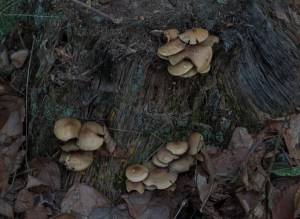
Another late season mushroom that is fruiting widely in Deering now (11 November) is the Brick Cap, Hypholoma sublateritium. This species comes up on hardwood stumps and buried wood, often in fascicles of several. It is notable for its brick-red cap that is paler, ochre, toward the margin; gills that are yellowish at first but become grayish-brown or grayish-olive. The spore print is   purple-brown.  There is no ring on the stipe, which is yellow above and reddish toward the bottom. Brick Cap fruits through fall into early winter. I have been noticing it in the past week in Deering (Dudley Brook – the Venter conservation easement, and the trail to High Five).

Brick Cap, Hypholoma sublateritium

Brick Cap is common in the east and is said to be edible. But, as always, you have to be careful. Galerina autumnalis is a somewhat similar mushroom in its small size and in having a brown cap and a ring on the stalk. It is deadly poisonous. Another somewhat similar poisonous mushroom is the Sulphur Tuft, Hypholoma fasciulare. This species has a yellow cap that can be brown or ochre in the center. Like Brick Cap, this species grows in fascicles from stumps and buried wood of hardwoods and conifers.  It fruits through fall into winter and is widely distributed in North America.


HONEY MUSHROOM

In the past couple of weeks, in mid-September, the honey mushroom, Armilariella mellea, has been coming up in different places around town.

The name, honey mushroom, refers to the Latin species name, mellea, which means honey. It’s a very attractive fungus and it’s name quite apt because the cap has a (sort of) light honey color.  According to David Arora, Mushrooms Demystified, A. mellea, is highly variable and may actually be a complex of species because of this variability. Some have recognized as many as 14 species in the complex! The critical elements for the complex are the presence of a veil, or ring around the stalk, a fibrous stalk, bitter taste (that apparently some cannot taste. I have not tried, yet), frequent presence of small dark hairs on the cap, growth on wood (often buried, rotten wood), and white or faintly yellowish spores (the cap may have a dusting of white spores).

The species is considered by some to be edible and delicious but there are reports of allergic reactions in some people. In addition, there are poisonous species, some deadly  that look a bit like A. mellea. One of them, the deadly poisonous Galerina autumnalis, also grows on wood. The spores of these poisonous species are brown.

Armilariella mellea is a sort of Jekyll and Hyde fungus.

As Jekyll, this species is edible, that’s good for a start.  More than that, Armilariella mellea has been used for hundreds of years in traditional Chinese medicine, and recent research suggests that the species has an anti-tumor potential, and polysaccharides isolated from it exhibit antioxidant activity that may provide protective effects against neurodegenerative diseases such as Alzheimer’s Disease.

On the Hyde side, this species – or species complex — is a serious forest pathogen. It affects roots of hundreds of species trees, shrubs, vines, and forbs growing in forests, along roadsides, and in cultivated areas. It is a widespread, native species and a natural component of the forest ecosystem, where they live undetected on coarse roots and stems of hardwood and conifer species. They become pathogenic when the host plant is weakened by other factors such as drought stress or other pathogens. Armilariella mellea can also weaken a host such that it becomes susceptible by other pathogens.

The Indian pipe, Monotropa uniflora, is common in Deering and is always connected to roots of trees via fungi in a peculiar two-way mycorrhizal association that benefits both the flower and the tree. One of the fungal associates of Indian pipe is this pathogen, A. mellea.


TWO MUSHROOMS: CANTHARELLULA UMBONATA AND MICROPHALE PERFORANS

Rain in the late summer and early fall can bring out a dazzling array of mushrooms in our northeastern forests.  All sizes, shapes and colors of mushrooms scatter about on the forest floor without obvious design. But there actually is a plan. Many mushrooms form more or less specific associations with roots of certain kinds of trees, either hardwoods or conifers and are essential for the health of those trees. Other mushrooms grow on decaying logs or on leaf litter without any obvious specificity as to their substrate.  Along with bacteria, insects and a host of microbes the fungi recycle rotting wood and fallen leaves and contribute to nutrient recycling of the forest. These recycling fungi are called ‘saprobes’ which means that they live on dead plant material. One would not think of saprobes as requiring specific substrates, but two apparently saprobic mushrooms that we see in the litter of our forests actually are specific as to what they grow on.


Cantharellula umbonata, also known as the grayling, grows among hair cap mosses (Polytchum species) and is native to eastern North America. The mushroom clearly rises from the mass of mosses but does not appear to cause them any harm. It is not a big mushroom. Its cap is only an inch or so in diameter and its stalk is up to 4” long and slender. The cap is gray (hence ‘grayling’) and the gills below the cap are off white, but the cap and gills stain red when bruised. Because the gills under the cap tend to run down the stalk, similar to what is seen in the chanterelle mushroom, the grayling was once classified as a chanterelle. Unlike chanterelles, the gills of the grayling are sharp-edged, not rounded as in the chanterelle. I have not seen research into why the grayling grows only on or with the moss. The moss appears unaffected, so it is not a question of parasitism. Is there any exchange between the mushroom and the moss? An interesting subject for research! I found the grayling that we see here on the trail to High Five.

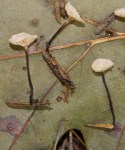
The second ‘host’ specific saprobic mushroom that is common in hemlock and pine forest in and around Deering is Micromphale perforans. This mushroom is very small, the cap no more than ¼” in diameter and is perched atop a very fine, black stalk that is no more than 1” long. This fungus is so small that it does not have a common name. We see it frequently here hemlock and pine forests, where you see it on the ground as tiny white spots. If you carefully pick up one of those little mushrooms and pull apart the debris you will see that the Micromphale is growing out from old hemlock, leaves or infrequently pine needles. Actually, fungi live in the roots, leaves and trunks of trees and leaves of most plants without causing any ill effects. These fungi, called endophytes, can be beneficial to the plant in several ways. It is a case of mutualism where both the fungus and the plant benefit. We do not know whether the Micromphale is an endophyte. How does it get there? Is the fungus waiting in the ground for the leaves to fall before invading them, or is it present in the leaves, only producing the little mushroom and completing its life cycle once the leaves have fallen?

The life styles of both of these mushrooms are curious and little known. Both interesting subjects for research! We know so very little about how our planet functions. It is these little interactions that, taken together, are critical for ecosystem functioning. So, yes, it is worth knowing the answers to these questions!

Margaret Wood Memorial/Pinnacle Trail


The Margaret Wood Memorial is a 20 acre conservation easement in East Deering, at the top of Peter Wood Hill Rd.  The land is privately owned but the conservation easement on the Margaret Wood Memorial has been held by the Society for the Protection of New Hampshire Forests since 1970.

Margaret Wood was the wife of Peter Wood. In 1917 the Woods purchased a large farm on what is now Peter  Wood Hill where they raised cattle and grew potatoes. Part of this farm is now the Margaret Wood Memorial.

Margaret Wood was a founding member of the Deering Community Club. The members of Deering Community Club were originally all women. Among other good deeds, the women of the Club were responsible for arranging running water in Deering Town Hall in the mid 1920’s. Many men in town contributed their labor to this project. The men impressed the ladies of the Deering Community Club so much that in 1927 men were admitted to membership in the club.  Soon thereafter town hall was extended to what we know today.

Margaret and Peter Wood were grandparents of several generations of current and former Deering Residents including Tom Coppadis, the owner of  the land on which the Margaret Wood Memorial is found.

How to get there: Please contact me if you would like to download the Pinnacle Trail map. From the Hillsborough end of Deering Center Rd. (NH Rt 149) turn on to Clement Hill Rd. Follow Clement Hill until it turns sharply right (about 1.5 mi). North Rd continues straight at this point. Follow North Rd to a T at Pond Rd (about 1 1/4 mi). North Rd continues to the right. Follow North Rd, turning sharply left at Clement Hill Rd to become Peter Wood Hill (approx. 1 1/4 mi). Continue a short distance to a small parking area on the left (approx. 300 yds). The trail head is about 20 yds downhill from the parking, on the left.   From points to the east pass through Weare on NH rt. 149 to Cross Rd., at the Wilds. Follow Cross Rd to a T at E. Deering Rd. (about 3/4 mi). Turn Right on East Deering Rd. and follow, turning sharply left at Gove Rd. (about 3/4 mi) and following to a T (approx. 1 mi) at Peter Wood Hill Rd. Turn left on Peter Wood Hill Rd and continue approx. 0.6 mi, passing Glen Rd. on the left and where the road becomes dirt, to the parking area on the right at the crest of the hill.

The Pinnacle trail is a loop that begins and ends on Peter Wood Hill. The lower end is opposite the point where Glen Rd meets Peter Wood Hill and the upper part is about 500 ft further uphill. There is a pull off large enough for 1 or 2 vehicles at the upper end, where Peter Wood Hill turns left. The entrance to the trail is slightly downhill on Peter Wood Hill from that point and is marked by a sign.

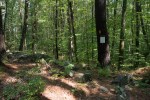
What’s the trail like?  The Pinnacle Trail loop is about 1 mile in length. The trail is reasonably well marked with white blazes on trees (but the blazes could use renewal as I write this in 2017). The trail has been well trodden over the years and is easy to follow. The trail is even underfoot, so walking is easy. For the most part the trail is level with little gain or loss in elevation however at the Glen Rd end there is a slightly steepish slope over maybe 50 yards. An option to returning to parking from Glen Rd is simply to walk through the woods, parallel to the road. Near the midpoint and the picnic table there is a side trail to ledge with an overlook however I did not see blazes on this overlook trail. Nonetheless, it would not be possible to miss the overlook or to become lost as the loop is very short and the edge of the ledge with overlook obvious. A log bench has been placed at a view-worthy spot near the picnic area, and vegetation has been kept at bay to allow for the view.

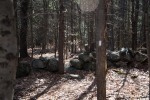
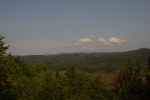
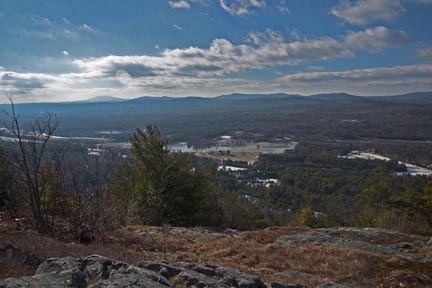
What’s the payoff? The forest in the Margaret Wood Memorial is a mixture of pine, oak and maple. The forest is very open, with little undergrowth. This makes the Pinnacle Trail a pleasant ramble through non-threatening woods. The two views are to the north and northeast, and this includes a good view of Dudley Brook and the hills beyond Henniker. There is a rustic picnic table at the highest point in the Memorial providing a great place for picnicking while taking in the views. The open forest gives lots of room for kids to run around. In early days Peter Wood Hill was known for winter sports. Today the Pinnacle Trail is a good place for snowshoeing or cross country skiing.


Smith Brook Trail

Please contact me if you would like a downloadable map of Smith Brook Trail to.

To Get There. The Audubon Preserve is located in Deering on Clement Hill Rd. From Deering Center Rd (NH Rt. 149) follow Clement Hill Rd., turning sharply right where North Rd goes straight (approx. 1.5 mi) and past the first marked parking area, on the right, then downhill past two private homes and down a steep dirt road to the bottom of the hill (approx. 09 mi), opposite Tree Frog Pond on the left. There is  parking area on the right.  You can reach Black Fox Pond from this parking area.

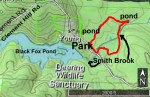
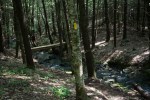
Smith Brook drains Black Fox Pond to the Piscatquog River through Dudley Brook. Pick up Smith Brook Trail directly opposite the parking area, across Clement Hill Rd. The trail is marked with yellow blazes and the entire loop is  a little over 1 mile. The trail passes through a mixture of forest types, pine at first and the mixed hardwood. The trail is level, with no gain or loss in elevation, and smooth with the exception of one short stretch that crosses the drainage of a small pond. It is an easy trail.

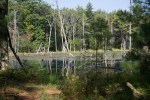
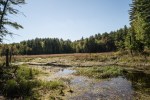
The first part of Smith Brook Trail, the western edge, follows Tree Frog Pond. This is a nesting site for wood ducks and wood duck nesting boxes have been placed on the pond. Great blue heron also nest on the pond. Both of these species are sensitive to noise, so if you want to see them you should go quietly.  On June nights you will hear the tree frogs singing. Some interesting plants along the trail are the orchids slender ladies’ tresses (Spiranthes lacera) and checkered rattlesnake plantain (Goodyeara pubescens),  and pipsissewa (Chimaphila umbellata) and a Pyrola species for which I have not yet seen flowers. The Spiranthes and Pyrola should flower in July or August. In September 2017 I found a beautiful, but deadly destroying angel mushroom (Amanita virosa) at the bridge across Smith Brook.

The trail follows along Smith Brook to a bridge and then follows the brook back past a beaver marsh, returning to Clement Hill  Rd at Smith Brook, where you turn right along the road for about ¼ mile to return to the parking area.