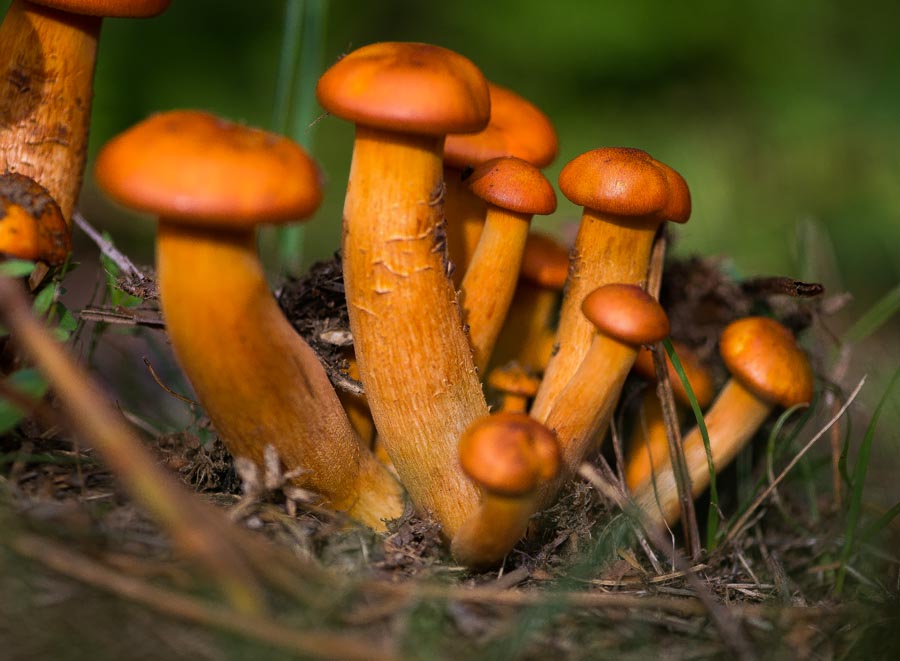
Galerina marginata: Don’t mess with me!

Mushrooms are a very conspicuous component of Deering’s forested land. The often large, often brightly colored and often edible mushrooms stand out. The gaudy, brightly colored Amanitas, deadly or otherwise, Russulas and Lactarius stand out in the dark forest. Some Boletes such as the Cep lookalike Boletus nobilis, and the shelving Chicken of the Woods are culinary delights in addition to being highly attractive. But far more mushrooms are nondescript, small or drab or both. LBM’s — Little Brown Mushrooms — growing from leaf litter and rotting wood are just not visually interesting, nor are they big enough to consider their taste — unless your were lost (in Deering?) and really, really hungry.

In that case you really must remember to stay away from mushrooms that have brown gills/spores and boletes that stain blue as a general principle. Most of these won’t kill you, just make you pretty ill and wish you were dead — but some will kill you, and your death will not be pretty.

So it is with Galerina marginata (earlier known as G. autumnalis). A little brown mushroom if ever there was one. This little mushroom contains the same toxins as the deadly amanitas, such as A. bisporigera — a common species here. It’s a slow death. First you will be sick, then you will get better — and then a day or so later your liver will deteriorate and, without a liver transplant, you will die. There is no antidote to these amatoxins.

Galerina marginata, and all Galerina species, grows from rotting wood and often in association with mosses. Where it’s been investigated the moss suffers from the association, unlike other moss-mushroom pairings that are mutualistic, with each partner benefiting from the relationship. This Galerina is variable in its form, but the basics are a smallish orange-brown cap (maybe up to 4 inches in diameter), a narrow stem with a membranous or fibrillose ring around the top, just below the cap, and rusty brown spores. But, because the species is variable, it has been described under several other names, in addition to G. autumnalis. The scary part is that it can look to some like edible species of Armillaria, Pholiota, Kuehneromyces or Flammulina.

Although G. marginata can appear from June to fall, it is more common in the fall. I have seen this species twice in Deering in recent weeks this late fall.

Galerina marginata and other wood inhabiting species perform an important role in nutrient recycling in forests. Rather than forming mycorrhizal associations with trees, and sharing nutrients with them, these fungi break down components in wood and return that carbon to the cycle of life in our forests.

Jack 0’Lanterns, Dead Man’s Fingers, Destroying Angels and Ghost Plants: It’s Halloween in Deering!

Fungi have long been associated with ghoulish and otherwise creepy activities. Zombie ants? Well, not in Deering, but in tropical America a fungus takes over the ant, commanding the creature to climb up into a tree so as to enhance the ability of the fungus to disperse its spores — to other ants. St Vitus Dance, induced by consuming ergot baked in rye bread, the ergot a reproductive unit of a fungus that invades and takes over the seed of rye and is gathered with the grain and baked into poor people’s bread. This is what lead Massachusetts colonists to hang some poor girls, ascribing their witchy behaviour to work of the devil.

Here is my Halloween offering : a selection of spookily named fungi — and one plant — that I have found in Deering.

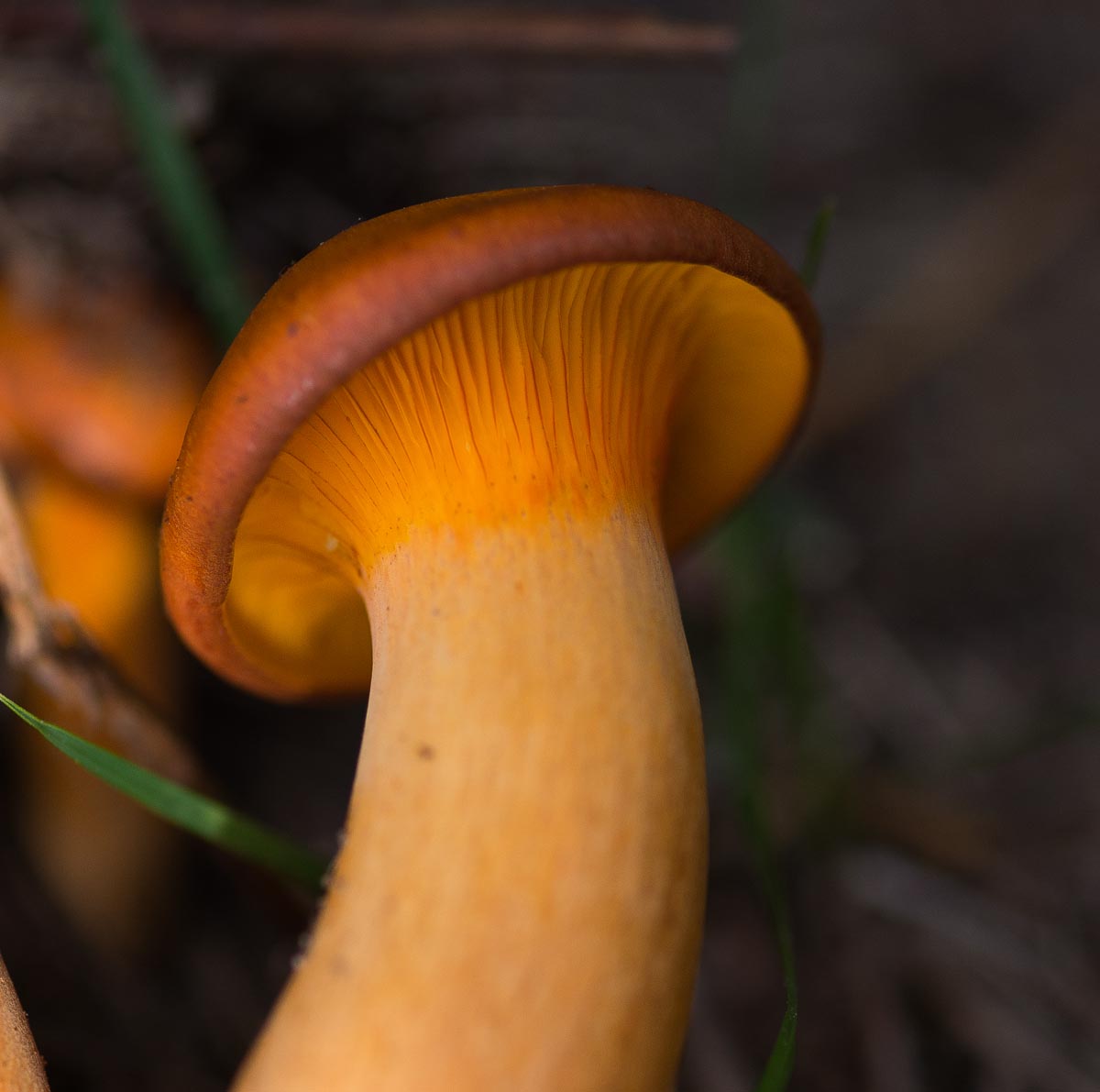
Omphalotus illudens: Jack O’Lantern Mushroom

Apart from the pumpkinny color that suggests the season, the Jack O’Lantern mushroom glows in the dark. Spooky, right? Wrap it in aluminum foil and put it in a dark place, such as a dresser drawer, and when you awaken during the night you might se it glowing. This is where the species name ‘illudens‘ comes from. The gills, where the spores are formed, tend to run down the stalk, as can be seen in the right hand picture. This, and the color, suggest the golden chanterelle. But don’t be tempted to eat this one because if you do, you are likely to end up with an unhappy stomach. Omphalotus illudens is a fairly wide spread and common fungus, growing on stumps and buried wood, typically oak.

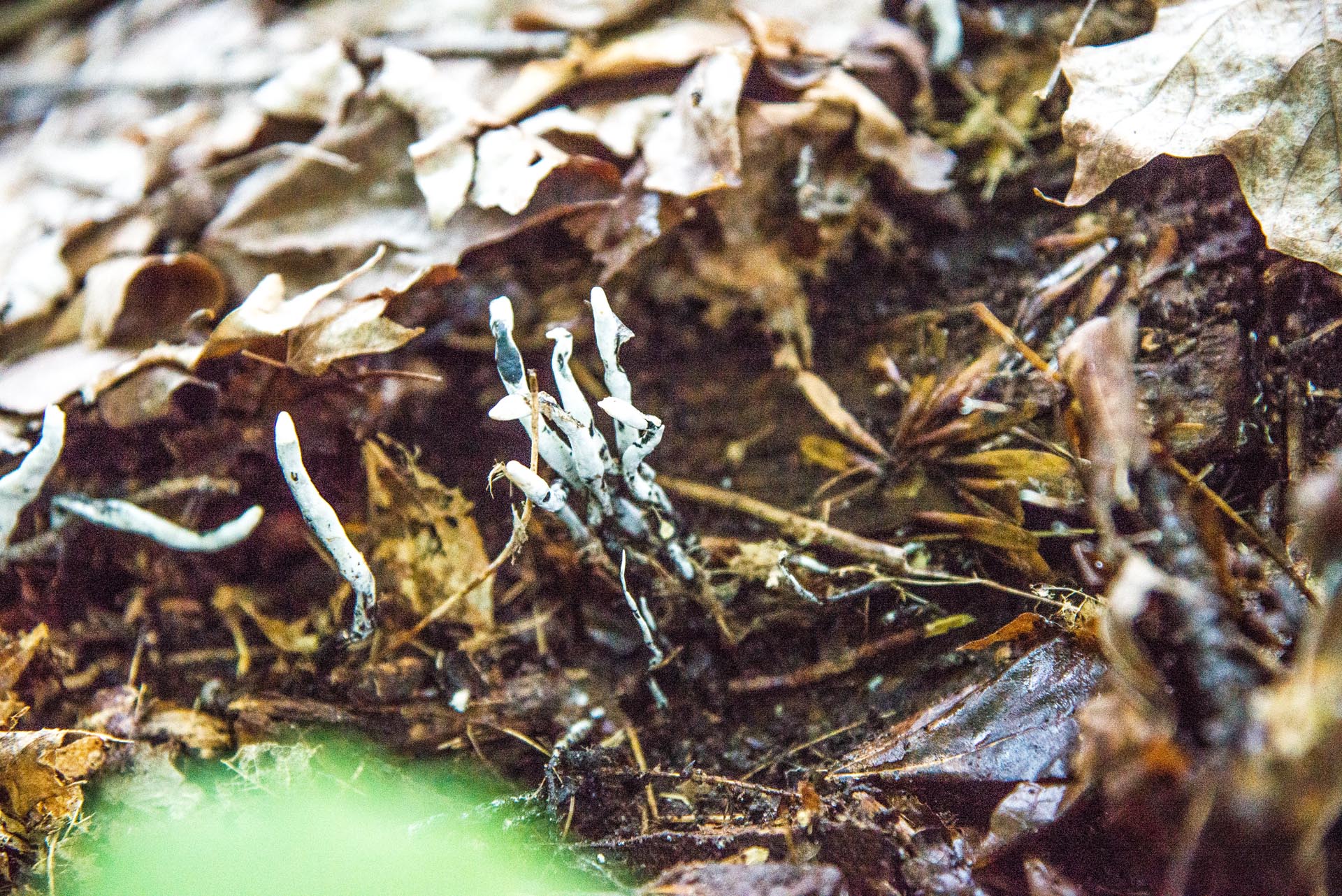
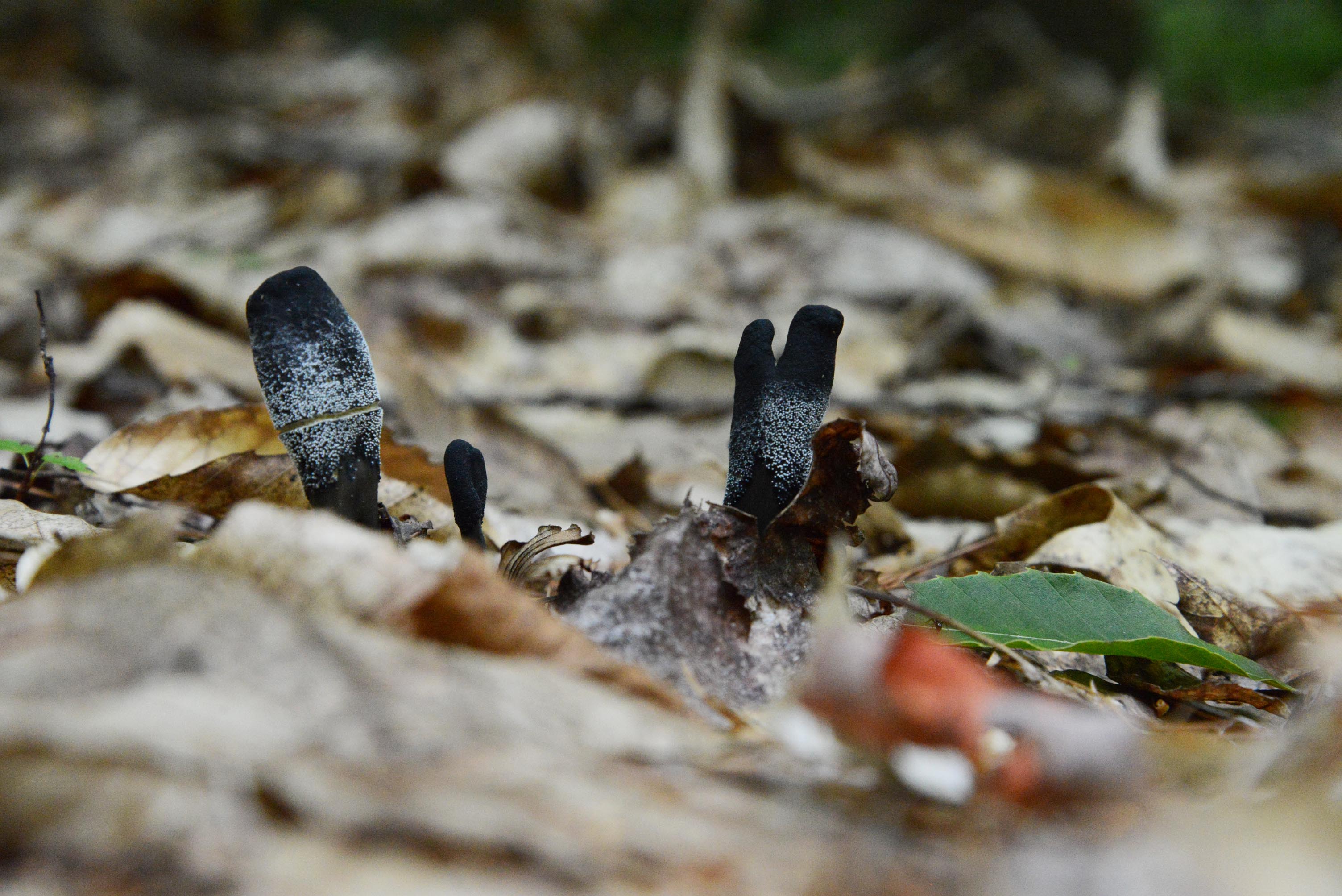
Dead Man’s Fingers: Xylaria species

Xylaria species, asexual/spring form on the left and sexual/summer,fall form on the right

Black fingers reaching out from the dense leaf litter. An undead soul seeking revenge? Dead Man’s fingers they are, and if you are brave enough to try to pull them out of the ground you might meet with some unexpected resistance. That is because the structure is often firmly attached to decaying wood. The structure (called a stroma), the reproductive part of the fungus — its body is a network of filaments that are growing in the substratum. Early in the year it is often covered with white powder, such as is seen in the picture above on the left. The powder is the asexual spores that disperse the fungus but that are clones of the particular individual. Later in the season sexual reproduction might take place and special spore-producing bodies form immersed in the stroma. These spores are the result of sexual recombination and disperse new genotypes into the environment.

Xylaria is a genus with many fungi. It is an Ascomycete, a group that is more or less parallel to the mushroom/basidiomycete fungi. Ascomycetes give us Roquefort cheese, wine, penicillin, Chestnut Blight, truffles, ergot and Dutch Elm Disease. Xylaria species are best known as wood decay fungi, and the diversity in tropical countries is truly amazing, but you might also find them growing within apparently asymptomatic leaves of the trees that surround us. These are endophytes and we don’t know what they are doing, but they are very common.

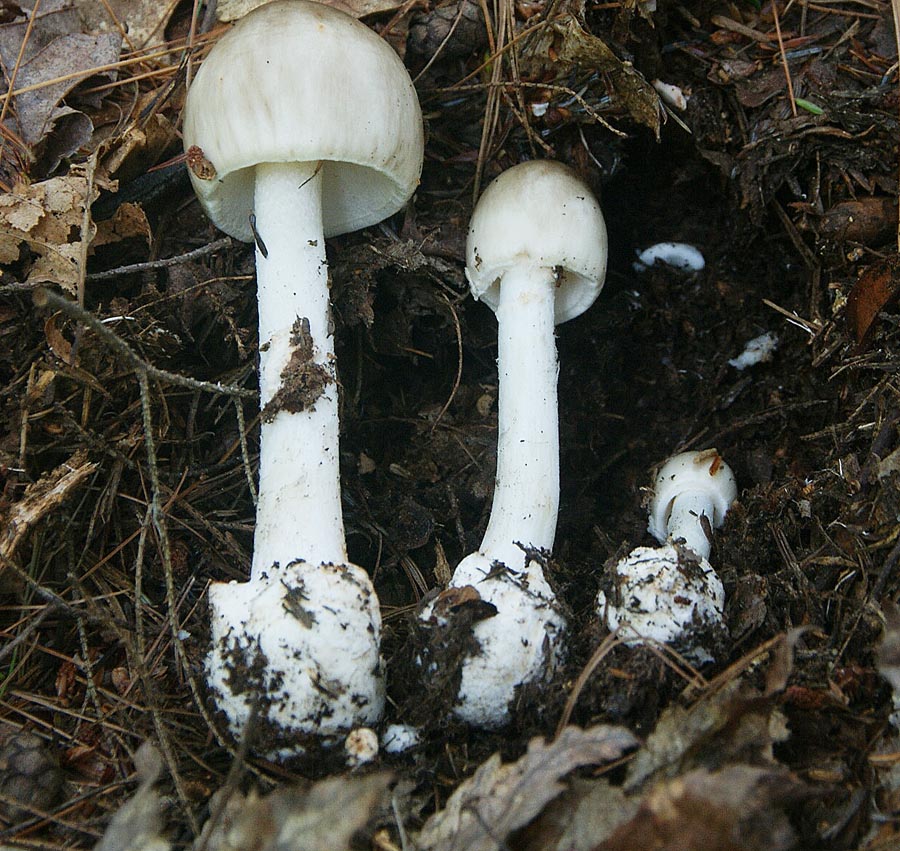
DESTROYING ANGEL: Amanita bisporigera

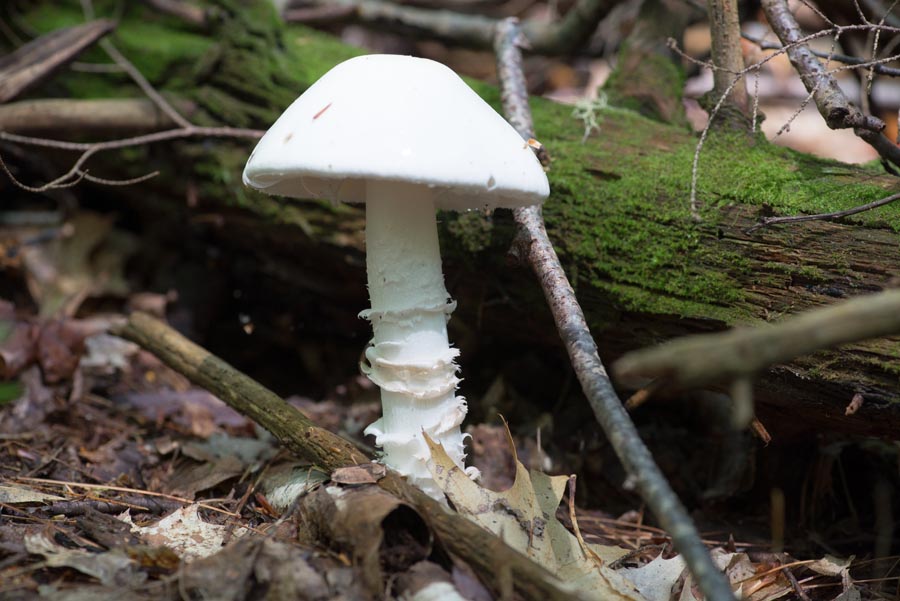
Amanita bisporigera lives up to its name: Destroying Angel, and one of its close relatives is Death Cap. These beautiful and common fungi will lead you to a most uncomfortable death in a somewhat protracted time. In the end your liver is destroyed and there is no known antidote.

You can recognize this fungus by its whiteness, a ring around the stalk just below the cap, and a bulbous base. The cap of A. bisporigera is smooth, unlike some Amanitas that have white patches scattered over the surface of the cap.

Most Amanita species form mycorrhizal associations with trees, so are part of the Wood Wide Web. Amanita bisporigera hooks up with broad-leaved trees. These fungi provide the tree with nutrients obtained from scavenging and receive sugar, produced by photosynthesis. They are important members of the Forest Community. Just don’t eat them.

Ghost Plant: Monotropa uniflora

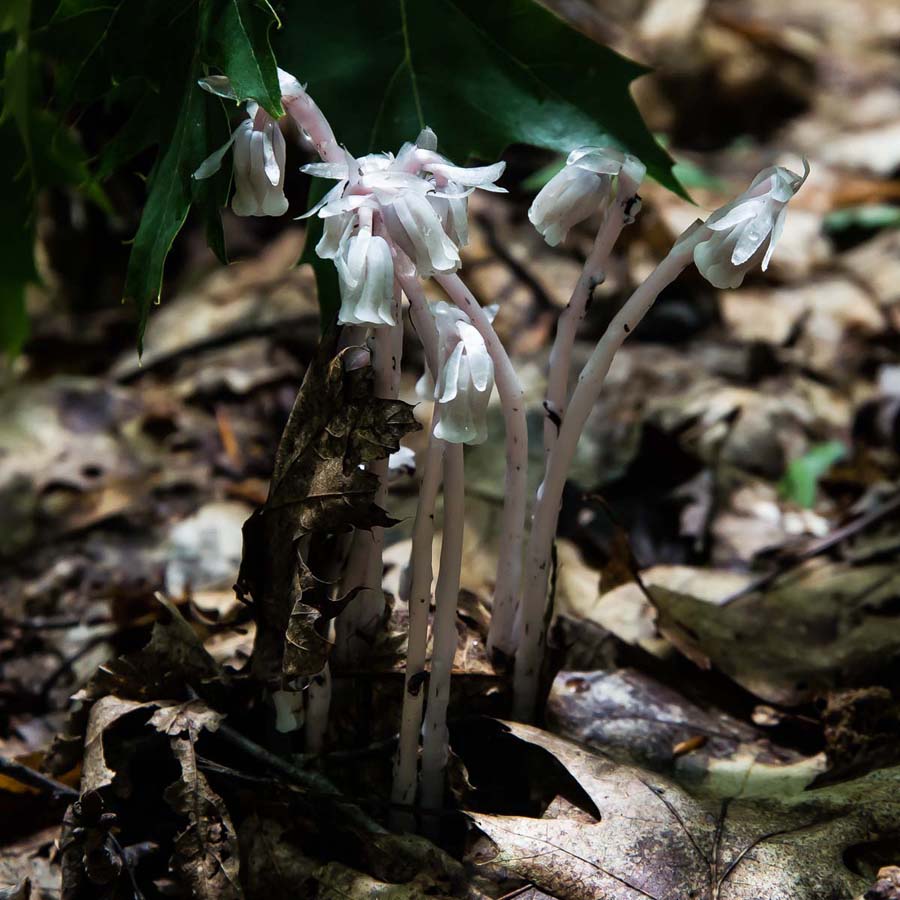
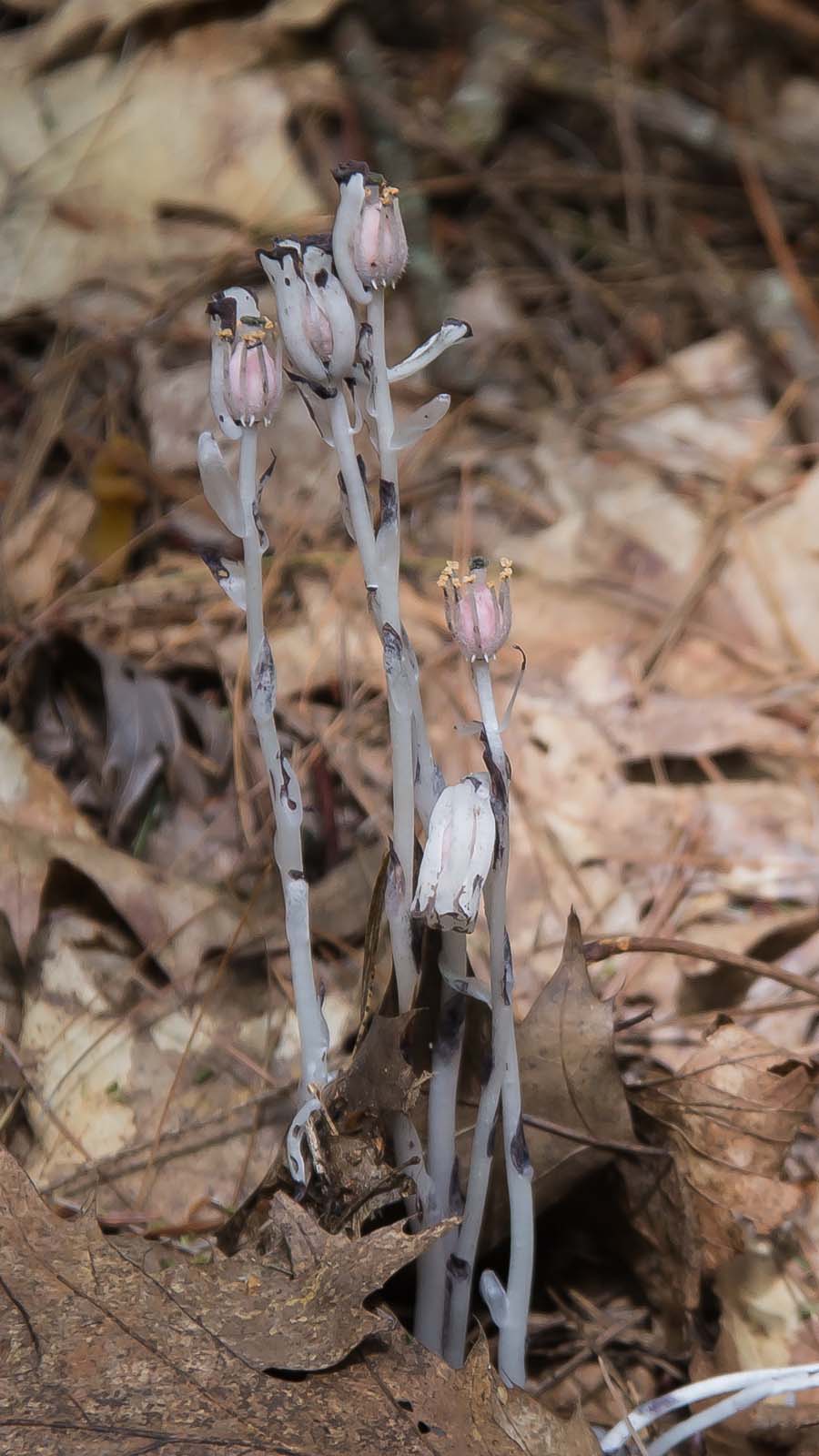
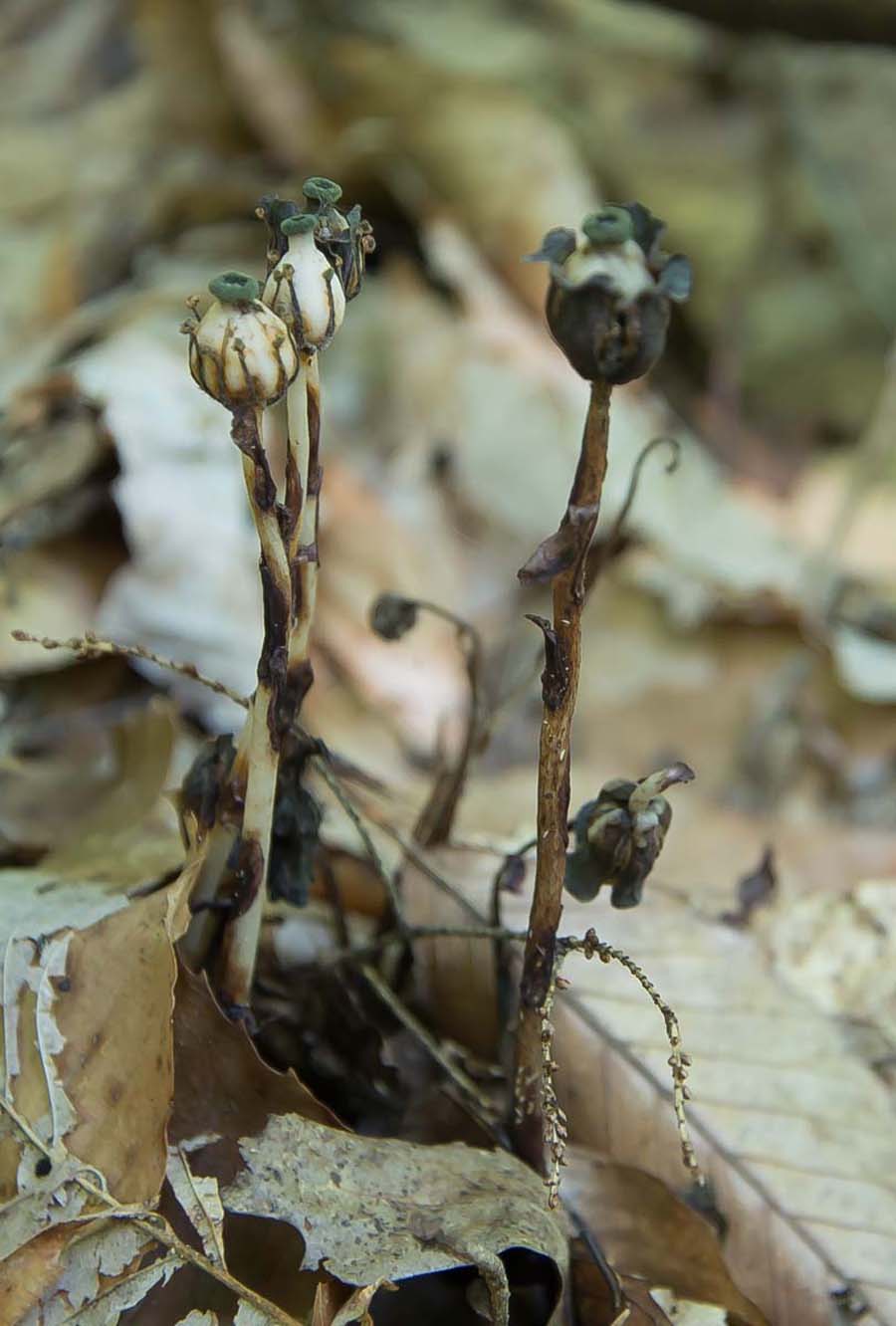
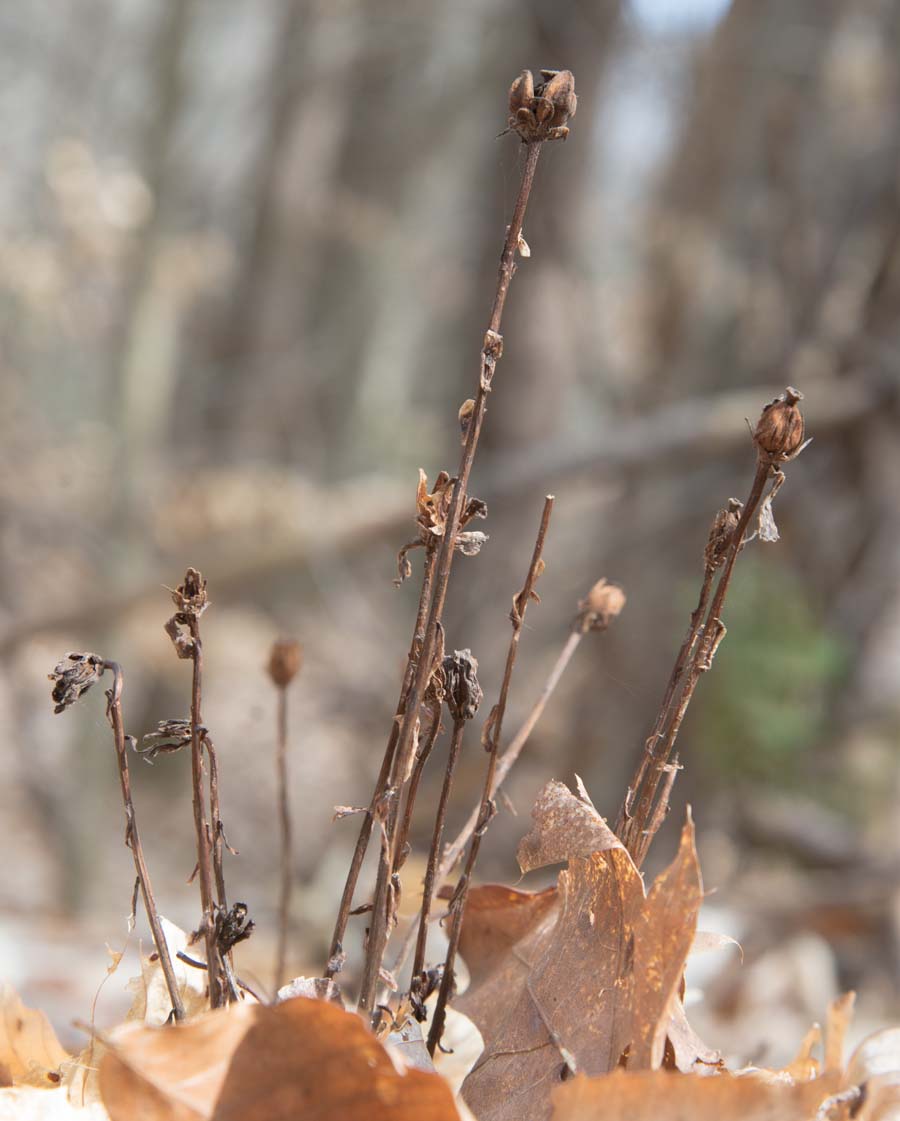
The Ghost Plant, also known as Indian Pipe, is not a fungus for all that it looks like it should be one, what with its white stems and flowers that arise from the forest floor. Early in the season the flower nods, suggesting a pipe. As the season progreses the flower gradually becomes erect to disperse its seeds. Finally all that remains are stems with spent flowers, all looking like dead sticks breaking through the forest floor.

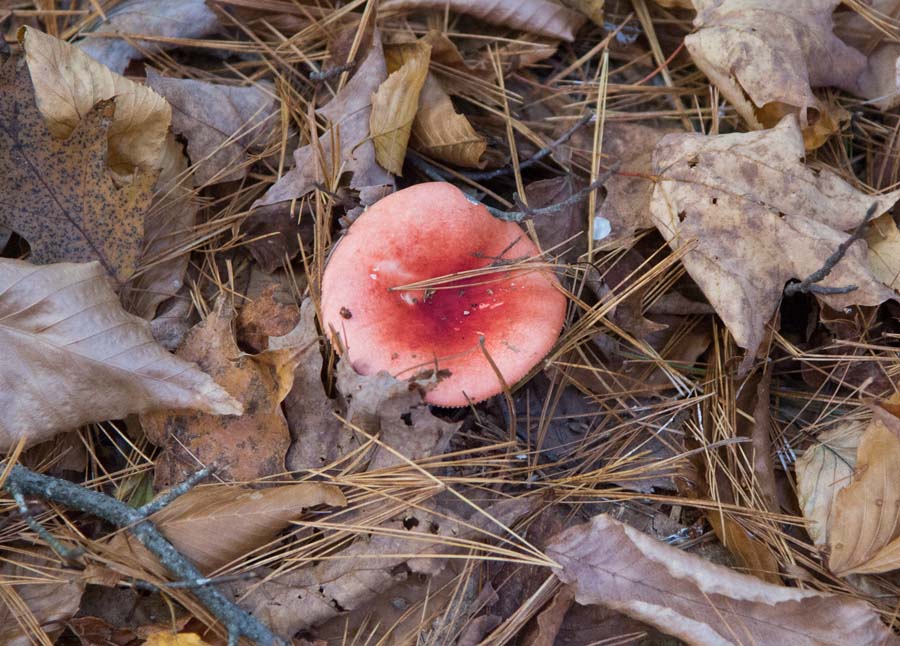
Monotropa and its relatives are actually related to blueberry, but they lack chlorophyll and thus they lack the ability to make their own food through photosynthesis. To meet that challenge, Monotropa and Hypopitys species latch onto the Wood Wide Web by parasitizing mycorrhizal mushroom-forming fungi. Monotropa uniflora parasitizes species of Russula (a typical species having a red cap is shown here), which form mycorrhizae with broad-leaved trees. In this three way affair, the Ghost Plant is a taker. The Russula gives nutrients to the Oak, which returns the favor by sending sugar into the mycelium. The Ghost Plant takes what it needs from the mycelium. The fungus doesn’t seem to mind though. This is just another way for a fungus to tell the rest of the world that “you can’t live without me!”

Moss-schrooms in Deering

The great Wood-wide Web: the trees in a forest interconnected by fungi. Fungal hyphae — the filamentous actual body of any fungus — running from tree to tree, sharing out sugars from the leaves of healthy trees, and giving water and essential nutrients in return. The forest one great Superorganism mediated by fungi. An enormously popular concept, and so very true: No Fungi? No future!

In all this it’s important to understand that fungi form associations with almost all life forms, not just trees: sometimes in a good way (most obviously as lichens or mycorrhizae) — and sometimes in not such a good way (for example, zombie ants and chestnut blight).

Fungi are now thought to have been essential for enabling rootless water dwelling plants to become established on land. They entered into ‘endophytic’ relationships with primitive plants, including mosses and liverworts — the closest modern relatives of the ancestors to the earliest terrestrial plants – – well before the evolution of trees and the trees and the Wood-wide web.

Many unrelated fungi are closely associated with mosses. The individual relationships may be saprobic (gaining carbon from dead plant material), or commensal (endophytic or parasitic) and obtaining carbon (sucrose) as the direct result of plant photosynthesis.

Here in Deering I have found, so far, two moss associated mushrooms: Cantharellula umbonata and Rickenella fibula. Both were associated with mosses in the genus Polytrichum., and I have found each only once.

Cantharellula umbonata

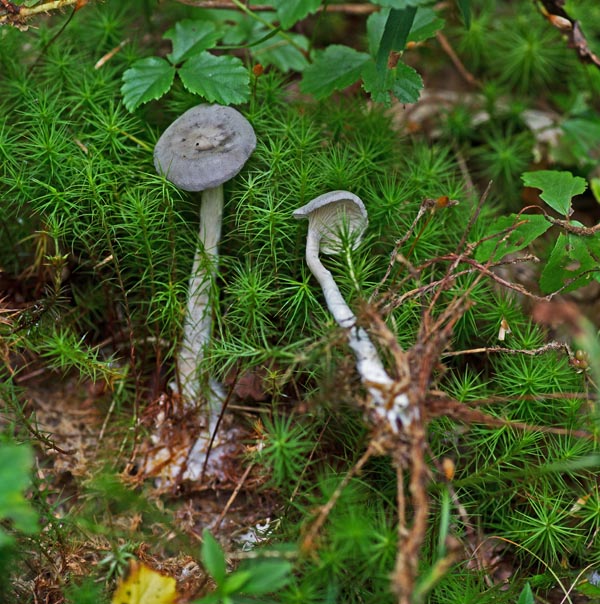
I wrote about Cantharellula umbonata, Greyling, in an earlier post. While the species is constantly associated with various mosses, I cannot find anything written about its trophic level, the nutritional nature of its relationship to the associated moss. When I collected it, I did not notice any obviously diseased areas of the patch of moss from which the mushroom arose. In this picture, on the right, one might see that the mushroom is attached to individual moss plants.

Rickenella fibula

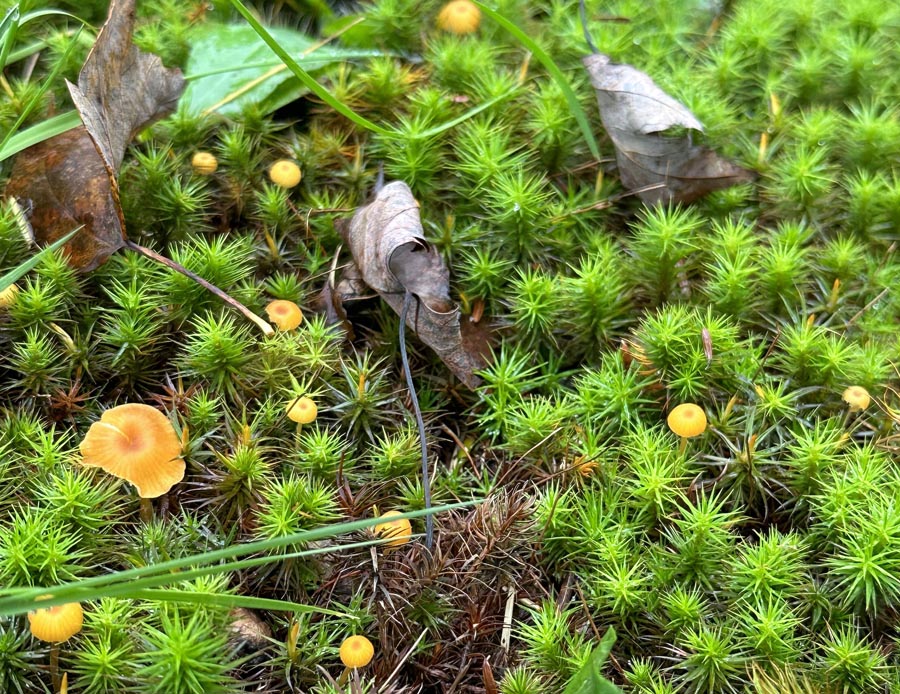
I found Rickenella fibula, the Orange Moss Agaric, at home this fall in some of the extensive patches of Polytrichum moss that spreads in what we call ‘lawn.’ A whole herd of little yellow caps peering up at me from a bed of moss. These are little mushrooms that have small (2 – 10 mm across), orange or yellow orange caps with a depression in the center. The stem is delicate and lacks a ring. The gills are widely separated from each other and are white, they conspicuously run down the stem.

Rickenella fibula occurs late in the season, August to November in southern New Hampshire. It is widely distributed in North America and has been introduced into New Zealand. It is always associated with mosses, but not with any particular species.

The relationship of the species Rickenella fibula to moss is ambiguous, either parasitic/endophytic or mycorrhizal. The species has been shown to produce pegs, haustoria, within moss cells. These haustoria would presumably be absorbing nutrients from the moss and therefore are indicative of parasitism. A parasitic or endophytic trophic mode is supported by the fact that the some collections can produce enzymes that degrade plant cell walls. In a DNA analysis, a phylogenetic study, that included several collections all collections of R. fibula were biotrophic (mycorrhizal or parasitic/endophytic); none were saprotrophic (growing on dead plant material). However individual biotrophic collections clustered in the analysis with either mycorrhizal or parasitic/endophytic collections, the difference being how the respective groups access the sucrose produced by the moss through photosynthesis. As far as I can tell the Orange Moss Agaric that I found in my lawn does not seem to be adversely affecting its associated moss.

PINK EARTH LICHEN

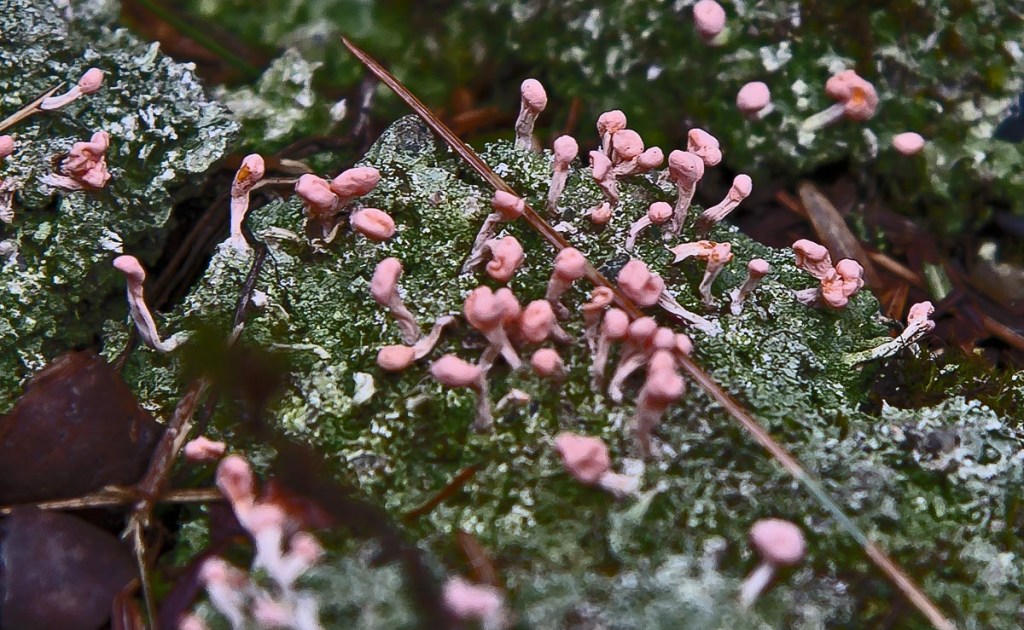
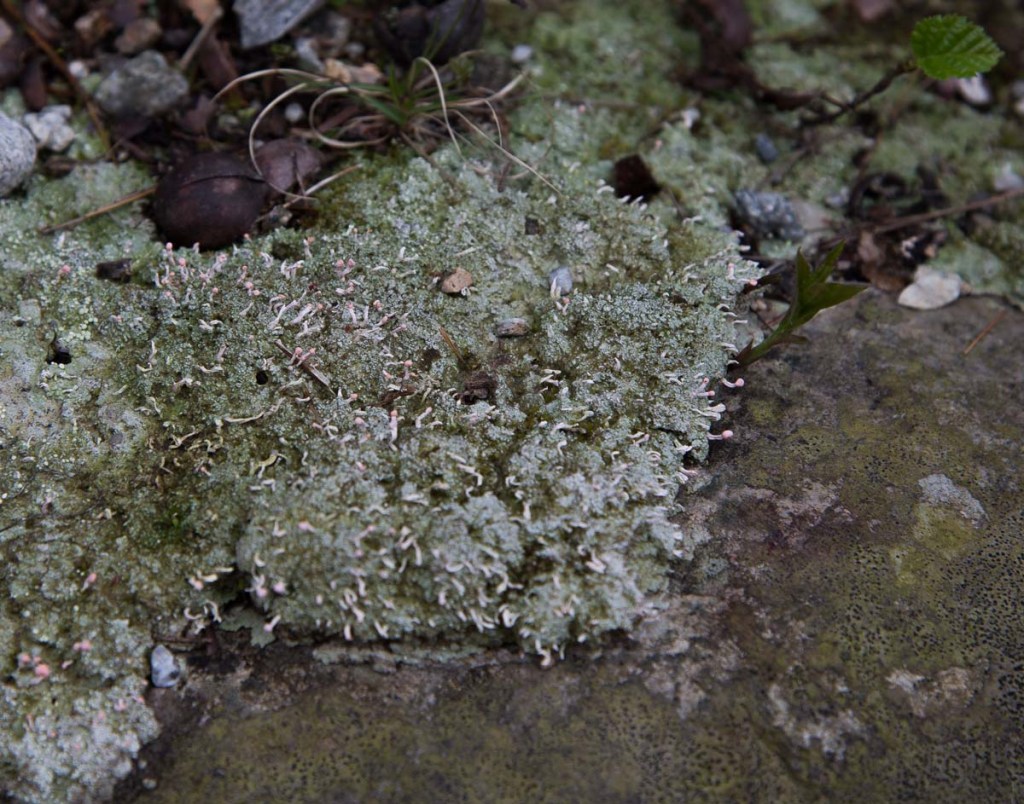
The Pink Earth Lichen, Dibaeis beomyces, can be recognized at 40 miles per hour, it’s that distinctive. But, you can be forgiven if you do not immediately recognize it as a lichen.

This lichen forms on sandy mineral soils and clay soils, often at roadsides. It is common and widely distributed in eastern USA and Canada, and Europe, reaching into the Arctic.

A lichen is the symbiotic relationship between a fungus and a green alga or a cyanobacterium. The alga, also known as the photobiont, produces nutrients through photosynthesis and these nutrients are translocated into the fungal cells. The fungus produces protective tissues within which the algal cell nestle; the fungus also produces spores that can disperse the lichen. The thallus, or body, of a lichen comprises fungal and algal cells. The thallus of Pink Earth Lichen is in the form of a crust of algal and fungal cells on the surface of the soil. The little pink mushroomy things produced by this lichen are fungal fructifications.

The fungus fructification of D. beomyces is known as an ‘apothecium.’ The pink, turban-shaped part of the fructification is completely covered by spore producing cells that, as is typical of an apothecium, are completely exposed.

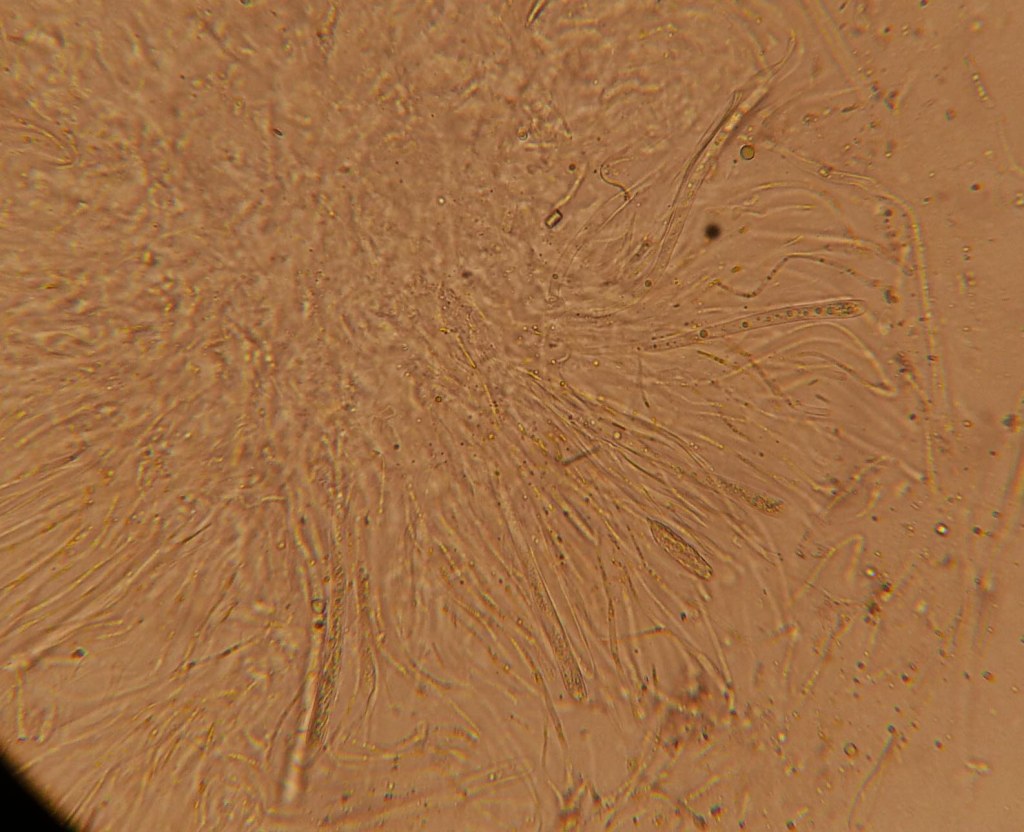
In this picture the spores will eventually be produced in the long, club-shaped cells called ‘asci.’Each ascus contains only one, diploid nucleus which resulted from the fusion of two haploid nuclei in a specialized c ell that supports each ascus. The narrow filaments surrounding the asci, ‘paraphyses,’ are sterile; they provide support and protection for the asci.

Fungi are haploid organisms. This is in contrast to other eukaryotic organisms, including humans and plants, that are diploid. That is, in humans, chromosomes derived from each parent are present in each cell: those cells are diploid. Whereas in fungi, each cell only has the chromosomes from one or the other parent: those cells are haploid. The diploid phase of a fungus is very brief, comprising only one diploid nucleus in each of the fertile cells, and that nucleus quickly undergoes meiosis (reduction division where genetic recombination occurs) to produce, once again, haploid progeny, typically 8 nuclei. A spore forms around each of the 8 haploid nuclei; the spore germinates to produce its thallus, known as a mycelium — narrow filaments that colonize the substratum and bring in nutrients.

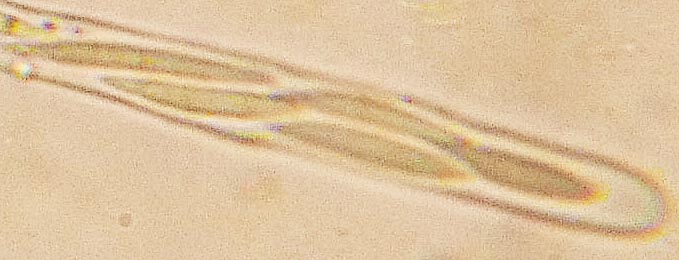
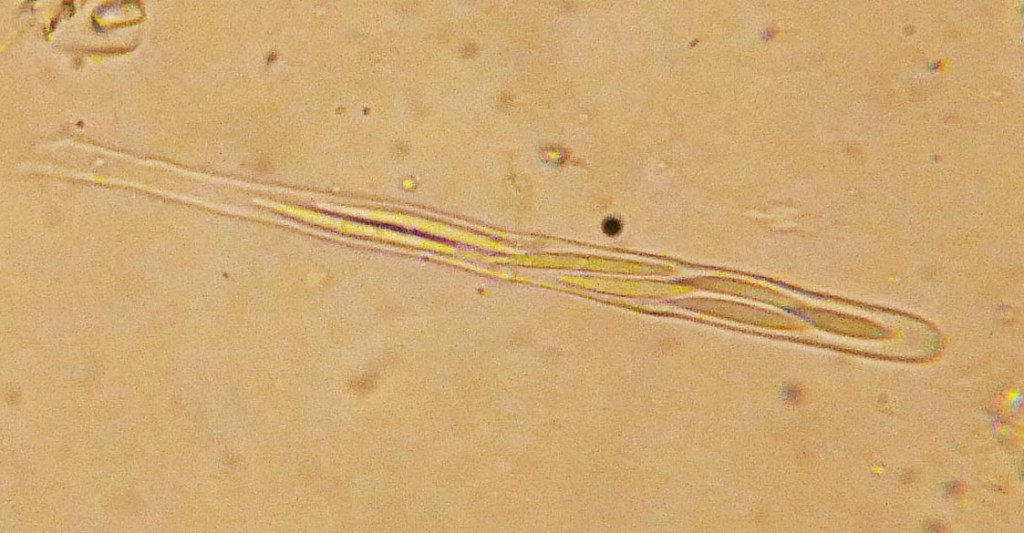
On the right an ascus with 8 ascospores in an asucs. On the left a closer image of the sexual spores within an ascus.

Lichens can reproduce through the formation of asexual propagules of various sorts. These are formed of mixed algal and fungal material and can reconstitute the lichen symbiosis. The spores, however, are not dispersed with algal material. The germinating spore must find a compatible algal cell in order to reconstitute the lichen.

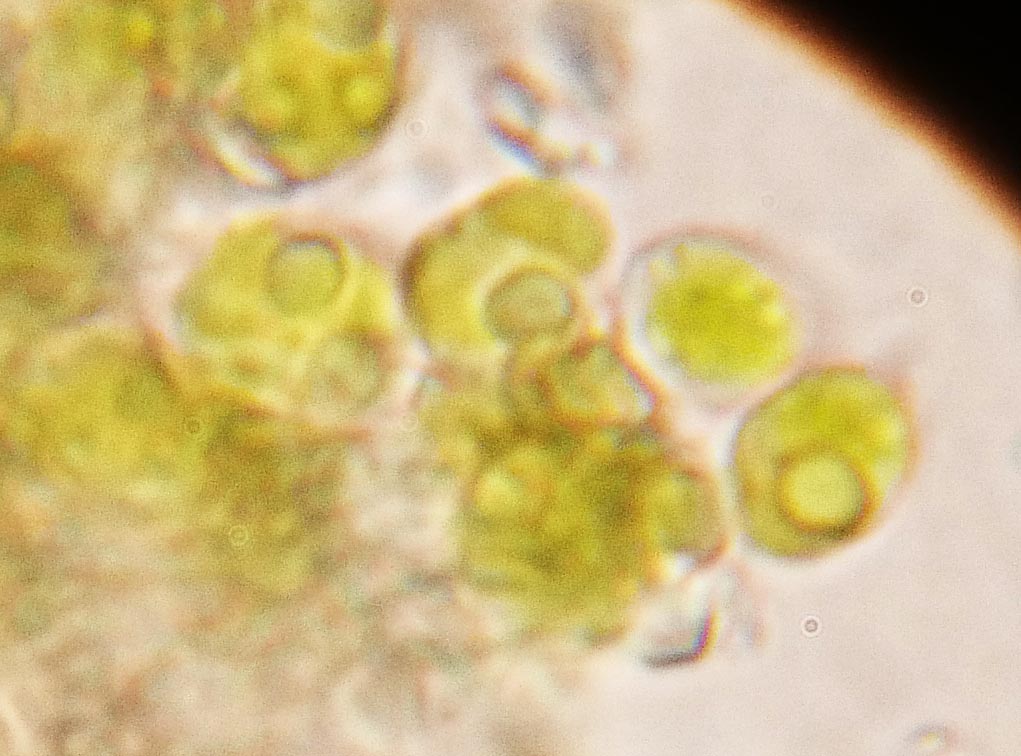
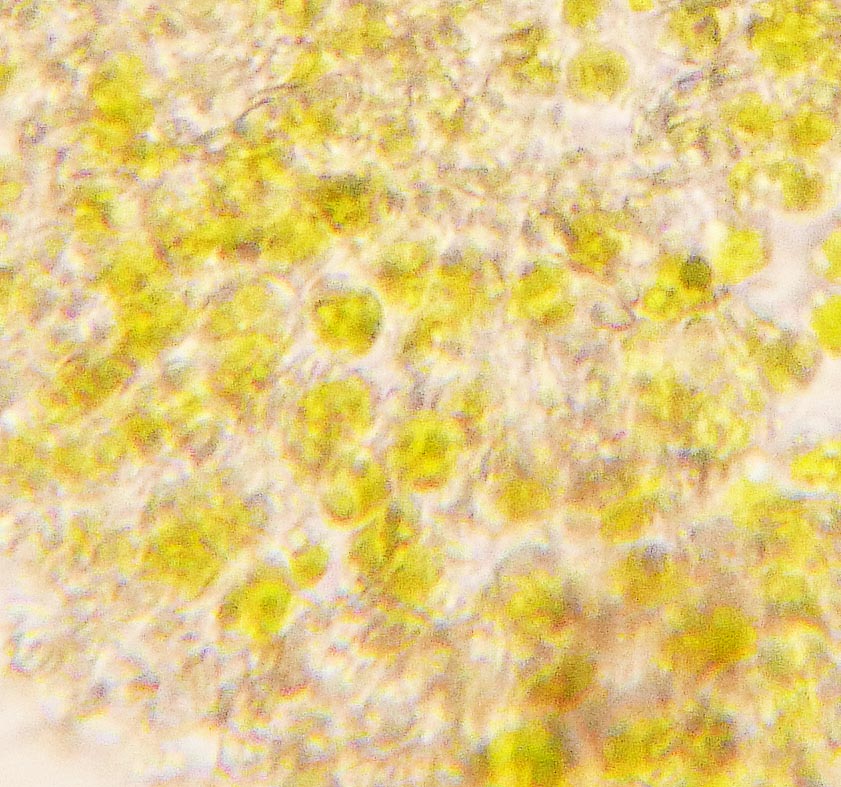
The photobiont of Pink Earth Lichen is a green alga in the genus Coccomyxa. It is single-celled, but masses of cells loosely adhere to each other to form the crustose thallus of the lichen.

The green in this picture is the crust of cells of the Coccomyxa photobiont

The picture on the right shows masses of green, photosynthesizing Coccomyxa cells. The picture on the left shows four individual Coccomyxa cells, each with what is probably a large lipid drop.